The Ceasefire Illusion: Is the Israel-Palestinian Conflict About Territory or Religious Existence?
The New “Peace” That No One Signed
A Ceasefire Agreement Without Stakeholders’ Signature
The ceasefire that now dominates global headlines has been hailed as a “breakthrough” by some and a “mirage” by others. Israel and Hamas have not formally signed it, yet both are performing parts of its choreography — exchanging prisoners and hostages, returning the bodies of captives, and allowing limited humanitarian access.
Still, reports from Al Jazeera and other outlets confirm that Israeli strikes continue in Gaza, even as the world watches the symbolic gestures of peace. Civilians are still dying. Families are still displaced. The uneasy calm feels less like peace and more like a pause between storms.
A Fragile Truce in a Theatre of Distrust
Trumpeted as the “first phase” of a broader peace effort, this ceasefire is built upon an unsteady foundation. Both sides agreed to limited steps: hostage releases, prisoner exchanges, and partial withdrawal of Israeli forces. Yet neither Israel nor Hamas signed the full accord.
Analysts argue this ambiguity serves political convenience. Israel can claim progress without conceding legitimacy to Hamas; Hamas can show resistance without appearing to surrender. But underneath the optics lies mistrust — the kind that has outlasted decades of negotiations and ceasefires.
Observers, including those from The Washington Institute and Al Jazeera, warn that without political resolution of core issues — sovereignty, borders, security, and recognition — such truces become temporary intermissions in a continuing tragedy.
This paradox — a truce without trust — raises a haunting question: is this conflict truly about borders and land, or has it evolved into a deeper struggle for existence?
Echoes from the Past: The Ancient Roots of a Modern War
To understand why this “peace” is fragile, one must understand the deep roots of the conflict itself — roots entwined not just in politics, but in religion, history, and identity.
A Land of Sacred Promises
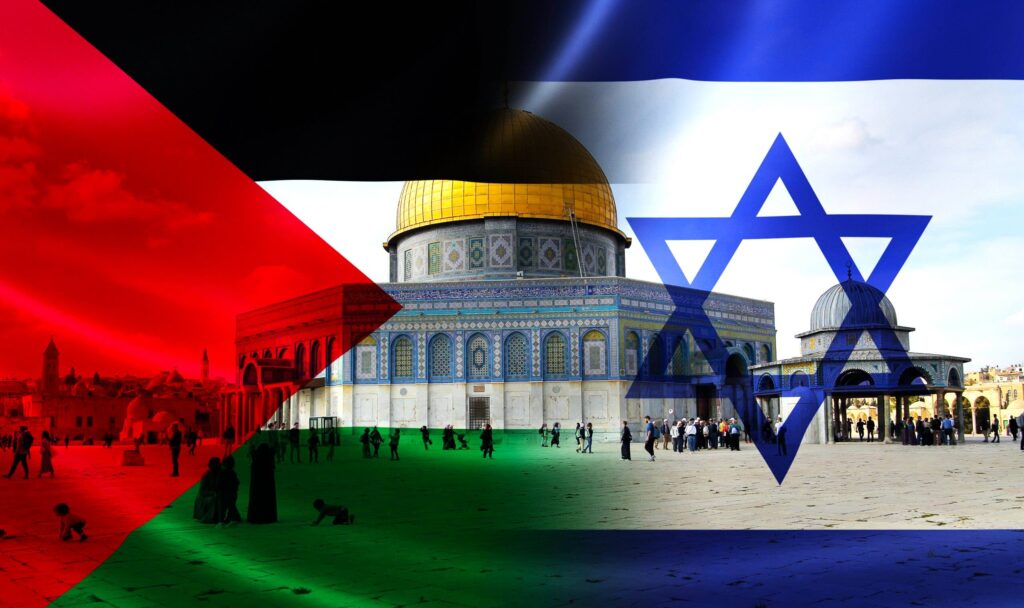
For Jews, this is the Eretz Yisrael — the land promised in scripture, the spiritual heart of their people. For Muslims, it is Al-Quds Al-Sharif, home to the Al-Aqsa Mosque and the Dome of the Rock, where the Prophet Muhammad ascended to heaven. Both faiths sanctify the same soil.
According to the Washington Institute’s analysis, religion is not a backdrop but a central pillar of this struggle. It transforms territorial disputes into existential ones. When the ground itself is holy, compromise feels like betrayal of faith.
Centuries of Conquest and Memory
Throughout its long history, Jerusalem has been destroyed at least twice, besieged 23 times, captured and recaptured 44 times, and attacked 52 times. Empires have come and gone — Babylonian, Roman, Byzantine, Ottoman — yet Jerusalem and the surrounding lands have always been more than spoils. They are mirrors of identity. Each conquest added layers of narrative: exile and return, occupation and liberation.
This long memory fuels the modern psyche on both sides. Every agreement is haunted by a thousand years of perceived injustice.
The Twentieth Century: When Faith Met Nationalism
The Rise of Zionism and the Arab Response
In the late 19th century, Jewish migration to Palestine intensified under the banner of Zionism. The dream of national revival collided with Arab fears of displacement. When Israel declared independence in 1948, that collision erupted into war.
The result was two narratives of survival:
For Israelis, a story of miraculous rebirth after centuries of exile.
For Palestinians, a story of dispossession — the Nakba, or catastrophe — when over 700,000 fled or were expelled.
Both sides emerged wounded, convinced of their victimhood, and determined never again to be powerless.
Borders of Fire
Since then, wars (1956, 1967, 1973) and uprisings (Intifadas) have redrawn borders and hardened hearts. Each ceasefire has been followed by new cycles of violence. And each cycle has been justified — by fear, by faith, by memory.
When Religion Became a Weapon
In recent decades, the conflict has become increasingly religion-driven.
On one side, religious Zionists frame settlement in the West Bank as fulfilment of divine prophecy. On the other, Islamist factions like Hamas invoke jihad as a sacred duty. Extremists turn sacred texts into weapons of war.
The Washington Institute’s study warns that these apocalyptic narratives deepen polarisation. When conflict is seen as a holy struggle, peace becomes heresy.
October 7, 2023: The Day the Illusion Shattered
The Hamas assault on Israel on October 7, 2023, changed everything. Over 1,200 Israelis were killed; hundreds were taken hostage. Israel’s retaliation was swift and devastating, with relentless airstrikes across Gaza.
The world was horrified — first by Hamas’s brutality, then by Israel’s overwhelming military response. Civilians bore the cost. Entire neighbourhoods vanished. Hospitals collapsed under bombardment.
That day destroyed whatever fragile equilibrium existed. It exposed the illusion of stability built on decades of unaddressed grievances.
Trump’s Peace Plan: The Promise and the Paradox
In the aftermath, former U.S. President Donald Trump presented a 20-point Gaza peace plan. It promised phased demilitarisation, international monitoring, and governance reforms under a technocratic board led by Tony Blair.
Yet both sides balked.
Israel accepted parts but refused full withdrawal or political compromise.
Hamas rejected demilitarisation and refused to sign, calling it “absurd” and threatening its survival.
Thus, the plan remained a paper peace — ambitious on paper, impossible in practice.
Critics argue it was less a peace framework and more a temporary containment strategy. Like earlier accords, it failed to address the deeper question: can two nations sharing one sacred land coexist?
The Present Truce: Fragile, Flawed, Fading
Today’s ceasefire, built loosely upon the Trump plan’s first phase, is visibly fragile.
Hostages are exchanged.
Prisoners are released.
Aid trucks crawl into Gaza.
Yet, as Al Jazeera reports, bombs still fall, and the humanitarian crisis deepens.
Diplomats call it “peace in progress,” but on the ground, it feels more like a war on pause.
Behind the Curtain: Power, Perception, and Fear
Analysts speculate that both sides have strategic reasons to maintain the illusion of peace.
For Israel, it secures global legitimacy and breathing space.
For Hamas, it buys time to regroup and rebuild its political stature.
Meanwhile, international mediators — from Qatar to Egypt to the United States — struggle to convert military fatigue into political will. But fatigue alone cannot heal existential fear.
Is It About Territory — or Existence?
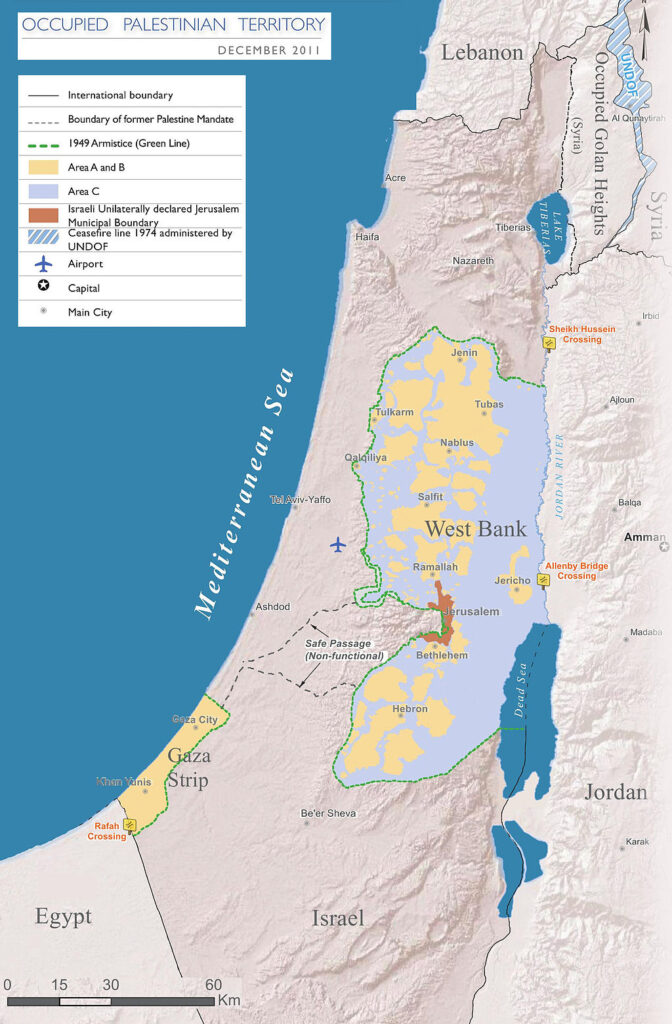
Every negotiation table returns to the same questions: borders, settlements, Jerusalem. Yet the real conflict lies beneath.
For many Israelis, the issue is existential security — the fear that any concession could lead to annihilation. For many Palestinians, it is existential dignity — the refusal to live indefinitely under occupation and blockade.
Thus, it is not merely about land; it is about life itself — who deserves safety, sovereignty, and recognition.
Until both peoples see the other’s existence as legitimate, no ceasefire, no plan, no “Deal of the Century” will hold.
Conclusion: The Mirage of Peace
This ceasefire may bring temporary relief, but it is not peace. It is a pause between battles, shaped more by exhaustion than reconciliation.
History has shown — from Oslo to Trump’s plan — that paper peace cannot override human pain. Real peace will require what has always been missing:
honest acknowledgement of mutual trauma,
engagement with religious sensitivities,
and a political vision where coexistence does not mean surrender.
Until then, the guns may fall silent, but the conflict endures — not just on maps, but in memories and souls.