Nepal Prison Break Leaves 500+ Indian Nationals Missing Amid Gen Z Protests
Kathmandu/New Delhi, October 2025 — More than 540 Indian nationals remain unaccounted for following Nepal’s historic prison break, which erupted amid the Gen Z protests in Nepal earlier this year. The unprecedented jailbreak saw over 13,000 inmates escape from 28 prisons nationwide during widespread youth-led demonstrations against corruption and the controversial social media ban.
Nepal’s Gen Z Protests and Political Upheaval
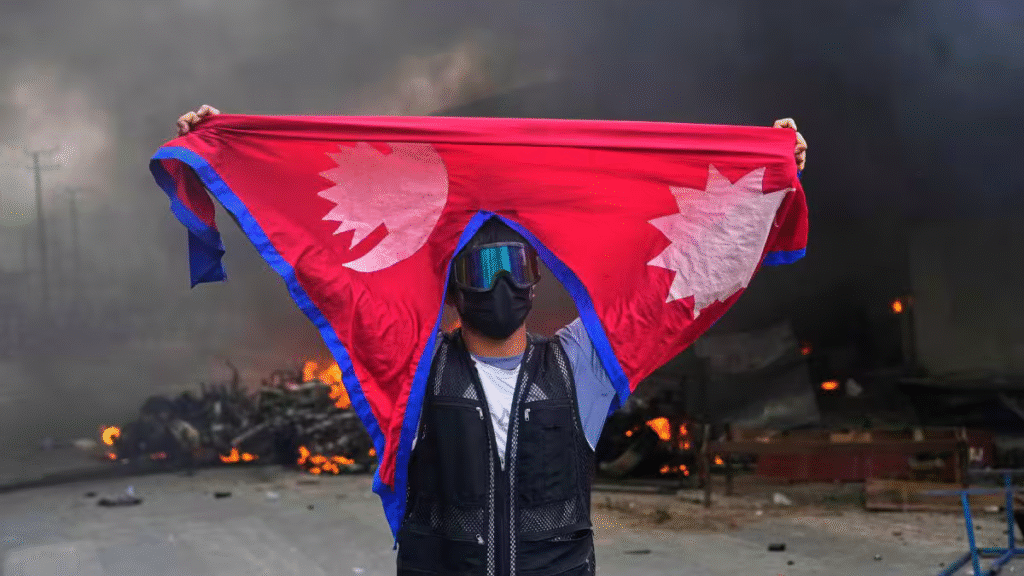
The Gen Z protests in Nepal began on 8 September 2025, as spontaneous demonstrations by young citizens angered over government corruption, ineffective governance, and the sudden suspension of social media platforms.
However, the peaceful rallies quickly escalated into violent clashes within 24 hours, resulting in the storming of key government buildings, including the Nepali Parliament.
Amid this escalating turmoil, Prime Minister K. P. Sharma Oli announced his resignation. The ensuing law enforcement collapse allowed thousands of prisoners to breach prison gates, set fires, and flee — marking one of Nepal’s largest jailbreaks in modern history.
540 Indian Nationals Among 13,000 Escapees
According to the Department of Prison Management (DoPM), approximately 5,000 Nepali citizens and over 650 foreign nationals remain missing. Among them are 540 Indian nationals previously held in Birgunj, Pokhara, and Kathmandu prisons for offences related to drug trafficking, smuggling, and border crimes.
Officials now fear that many of these fugitives may have crossed into India through the porous India–Nepal border. Therefore, security agencies in both nations have intensified cross-border surveillance and intelligence-sharing operations.
Reports from Nepal Police link several recent incidents of theft and violence to the escaped inmates, further heightening public anxiety and security concerns.
Massive Manhunt and Government Response
In response to the crisis, the Nepali Home Ministry declared a nationwide manhunt, urging all escapees to surrender by 6 October 2025. The ministry also warned of harsher penalties for those refusing to comply.
A joint task force—comprising the Nepal Police, Armed Police Force, and local administrations—continues door-to-door operations in high-risk areas.
By 28 September, authorities confirmed that 7,735 inmates had surrendered voluntarily or were recaptured, leaving around 5,700 fugitives still at large. Simultaneously, investigations are underway into prison management failures, staff complicity, and emergency preparedness during the riots.
India–Nepal Border Security on High Alert
The open border policy between India and Nepal has emerged as a major security challenge in the wake of the jailbreak.
The Sashastra Seema Bal (SSB) has intensified patrolling across Uttar Pradesh, Bihar, West Bengal, and Uttarakhand, where several escapees attempted to cross illegally.
So far, around 60 fugitives have been intercepted — most of them Nepali nationals, though a few Indian-origin prisoners are under verification.
In one incident, SSB personnel in Bihar’s Sitamarhi district apprehended 10 escapees, including two Indian nationals. Similar arrests were also reported in Siddharthnagar (U.P.) and Pithoragarh (Uttarakhand), underscoring the cross-border dimension of this developing crisis.
Regional and Geopolitical Implications
This large-scale jailbreak has exposed vulnerabilities in Nepal’s prison infrastructure and institutional governance. It has also sparked strong calls for judicial and correctional reforms.
For India, the incident raises serious border management and security challenges, especially given the number of Indian nationals still missing.
Analysts suggest that the Gen Z protests in Nepal have reshaped the country’s internal political landscape and tested regional cooperation frameworks between New Delhi and Kathmandu. Enhanced law enforcement collaborationand intelligence exchange are now crucial to addressing the crisis effectively.
Conclusion
The Gen Z protests in Nepal have not only altered the country’s political direction but also triggered a multi-national security dilemma. As the manhunt continues, both India and Nepal must focus on restoring stability, strengthening border vigilance, and ensuring accountability for institutional failures.
The coming months will determine whether this episode becomes a turning point for governance reform or a persistent regional security threat.