Turbulence in the Skies: Trump Administration’s Move to Ban Chinese Airlines Over Russian Airspace Triggers Global Reaction
Aviation Meets Geopolitics: The U.S. Challenges China’s Advantage
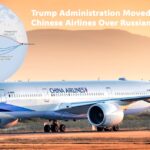
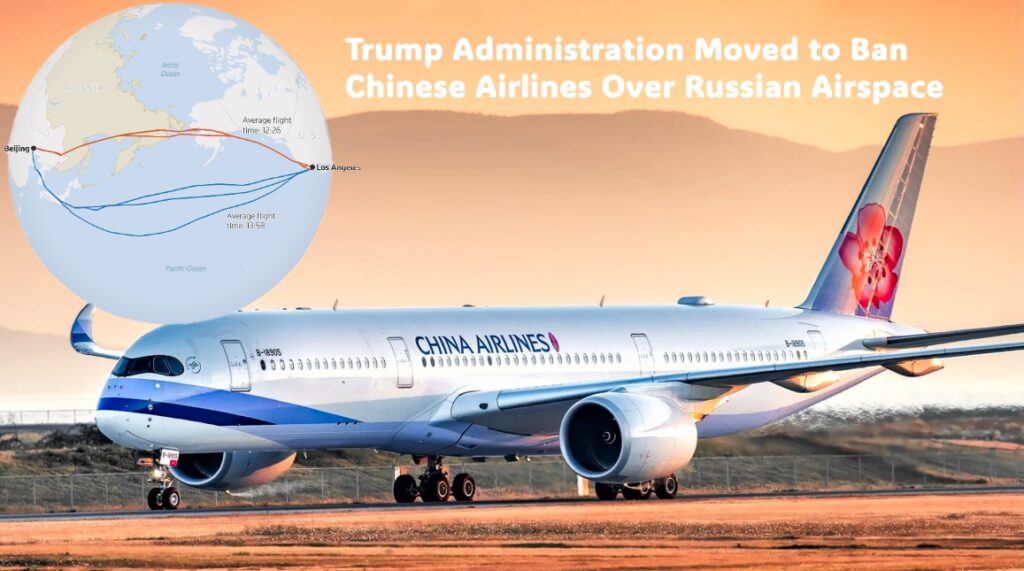
Trump administration has ignited a new wave of aviation and geopolitical tension by proposing a ban on Chinese airlines using Russian airspace for flights to and from the United States. The plan, announced by the U.S. Department of Transportation (DOT), aims to eliminate what Washington calls an “unfair competitive edge” enjoyed by Chinese carriers.
Ukraine invasion, U.S. and European airlines have been banned from Russian skies as part of Moscow’s retaliatory sanctions. In contrast, Chinese airlines continue to operate over Russian territory, benefiting from shorter flight paths, reduced fuel costs, and lower operational expenses.
According to U.S. regulators, prohibiting Chinese overflights would help “level the playing field” for American carriers forced to take longer and costlier routes.
China’s Response: Warning of Economic Fallout
Beijing swiftly responded, condemning the U.S. proposal as “discriminatory and self-defeating.” The Chinese Foreign Ministry cautioned that the move could “hurt American businesses and consumers alike,” urging Washington to reconsider the domestic and global repercussions of its restrictive policies.
“Suppressing other countries under the guise of fairness harms global cooperation and economic recovery,” a Chinese spokesperson stated, highlighting that U.S. airlines would also suffer from rising operational costs and diminished competitiveness in Asia-bound markets.
China’s sharp reaction reflects how deeply intertwined aviation policy and diplomatic strategy have become in an era of escalating U.S.–China–Russia rivalry.
The U.S. Authority Over Flight Routes Explained
Through the Federal Aviation Administration (FAA) and the Department of Transportation (DOT), the U.S. holds regulatory authority over all flights entering or leaving its airspace.
This authority allows Washington to:
- Approve or reject flight plans and route access.
- Impose restrictions for safety, security, or competitive fairness.
- Mandate that foreign airlines avoid specific airspaces, such as Russian territory, when flying to the U.S.
While the U.S. cannot dictate how airlines fly within foreign airspace, it can control what routes are permitted to or from U.S. airports. The proposed ban on Chinese airlines’ overflights via Russia exemplifies this strategic use of regulatory power — a countermeasure to Moscow’s airspace blockade against U.S. carriers.
India’s Reciprocal Airspace Policy: A Regional Parallel
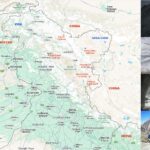
India has long exercised similar principles of reciprocal airspace control to maintain parity and sovereignty. Following heightened tensions after the Pahalgam terror attack in April 2025, Pakistan closed its airspace to Indian aircraft.
In response, India imposed a complete ban on Pakistani-registered aircraft — including passenger, cargo, and military planes — from entering Indian airspace. The ban, extended several times, remains in effect until at least October 24, 2025.
This ongoing restriction has caused:
- Longer flight durations and increased fuel costs.
- Financial losses estimated at over $600 million annually for Indian carriers such as Air India.
- Disruptions in regional air connectivity across South and Central Asia.
India’s stance underscores its right to reciprocity — denying airspace to nations that deny it access. The policy mirrors Washington’s approach, using airspace regulation as leverage in geopolitical disputes.
The Global Impact: Airspace as a Geopolitical Battleground
The U.S.–China–Russia airspace standoff, alongside India–Pakistan’s regional dispute, demonstrates how airspace sovereignty has evolved into a potent tool of geopolitical influence.
Economic Costs and Airline Challenges
Airlines face mounting fuel costs, rerouting delays, and logistical hurdles due to restricted access to crucial corridors such as:
- Siberian routes between Asia and North America.
- Kashmir corridor between South and Central Asia.
These diversions add hundreds of millions of dollars annually to global airline expenses and affect flight ticket pricing, delivery logistics, and international trade routes.
Strategic Implications
Countries now wield airspace not just for safety or sovereignty, but as a strategic economic and political weapon.
- Russia uses its skies as leverage against Western sanctions.
- China capitalises on Moscow’s openness to maintain connectivity and economic advantage.
- The U.S. employs airspace restrictions to counter geopolitical imbalances.
- India mirrors these practices regionally to ensure security parity and economic fairness.
Aviation Policy in a Multipolar World
Trump administration Chinese airlines ban proposal marks more than an aviation dispute — it signals a redefinition of global air diplomacy.
In today’s multipolar world, airspace has become a currency of power. Each nation’s decision to open or close its skies carries implications for commerce, strategy, and diplomacy.
The U.S. proposal may level competitive disparities, but it also risks deepening tensions with both Beijing and Moscow, reshaping air travel routes and the very dynamics of international aviation.
As seen from Washington to New Delhi, the message is clear: in the 21st century, the sky itself has become a strategic frontier of global politics.