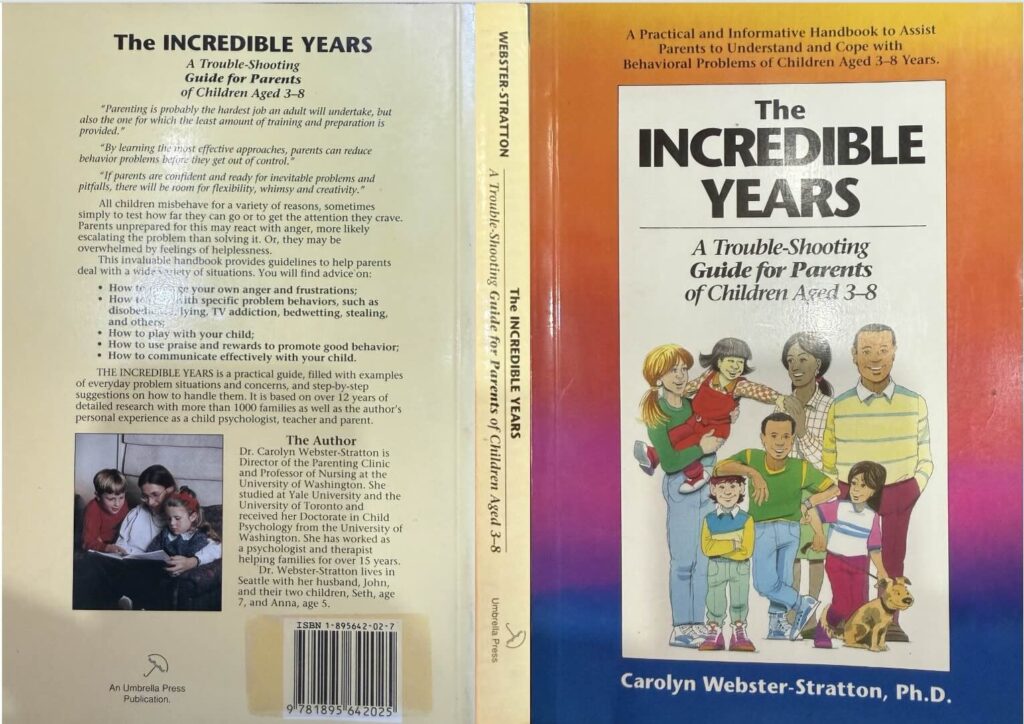
A Parenting Classic That Still Resonates
First published in 1992 and reprinted several times, Carolyn Webster-Stratton’s The Incredible Years: A Trouble-Shooting Guide for Parents of Children Aged 3 – 8 has stood the test of time as one of the most practical and compassionate parenting handbooks available.
Though written decades ago, its core principles: play, positive reinforcement, and emotional coaching, remain as relevant today as when they were first introduced. Later editions (3rd edition of July 2019) expand on topics such as digital distractions, social media, and child health, but the foundation laid in the earlier versions is remarkably enduring.
As Webster-Stratton notes, “Parenting is the most important job we ever do, yet it comes with the least formal training.” This book fills that gap with wisdom, strategies, and encouragement.
Understanding the Heart of The Incredible Years
The book is built around the idea that children’s challenging behaviours are opportunities for learning, not simply problems to be punished. Webster-Stratton, drawing on her clinical psychology background, guides parents through everyday issues: tantrums, bedtime struggles, sibling fights by offering structured approaches that combine empathy with discipline.
One of her central reminders is “Children misbehave not because they are bad, but because they are learning how to manage their feelings and behaviours.”
This reframing takes away the guilt and blame many parents feel and replaces it with a practical toolkit.
Key Lessons and Strategies from The Incredible Years
Play Is Serious Learning
Webster-Stratton stresses that parents should not underestimate play. It builds social skills, empathy, and resilience. She writes, “Play is the natural language of children.”
Positive Reinforcement Works Wonders
Instead of focusing only on misbehaviour, parents are urged to praise specific good behaviours. For example, instead of saying “Good job” , say I love how you shared your crayons with your friend.” This helps children connect praise to action.
Managing Misbehaviour Calmly
The book offers practical methods like clear rules, predictable routines, and time-outs. Importantly, Webster-Stratton emphasises consistency: “Children thrive best when they know what to expect.”
Emotional Coaching
Helping children name their feelings is central. She explains, “A child who can say, I m angry is less likely to hit.” Parents are encouraged to validate emotions while setting limits on actions.
Problem-Solving Together
Instead of dictating, Webster-Stratton suggests guiding children with questions like, “What could you do differently next time?” This helps build independence and self-control.
Why This Book Resonates Even Decades Later
Even though the edition you hold (1992/2001) predates smartphones and modern digital concerns, the core philosophy is timeless. Parents today can still apply its strategies with equal success.
What makes The Incredible Years powerful is its combination of:
- Scientific grounding (rooted in psychology and family therapy)
- Practical tips (clear routines, praise, behaviour charts)
- Empathetic tone (encouraging persistence, not perfection)
In fact, parents often report that even small changes like praising more or dedicating 15 minutes to play each day, dramatically improve family life.
What Later Editions Add
The 3rd edition of The Incredible Years builds on the same foundation but includes new chapters on:
- Screen time and digital distractions
- Social media challenges for families
- Child health and lifestyle habits
These updates acknowledge the modern parenting landscape. But even without them, the 1992 edition remains highly relevant, especially for core behaviour management and emotional development.
Parenting Takeaways from The Incredible Years
- Spend quality one-on-one playtime daily.
- Praise behaviours you want to see more often.
- Create predictable routines to reduce conflicts.
- Stay calm, children model your emotional regulation.
- Guide children toward solutions instead of handing them answers.
Webster-Stratton reminds us: “Parenting is not about perfection it is about persistence.” This is as true in 2025 as it was in 1992.
A Parenting Handbook That Stays Relevant
The Incredible Years may have been written over three decades ago, but its lessons remain powerful. It transforms parenting from a cycle of nagging and punishment into one of guidance, encouragement, and emotional growth.
I had read and still holding the 1992 / 2001 reprint edition, which is a timeless guide that helped us in understand the child better. For those wanting advice tailored to today’s challenges, newer editions expand into screen time and social media. Either way, the heart of the book remains: children flourish when parents balance warmth with structure.
👉 Final Thought: Whether you are parenting a tantrum-prone toddler or a stubborn six-year-old, this book is a reliable companion, turning everyday struggles into opportunities for connection.
👉 Further Recommendations: For parents of teenagers, a must-read is The Teenage Brain: A Neuroscientist’s Survival Guide to Raising Adolescents and Young Adults by Frances Jensen, M.D.