James Comey Indictment Highlights Growing Threats to U.S. Democracy
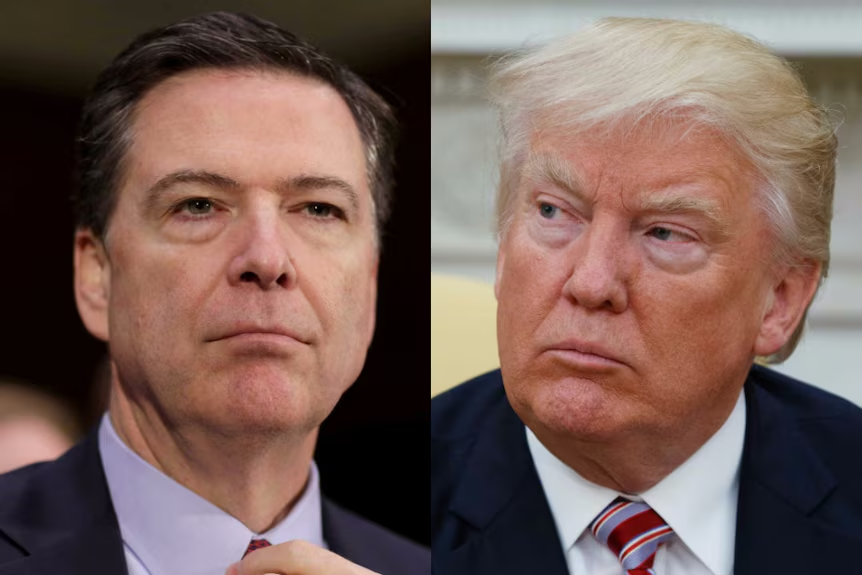
The indictment of former FBI Director James Comey on charges of obstruction and making false statements during his 2020 congressional testimony has fuelled concerns about increasing authoritarian tendencies in the United States under President Donald Trump’s administration. The case underscores tensions in the justice system and reflects broader attacks on democratic norms that have been widely documented in U.S. media and political analysis over the past years.
Details of the Indictment
James Comey was charged by a federal grand jury in Virginia with two felony counts related to alleged falsehoods in his testimony before the Senate Judiciary Committee. The investigation was led by Lindsey Halligan, a Trump-appointed U.S. Attorney who bypassed career prosecutors who found insufficient evidence to bring charges. Comey denies all allegations and reaffirmed his faith in the judicial process. His arraignment is scheduled for early October 2025.
Political Context and Trump’s Role
The indictment followed intense public pressure from President Trump, who has long targeted Comey as an adversary after being investigated for Russian election interference. Trump celebrated the indictment and has repeatedly politicized legal mechanisms to attack opponents, raising concern about the weaponization of the justice system for political ends.
Growing Democracy Threats Documented Earlier
Concerns about threats to American democracy under Trump have been widely reported well before this indictment. The Carnegie Endowment detailed in August 2025 how the Trump administration’s “executive aggrandizement” has weakened institutional checks and undermined democratic norms through:
Centralization of executive power within the presidency
Attacks on independent media through lawsuits and exclusion
Voter suppression tactics and interference in election administration
Retaliation against critics in civil society and the judiciary
Similarly, political scientists and media outlets have warned for years about democratic backsliding in the U.S. A 2021 International IDEA report highlighted how Trump’s baseless claims about election fraud and the January 6 Capitol attack had damaged faith in democratic institutions and inspired anti-democratic movements globally.
Additional analysis from Verfassungsblog in September 2025 cites legal experts warning that the second Trump administration is systematically targeting the judiciary, universities, and the press, undermining the pillars of American democracy through an “authoritarian legal playbook”.
Threats to Judicial Independence and Press Freedom
A growing body of evidence shows intensified threats to judicial independence, including attacks on judges via misleading media, recall efforts, and politicization of appointments. Federal judges report increased threats to their safety, contributing to a chilling effect on the judiciary’s impartiality. Concurrently, the Trump administration’s lawsuits against major news outlets and exclusion of critical media from governmental briefings exemplify ongoing attempts to stifle the free press.
The Stakes for American Democracy
Political scientists categorize these actions as part of “competitive authoritarianism,” where democratically elected leaders use state powers to erode institutional checks and suppress opposition without outright dismantling democratic forms. Despite these pressures, scholars note that American democratic institutions retain resilience but warn of continued vulnerability if these trends are unabated.
Conclusion
The James Comey indictment is a flashpoint reflecting the ongoing struggle over the integrity of U.S. democratic institutions. When viewed alongside documented actions by the Trump administration to weaken judicial independence, restrict press freedoms, manipulate elections, and concentrate executive power, it signifies a broader challenge to the foundational pillars of American democracy. Vigilance and active citizen engagement remain critical to safeguarding the rule of law and democratic governance in the United States.