Saudi-Pakistan Defence Pact: Strategic Protectorate or Regional Game-Changer?
The Unexpected Alliance Surprise
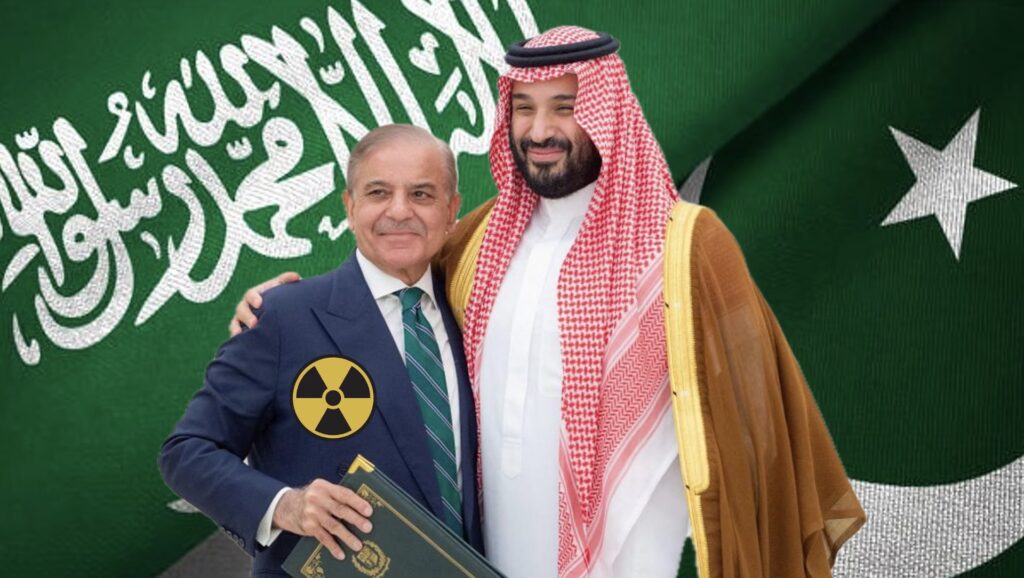
Imagine a West Asia where old alliances fade, new powers rise, and a single defence agreement sends ripples across Asia—West to South and Centrals Asia. Saudi Arabia and Pakistan formalised a Strategic Mutual Defence Agreement (SMDA) on September 17, 2025 which isn’t just another headline—it’s a bold pivot that challenges decades of status quo and puts two unlikely partners at the centre of geopolitics. Why did Saudi Arabia and Pakistan forge such a close alliance—and what does it mean for everyone else?
This pact pledges that any aggression against either nation will be treated as aggression against both—an unprecedented move signalling the deepest defence cooperation in decades. Signed amid escalating tensions following Israeli airstrikes in Qatar and a recent India-Pakistan crisis, the agreement carries profound implications for regional alliances, power balances, and security postures.
Economic Necessity Meets Strategic Ambition
Pakistan finds itself in deep economic turmoil, burdened by debt and growing dependence on China. As its financial crisis intensifies, Islamabad searches for lifelines—and Saudi Arabia delivers. This pact is not just about military cooperation, shared history, or religious ties; it is Pakistan securing vital financial support by offering Riyadh what few can: strategic protection. It extends a strategic umbrella that now formally includes nuclear deterrence capabilities. Defence Minister Khawaja Asif confirmed that Pakistan’s nuclear arsenal—long aimed at India—would be made available to Saudi Arabia if required. This marks a historic formalisation of military reliance and deterrence sharing.
In essence, this partnership is as much a transaction as it is an alliance. Saudi Arabia, rich in oil wealth, provides funding that helps stabilise Pakistan’s economy, while Pakistan’s military—historically deployed in Saudi service since the 1960s—now comes with new guarantees. The military component and economic survival are inseparable, highlighting how geopolitical deals often emerge from necessity rather than choice.
Yet, this military pact is as much about survival and pragmatism as it is about ambition. Pakistan’s financial dependency lowers its bargaining power, making the relationship a delicate quid pro quo: Saudi funding in exchange for military backing and nuclear protection.
The Limits of Pakistan’s Military Credibility
Significantly, recent events have exposed Pakistan’s military vulnerabilities. In May 2025, India launched a swift and decisive offensive against several terrorist establishments deep inside Pakistan, followed by destruction of Pakistani military bases, airfields, underground command centres, fighter jets, and other military assets and installations within a span of 2-3 days. Pakistani air defences completely failed, whereas Pakistan’s missiles failed to penetrate Indian airspace effectively, highlighting its operational shortcomings despite nuclear threats.
Also, Pakistan struggles to fight against the Baluch Liberation Army on the ground within its own territory.
These realities dampen Pakistan’s role as a guarantor of military security for Saudi Arabia or the Gulf at large. While nuclear deterrence carries strategic weight, conventional military incapacity in direct conflict and historical performance raise questions about the pact’s practical efficacy.
Regional Rivalries and New Calculations
This deal quickly shifts the power balance and unsettles multiple regional actors. Iran perceives it as an encirclement strategy, intensifying proxy conflicts via its Houthi allies in Yemen. Houthi warnings against Pakistani troop deployments raise the risk of Yemen–Saudi border conflict flare-ups to a larger scale.
Meanwhile, Israel—long the undisputed nuclear power in the Middle East—recalibrates defence postures considering the extension of Pakistan’s nuclear umbrella into the Gulf, complicating any potential military operations against Saudi (or probably any other GCC states). Deterrence equations are reset, making one country’s military pact the fulcrum for many others’ security calculations.
It is also to be seen whether this SMDA is the first and last or will it extend to any or many other GCC countries in due course of time.
India finds itself caught in a diplomatic bind. Its long-standing strong economic and diplomatic ties with Saudi Arabia contrast sharply with its adversarial stance toward Pakistan. The new pact muddles India’s West Asia strategy, possibly asking for higher restraints against Pakistan and/or pushing itself toward closer partnerships with rival GCC states and Israel, fragmenting the region further.
Is It Really “Goodbye” to Western Guarantees?
Despite some Gulf states’ expressed desire to reduce dependency on Western security, the reality is more nuanced. The United States retains a significant military presence in Saudi Arabia, the UAE, Qatar, and other MENA states, maintaining strategic airbases, naval facilities, and troops. US influence continues to shape the security architecture of the region profoundly.
Moreover, recent crises suggest American involvement remains pivotal behind the scenes. Israel’s attack on Qatar catalysed US efforts to renew defence cooperation with Doha, underscoring continued American influence.
Hence, this pact should not be seen as a wholesale abandonment of Western guarantees but rather an attempt by Gulf states to diversify their security partnerships amid perceived uncertainties about US reliability. Also, time will tell if it could be a planned tactic by the US itself to play the game through Pakistani boots and nuclear deterrent against Israel and Iran on the ground.
Another possibility is that China plays an indirect but vital role—strengthening both countries through investment and diplomacy, cementing its Belt and Road Initiative footprint, and quietly benefiting as the West withdraws. Yet, the pact unfolds more as an act of regional autonomy than foreign orchestration.
The Changing Security Landscape
The Saudi-Pakistan pact embodies a broader regional trend toward autonomous defence collaborations. It reflects Saudi Arabia’s Vision 2030 strategy, seeking economic and military independence and a more assertive geopolitical role.
Yet, despite its symbolism and potential, this alliance is tethered by Pakistan’s economic frailty and military limitations. It is more a layered security measure than a game-changer, functioning alongside enduring US involvement and underlining the complexities of modern Western and South Asian geopolitics.
Conclusion: A Delicate Balancing Act
The Saudi-Pakistan defence pact is far-reaching but cannot be viewed in isolation. It is born out of economic necessity, historical ties, and strategic ambition, overlaying new challenges and opportunities in an evolving security environment.
For Saudi Arabia, the pact offers an expanded shield and a diversification of defence partnerships. For Pakistan, it secures financial lifelines and regional prestige—yet exposes vulnerabilities when confronted with superior military force, as evidenced in May 2025. For the region and global powers alike, the pact signals both continuity and change, a cautious hedging as alliances shift and new fault lines emerge.
Ultimately, this alliance redefines power equations and deterrence postures—not by ignoring established players like the US but by recalibrating roles, influences, and partnerships amid persistent uncertainty. The future may well depend on how these layered relationships evolve—and whether they truly deter aggression or merely complicate an already volatile region.