Resurgence of Far-Right Anti-Muslim Protests: From London to Poland and Beyond
In 2025, Europe witnessed an alarming resurgence of far-right anti-Muslim protests, marked notably by the massive “Unite the Kingdom” rally in London and widespread demonstrations across Poland. These movements, largely driven by nationalist and anti-immigration sentiments, have amplified social tensions centered around fears of cultural displacement, economic uncertainty, and security threats. Understanding the roots and implications of these protests is vital for grasping contemporary social and political dynamics in Europe and beyond.
The London Protest: A New Peak of Far-Right Mobilization
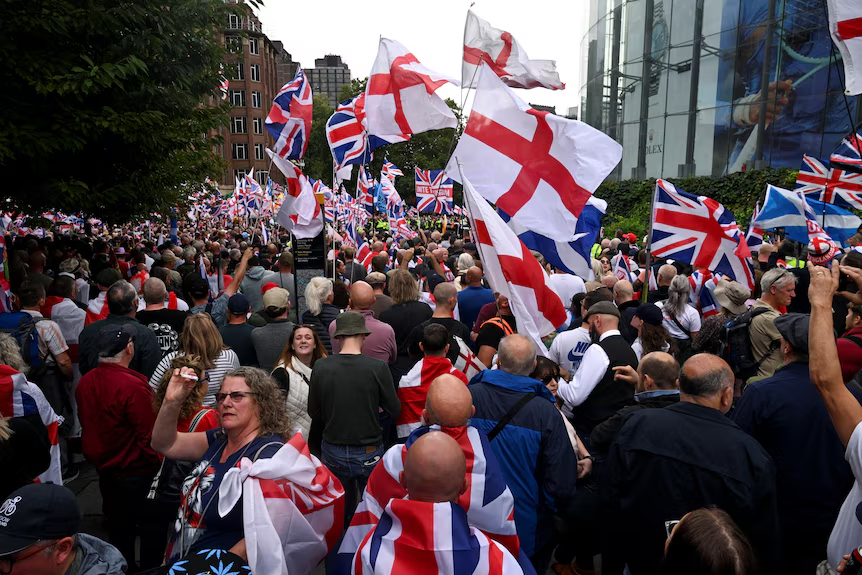
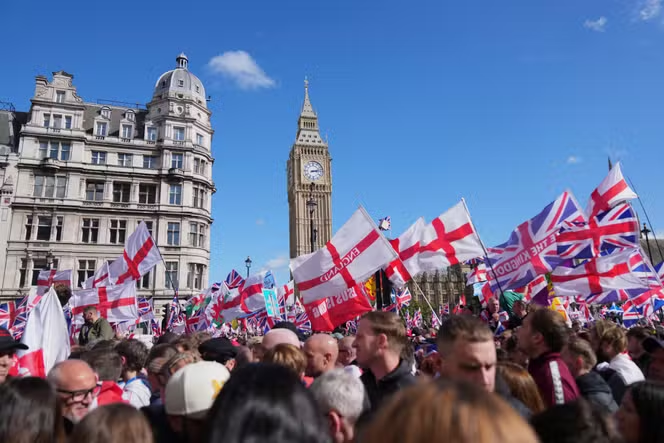
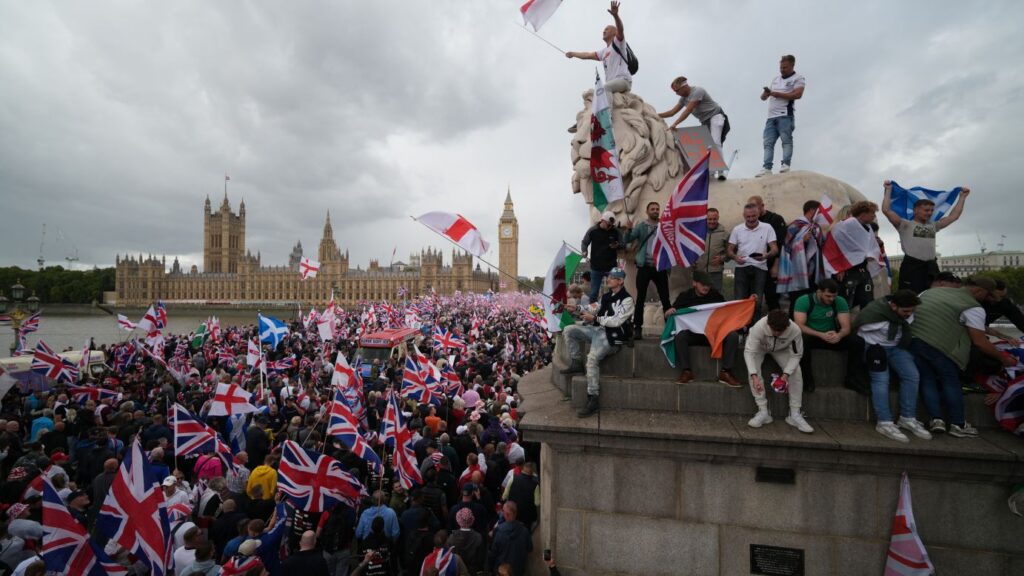
On September 13, 2025, London became the epicenter of a far-right mobilization rarely seen in recent UK history. The “Unite the Kingdom” protest, organized by notorious far-right activist Tommy Robinson, attracted an estimated 110,000 to 150,000 participants. The rally, explicitly anti-immigration and anti-Muslim, was characterized by attacks on government immigration policies and calls for radical political reform. British flags and English nationalism featured prominently, while inflammatory slogans targeted Muslim communities broadly. The event was not without violence; clashes with police resulted in injuries to 26 officers and over 20 arrests.
Significantly, tech entrepreneur Elon Musk lent support via a virtual address, urging protesters to “fight back or die,” adding an international dimension to the movement. The protestors voiced concerns about “massive uncontrolled migration,” portraying Muslim migration as an existential threat to British social fabric. This rhetoric was fueled by social anxieties over incidents such as the grooming gang scandals, where approximately 1,400 children were sexually exploited primarily by groups identified as Pakistani Muslim men. These cases have deeply etched fear and resentment within sections of the public, often exploited by far-right groups to justify xenophobic agendas.
Poland’s Mid-2025 Protests: Nationalism and Islamophobia on the Rise
Similar anti-Muslim sentiment found expression in Poland earlier in July 2025, when thousands converged for far-right marches in over 80 cities, including Warsaw, Krakow, and Katowice. Spearheaded by the nationalist Konfederacja party, the protests demanded stronger border controls and rejected Muslim immigration. Slogans such as “Poland for Poles” reflected a pervasive desire to preserve perceived national identity against globalization and multiculturalism.
These events are not isolated. Poland has a history of such protests, with a notably large nationalist march in 2017 attracting around 60,000 participants chanting anti-Islam slogans. The continual rise of far-right groups is linked to demographic changes and the growing visibility of Muslim immigrants in the country alongside broader European migratory trends. The tension between preserving cultural homogeneity and adapting to modern multicultural realities underlies much of the public unrest.
Wider European and Global Context
The wave of anti-Muslim protests is part of a larger European pattern where economic challenges, escalating migration flows, and cultural anxieties coalesce into political movements opposing Islam and immigration. Similar, though smaller-scale, protests occurred in countries such as France, Germany, and Italy throughout 2025.
In contrast, North America has witnessed periodic anti-immigrant and Islamophobic sentiments, but large coordinated anti-Muslim protests remain less pronounced. Canada’s multicultural policies and the U.S.’s complex ethnic mosaic moderate public mass mobilizations against Muslims, despite persistent societal prejudices.
Russia, while home to nationalist groups, has seen fewer organized protests explicitly targeting Muslims at the scale evident in Western Europe. This is due to different state policies, ethnic dynamics, and government control over demonstrations.
Australia and New Zealand, though occasionally experiencing anti-Muslim rhetoric, have not reported significant large-scale anti-Muslim protests similar to those in Europe in 2025, reflecting differing social and political climates.
Root Causes: Fear, Identity, and Political Exploitation
At the core of these anti-Muslim protests lies a mixture of economic insecurity, cultural identity fears, and political opportunism by far-right groups. Economic stagnation and perceived loss of jobs fuel anxiety about immigrants who are viewed as competitors for scarce resources. The growing visibility of Muslim communities challenges traditional national and cultural narratives, provoking fears of social displacement and cultural erosion.
Particularly influential has been the scandal involving grooming gangs in the UK, where reports found thousands of children sexually exploited predominantly by British Pakistani men. The revelations have caused a rupture in community trust, sparking anger and mistrust towards Muslim populations broadly. These heinous crimes, while committed by a minority, have been widely leveraged by far-right activists as evidence of a broader threat, feeding xenophobia and Islamophobia that drive protest mobilization.
Institutional reluctance to confront ethnic dimensions of such crimes due to concerns about accusations of racism has further complicated social cohesion, leaving communities feeling vulnerable and mistrustful.
Conclusion
The rise of far-right, anti-Muslim protests in London, Poland, and across Europe in 2025 reflects deep societal challenges. Rooted in fear, economic instability, and cultural insecurities, these movements have grown by exploiting real and perceived grievances around immigration and social change. The grooming gang scandal in the UK has been a flashpoint, exacerbating tensions and mistrust. Addressing these divisions requires nuanced political leadership, community engagement, and comprehensive social policies to counter hate and promote integration rather than further fragmentation.