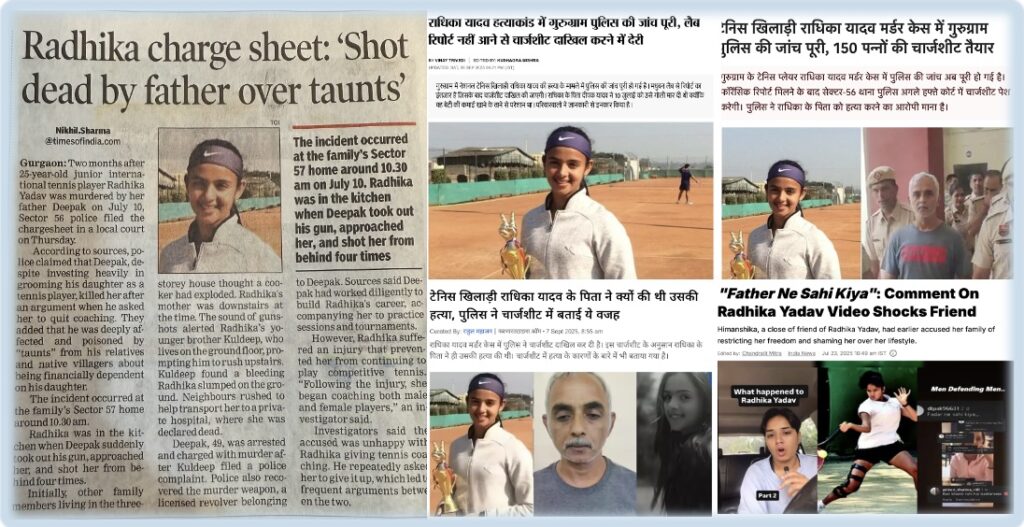
Understanding the Tragedy of Radhika Yadav: Beyond Chargesheets and Headlines
The heart-wrenching murder of 25-year-old junior international tennis player Radhika Yadav by her father Deepak Yadav in Gurugram remains a painful tragedy that raises profound questions about family dynamics, societal pressures, and mental health awareness. While the police chargesheet points to “taunts” from relatives about living off his daughter’s income as the motive, the deeper causes run far beyond simple explanations.
Radhika was a devoted athlete, ranked 113th in the International Tennis Federation doubles rankings, who had climbed the hard road to success with significant financial and emotional support from her father. Yet beneath this façade of support lay a turbulent relationship marked by control, monitoring, and emotional distance. According to close sources and friends, Deepak monitored Radhika’s phone calls and controlled many aspects of her social life, while Radhika publicly criticised her family and sought independence, including friendships outside their community and participation in creative projects like music videos and run a (male/female) mixed training centre, which her father opposed due to social sarcasm, etc.
This tragic rupture between father and daughter cannot be reduced to a single explanation. It reflects a complex interplay of generational, cultural, and emotional clashes—where love mingled with control, aspirations met with restrictions, and safety longed for amidst confinement. Radhika’s friend revealed that her mental health had deteriorated under these pressures, illustrating how toxic family environments can contribute to extreme outcomes.
The Limits of Legal Action Alone
While the filing of a chargesheet, court trials, and sentencing are essential for justice, they fall short of addressing the root causes driving such violence. The legal process focuses on punishing wrongdoing after the fact but does minimal work towards healing families or preventing future tragedies. A sustainable solution demands proactive, multi-dimensional social efforts.
Schools and communities must integrate psychological education, mental health counseling, and emotional support systems targeted at teenagers and young adults. Family counseling, conflict mediation, and open dialogues about healthy boundaries, gender roles, and interpersonal respect can help prevent dangerous escalations. These preemptive measures, if widely implemented, can build resilience and empathy, enhancing familial harmony and reducing the risk of such heartbreaking incidents.
Shared Responsibility and Moving Forward
This tragedy challenges simplistic victim-perpetrator narratives. While Deepak’s actions were unforgivable and rightly condemned, exploring his frustrations, insecurities, and social stigmas offers crucial insight into the pressures many families face. Similarly, understanding Radhika’s desire to carve her own path and the emotional costs of restricted autonomy highlights the urgent need for families and societies to cultivate trust and freedom alongside care.
Comprehensive social reforms should also address oppressive cultural norms limiting young women’s independence and the toxic masculinity that pressures men to control family dynamics. Encouraging open communication and dismantling harmful stereotypes will be key to preventing future tragedies.
Conclusion
The murder of Radhika Yadav exposes the urgent need not only for justice but for healing—through psychological insight, community engagement, and compassionate education. Only by addressing the invisible wounds of control, frustration, and repression can society protect its youth and families. This is a call to action for mental health professionals, educators, education system and policymakers, and communities to work collaboratively so that no more promising lives are lost to silence and misunderstanding.