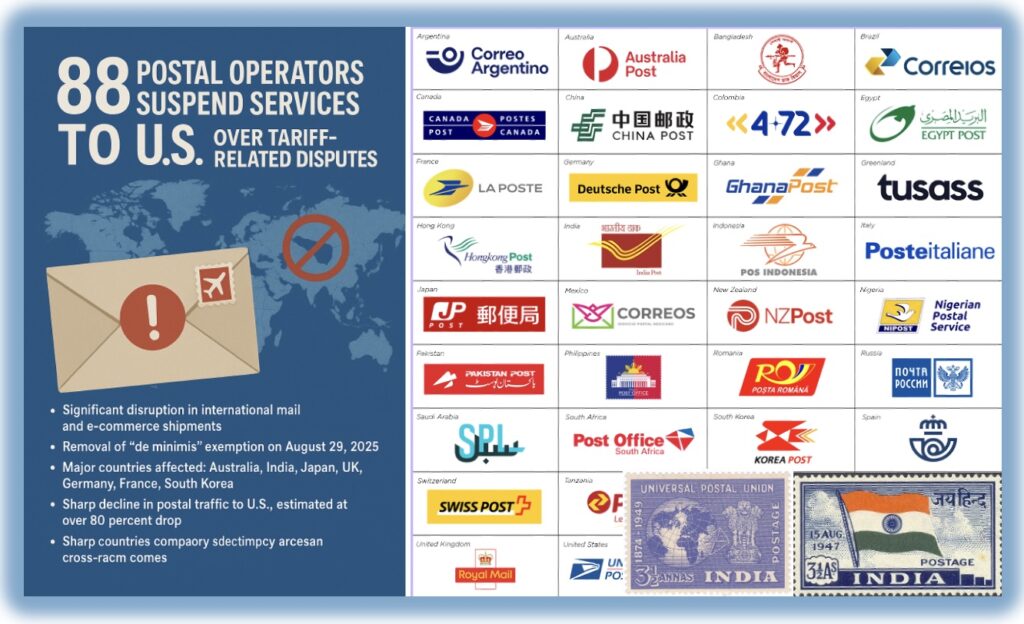
The United Nations reported 88 postal operators suspended services to the U.S. over tariff-related disputes:
The recent suspension of postal services to the United States by 88 postal operators worldwide marks a significant disruption stemming from the elimination of the U.S. “de minimis” exemption on August 29, 2025. This exemption previously allowed goods valued at $800 or less to enter the U.S. duty-free, facilitating smooth international mail and e-commerce shipments. Its removal has forced postal operators from 78 UN member states and 9 territories to halt or partially suspend parcel deliveries to the U.S., citing logistical challenges and the inability to comply with the new customs and tariff regulations. Major countries affected include Australia, India, Japan, the United Kingdom, Germany, France, and South Korea among others, many of which temporarily paused services due to the abrupt changes.
The policy change requires all shipments entering the U.S. to now pay customs duties and go through more complex clearance procedures, placing the onus on carriers or approved third parties to manage the duty remittance. Many carriers are unwilling or ill-equipped to handle these responsibilities, leading to the suspension crisis. This has resulted in a sharp decline in postal traffic to the U.S., estimated at over an 80 percent drop, severely impacting global supply chains and cross-border e-commerce. The shift disrupts historical patterns where millions of low-value packages entered the U.S. duty-free annually, a system critical for affordable international shopping and small businesses.
The Trump administration defends this aggressive move by citing concerns over illegal goods, including narcotics entering the U.S. through low-scrutiny shipments, along with arguments that the exemption gave unfair advantage to foreign companies. However, the move has left businesses scrambling to adapt, with many facing increased costs, slower deliveries, and operational turmoil. Postal organizations and the Universal Postal Union (UPU) are actively working on solutions like the “Delivered Duty Paid” system to enable postal operators to collect duties before shipment, aiming to restore and streamline international mail services to the U.S.
For consumers and businesses, the end of the de minimis exemption means higher prices, reduced product selection, and disruptions in international shipping. Retailers and marketplaces that thrived on the old system are now rethinking their U.S. strategies to cope with higher tariffs and compliance demands. This global postal suspension exemplifies the wide-reaching repercussions of the policy shift, highlighting how a single trade regulation can unsettle international commerce and connectivity in the digital age. The coming months will be critical as postal services work to adjust and resume normal parcel deliveries while businesses and consumers brace for the lasting impact.
In this context, “postal services” generally refer to national postal authorities and their international mail systems. Courier companies like DHL, FedEx, etc. operate separately from these postal services and have not been part of the reported suspensions linked to the U.S. tariff changes. These courier services continue to operate independently with their own customs clearance processes, so their service to and from the U.S. is not usually affected by changes in postal tariff agreements.