The American Deep State’s Geopolitical Strategy: From the USSR to China and the Emerging India – PART 2
Beyond the Deep State—Iran, Trump, and the Path to Multipolarity
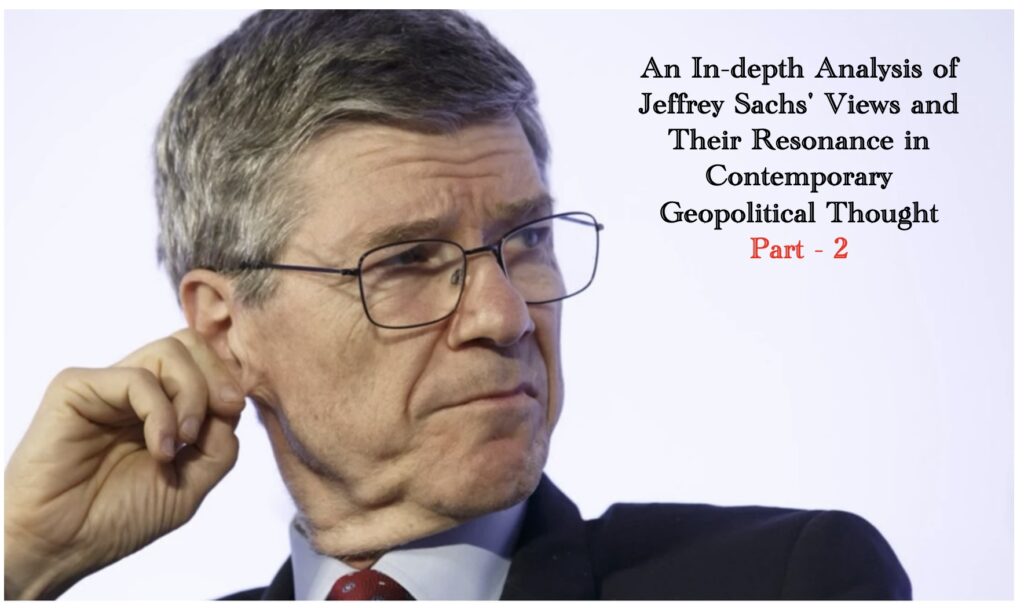
Continuing the exploration of Jeffrey Sachs’ analysis, Part 2 focuses on the role of Iran within the American deep state’s strategic framework and critiques of former President Donald Trump’s foreign policies. Sachs also outlines his visionary call for global governance reforms and multipolar cooperation.
Iran: More than Israel's Responsibility
Contrary to the belief that Iran is “left for Israel to handle,” Sachs situates U.S. policy toward Iran firmly within the deep state’s long-term confrontational agenda. The CIA, Pentagon, and intelligence agencies drive a continuity of sanctions, military presences, and covert actions against Iran, paralleled yet amplified by Israeli strategic goals, notably under Netanyahu’s leadership. The infamous 1996 “Clean Break” strategy provided a blueprint for regime change targeting Iran.
“The drumbeat of war with Iran, including airstrikes and naval deployments, risks escalating into a wider conflict. There is no realistic way to ‘defeat Iran’ militarily given its alliances with Russia and China.” — Sachs, 2025
Trump and the Deep State Continuity
Though Donald Trump projected himself as an outsider opposing the military-industrial complex, Sachs argues his trade wars and tariff policies were erratic and protectionist, ultimately reinforcing deep state agendas rather than challenging them. Sachs estimates a global economic loss of around $10 trillion due to these policies.
“Trump portrays his trade wars as pro-working class, but they serve American power politics… his presidency did not fundamentally challenge the deep state agenda.” — Jeffrey Sachs, 2025
Trump’s contradictory stance—wishing for friendly ties with Putin while escalating conflicts with China and India—exemplifies the complex limitations presidents face against the entrenched deep state.
Sachs’ Vision: A Multipolar World Order
Sachs calls for a fundamental shift from unipolar U.S. dominance to a multipolar world respecting sovereignty and international law. He advocates reforming international institutions like the UN Security Council to include emerging powers such as India, enabling stable and peaceful trade corridors across South Asia and Eurasia.
Key recommendations include:
Resolving regional border disputes to foster trust
Promoting diversified economic partnerships beyond Western hegemony
Building inclusive global governance grounded in cooperation and law
“We must move beyond unipolar dominance toward a genuine multipolar world respecting sovereignty and international law.” — Jeffrey Sachs, multiple speeches, 2024-2025
Closing Thoughts
Jeffrey Sachs reveals an American deep state continually shaping U.S. foreign policy through covert, institutionalized means, with strategies of containment evolving from the Cold War to today’s complex global landscape. His analysis urges emerging powers, especially India, to recognize these realities early and fortify their strategic autonomy through diversified partnerships and diplomatic vigilance.
This synthesis is not only a critique but a roadmap toward a more balanced and cooperative global order—one that transcends the shadows of deep state agendas.
Disclaimer: This article is a curated synthesis based on multiple talks, interviews, podcasts, and YouTube presentations by economist and public policy analyst Jeffrey Sachs. The content has been compiled and contextualised by TNT News to provide an informed overview of Sachs’s perspectives on NATO expansion, the Ukraine conflict, U.S. foreign policy, and evolving global geopolitical dynamics.