The American Deep State’s Geopolitical Strategy: From the USSR to China and the Emerging India – PART 1
The American Deep State and Its Global Containment Strategy
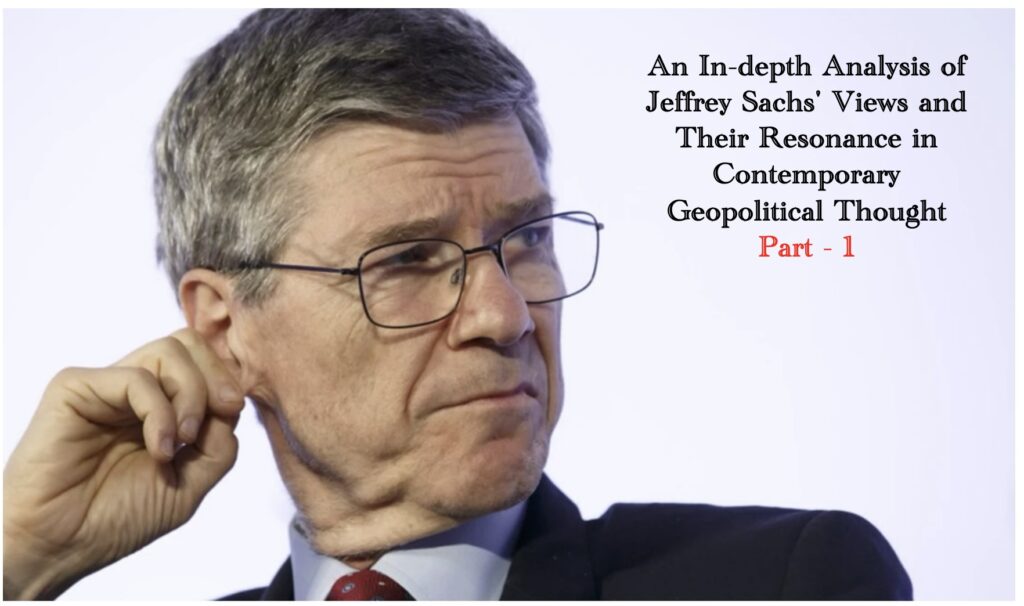
In recent decades, an unelected and largely invisible national security bureaucracy—the “American deep state”—has shaped U.S. foreign policy, argues economist Jeffrey Sachs. This permanent apparatus, established after World War II, pursues a relentless agenda: to contain and dismantle any rising global power that threatens U.S. dominance. From the Soviet Union to Russia, then China, and now potentially India, this covert strategy continues regardless of which president sits in the Oval Office.
Sachs traces the origins of this deep state to the National Security Act of 1947, which created permanent institutions like the CIA and the Joint Chiefs of Staff. These entities, he warns, operate beyond public or congressional oversight and have become the “President’s private army,” wielding power far beyond their intended national defence role.
“The permanence and unaccountability of the CIA in my mind is the single biggest structural liability of the U.S. system… this unaccountable ‘state within a state.” — Jeffrey Sachs, 2025
Sachs unveils a decades-long strategy of encirclement and containment that has evolved with shifting targets:
Containing the USSR and Russia
Despite promises made during the Cold War’s end that NATO would not expand eastward, successive U.S. administrations pushed alliances deep into Eastern Europe. Sachs calls this a strategic betrayal and an attempt to surround Russia geopolitically, crippling its influence. He cites Zbigniew Brzezinski’s 1997 book, The Grand Chessboard, which laid the intellectual foundation for this approach:
“No Eurasian challenger should be allowed to emerge, capable of dominating Eurasia and thus challenging the United States.” — Brzezinski, 1997
The U.S. support for the 2014 coup in Ukraine and ongoing military aid exemplifies efforts to destabilize Russia’s influence. Sachs also reveals how the South Caucasus region—Georgia, Armenia, and Azerbaijan—has been a chessboard in this containment game, with the U.S. seeking to disrupt Russia’s economic corridors and alliances.
The Rise of China and Its Containment
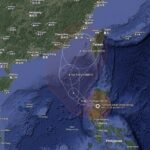
With Russia largely encircled, the focus shifted to China. Sachs highlights measures like economic sanctions, trade restrictions, technology bans, and military alliances designed to halt China’s rise as a global multipolar power. Taiwan emerges as a critical flashpoint, where America’s military support is part of a broader deterrence and containment policy involving “strategic ambiguity” to prevent outright conflict while maintaining regional dominance.
“China advocates coexistence and multipolarity. The U.S. strategy trying to isolate China is misguided and ultimately futile given China’s scale.” — Jeffrey Sachs, 2025
India: The Emerging Third Target?
Following similar patterns, Sachs warns that India may soon face containment attempts. The strategies Sakhs describes include military pressure through expanded U.S. naval presence and arms deals with India’s neighbors, economic leverage via sanctions and trade controls, and diplomatic conditioning tied to U.S. market and multilateral influence. Neighboring countries like Pakistan, Bangladesh, Sri Lanka, and Myanmar could be used as leverage points in this encirclement strategy.
“If Russia and China are successfully contained, India’s growing geopolitical and economic stature will almost certainly invite similar encirclement.” — Sachs, 2025
Stay tuned for Part 2 — where we explore the role of Iran, the impact of U.S.-Israel relations, the complex legacy of Trump’s foreign policy, and Sachs’ vision for a new multipolar world order.
Disclaimer: This article is a curated synthesis based on multiple talks, interviews, podcasts, and YouTube presentations by economist and public policy analyst Jeffrey Sachs. The content has been compiled and contextualised by TNT News to provide an informed overview of Sachs’s perspectives on NATO expansion, the Ukraine conflict, U.S. foreign policy, and evolving global geopolitical dynamics.