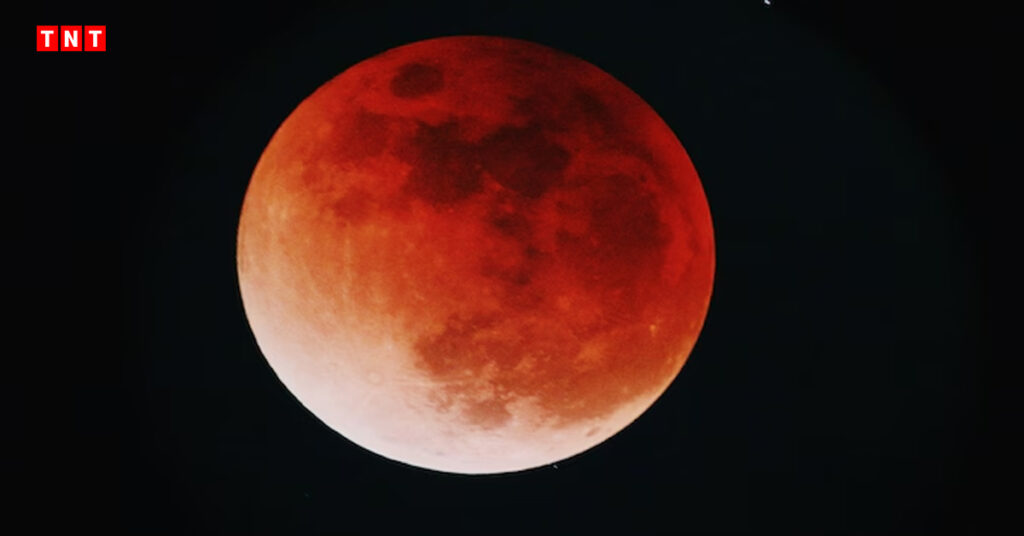
Blood Moon 2026: Date, Visibility & Viewing Guide
The night sky has always fascinated humanity, but every once in a while nature offers a rare celestial event that captures global attention. One such phenomenon is the Blood Moon, a dramatic version of a lunar eclipse that turns the Moon deep red. On March 3, 2026, skywatchers around the world will have the opportunity to witness this breathtaking astronomical event.
Also Read: AI Transforming IT Business Models: Opportunities & Risks
A Blood Moon is not just visually stunning; it also represents a remarkable alignment of the Sun, Earth, and Moon. For astronomers, photographers, and casual stargazers alike, this event offers both scientific interest and a memorable experience. Understanding why the Moon changes color and where it will be visible can make the experience even more exciting.
Also Read: Artemis II Mission Set for March 6: NASA’s Return to Lunar Orbit
What Exactly Is a Blood Moon?
A Blood Moon occurs during a total lunar eclipse, when Earth passes directly between the Sun and the Moon. During this alignment, Earth blocks direct sunlight from reaching the Moon. However, some sunlight still passes through Earth’s atmosphere and bends toward the Moon.
This filtered light contains more red and orange wavelengths, which gives the Moon its distinctive copper or reddish glow. The effect is similar to the colors seen during sunrise and sunset.
The deeper the Earth’s shadow and the atmospheric conditions at the time, the more dramatic the color becomes. Dust, pollution, and clouds in Earth’s atmosphere can make the Moon appear darker red or even brownish.
Also Read: Samsung Teases Next-Gen Innovation as Galaxy S26 Ultra Nears Official Debut
Why the Moon Turns Red
The red color during a lunar eclipse is caused by a scientific process called Rayleigh scattering. This is the same phenomenon responsible for colorful sunsets.
When sunlight passes through Earth’s atmosphere, shorter wavelengths like blue and violet scatter in different directions, while longer wavelengths such as red travel more directly. As the light bends toward the Moon, the red wavelengths dominate, bathing the lunar surface in a reddish glow.
In simple terms, during a Blood Moon you are essentially seeing all the sunsets and sunrises happening on Earth at the same time projected onto the Moon.
Also Read: India’s AI Leadership Vision Gains Global Spotlight at Major Tech Summit
When the March 3 Blood Moon Will Occur
The upcoming eclipse on March 3 will unfold in several stages, making it an event that lasts several hours.
Penumbral Eclipse Begins
The Moon enters the outer part of Earth’s shadow. The dimming is subtle and often difficult to notice.
Partial Eclipse Begins
Earth’s darker shadow begins to cover the Moon, creating a noticeable “bite” shape.
Total Eclipse Begins
This is when the Blood Moon appears. The Moon becomes fully immersed in Earth’s shadow and turns red.
Maximum Eclipse
The most dramatic moment, when the Moon is deepest in Earth’s shadow.
Eclipse Ends
The Moon gradually returns to its normal brightness.
These phases make lunar eclipses particularly enjoyable because viewers can observe the gradual transformation of the Moon.
Also Read: German Court Ruling Halts Acer & ASUS Sales Over Nokia HEVC Patent Dispute
Where the Blood Moon Will Be Visible
The visibility of a lunar eclipse depends on the time of night and the Moon’s position relative to different parts of the world.
The March 3 Blood Moon is expected to be visible across large regions of the planet, including:
- Parts of Asia
- Europe
- Australia
- Large sections of Africa
- Portions of North and South America
Observers in areas with clear skies will have the best viewing experience. Since lunar eclipses are safe to watch with the naked eye, anyone can enjoy the event without special equipment.
Even urban areas can offer good views if the Moon is high in the sky and light pollution is minimal.
Best Ways to Watch the Blood Moon
Watching a Blood Moon does not require expensive telescopes or scientific equipment. However, a few simple preparations can make the experience far better.
Find a Dark Viewing Spot
Light pollution from cities can reduce visibility. A park, open field, rooftop, or countryside location is ideal.
Check the Weather Forecast
Cloud cover can completely block the event. Monitoring the forecast ahead of time increases your chances of seeing the eclipse.
Bring Binoculars or a Telescope
While not necessary, these tools can reveal more details on the Moon’s surface during the eclipse.
Allow Time for the Entire Event
Unlike meteor showers that happen quickly, lunar eclipses unfold slowly. Spending time watching each phase makes the experience more rewarding.
Why Lunar Eclipses Are Special for Scientists
Astronomers use lunar eclipses as opportunities to study Earth’s atmosphere and the Moon itself. The color and brightness of the Moon during an eclipse can provide information about dust, pollution, and particles in the atmosphere.
Scientists also analyze how sunlight bends through Earth’s atmosphere, which can help improve climate models and atmospheric studies.
In recent years, lunar eclipses have even helped researchers understand conditions on other planets with similar atmospheric properties.
Cultural and Historical Significance
Blood Moons have held deep cultural meaning for centuries. Ancient civilizations often interpreted lunar eclipses as omens or messages from the gods.
In various cultures:
- Some believed the Moon was being swallowed by mythical creatures.
- Others saw eclipses as warnings or signs of major change.
- In certain traditions, people would perform rituals, prayers, or ceremonies during an eclipse.
Today, science explains the phenomenon clearly, but the sense of wonder remains unchanged.
Photography Tips for Capturing the Blood Moon
For photographers, a Blood Moon presents a unique opportunity.
Use a tripod to keep your camera stable.
Zoom lenses help capture detailed images of the Moon.
Manual settings allow better exposure control.
Take multiple shots during different phases of the eclipse.
The contrast between the dark sky and the glowing red Moon often creates dramatic photographs.
Why the March 2026 Eclipse Is Worth Watching
While lunar eclipses occur several times a decade, not every one is easily visible from populated regions. The March 3 Blood Moon stands out because many parts of the world will have a chance to see it.
Events like this also remind us how connected Earth is with the wider universe. Watching the shadow of our own planet fall across the Moon can be both humbling and inspiring.
For families, students, and astronomy enthusiasts, it is also an opportunity to learn more about space and science in a very visual way.
Also Read: Indian-Origin Asha Sharma Leads Microsoft Gaming
Conclusion
The Blood Moon on March 3, 2026, is more than just a beautiful sight in the sky. It represents a fascinating interaction between Earth, the Sun, and the Moon that humans have observed for thousands of years.
Whether you watch it casually from your balcony or plan a dedicated night of stargazing, the event promises a memorable experience. With clear skies and a little preparation, millions of people around the world will look up and witness the Moon glowing red — a reminder of the incredible cosmic dance happening above us every day.
FAQ: Blood Moon 2026: Date, Visibility & Viewing Guide
1. What causes a Blood Moon?
A Blood Moon occurs during a total lunar eclipse when Earth blocks sunlight from directly reaching the Moon, allowing only red light filtered through Earth’s atmosphere to illuminate it.
2. Is it safe to watch a lunar eclipse with the naked eye?
Yes. Unlike solar eclipses, lunar eclipses are completely safe to watch without protective glasses.
3. How long does a Blood Moon last?
The total eclipse phase typically lasts between 30 minutes to over an hour, while the entire eclipse event can span several hours.
4. Do I need a telescope to see the Blood Moon?
No. The Moon is easily visible without equipment, although binoculars or telescopes can enhance the experience.
5. Will the March 3 Blood Moon be visible in India?
Visibility depends on the exact timing of the eclipse and local conditions, but many regions across Asia are expected to witness at least part of the event.