Russia’s Economic Condition Amid the Ukraine War: Assessment and Future Expectations
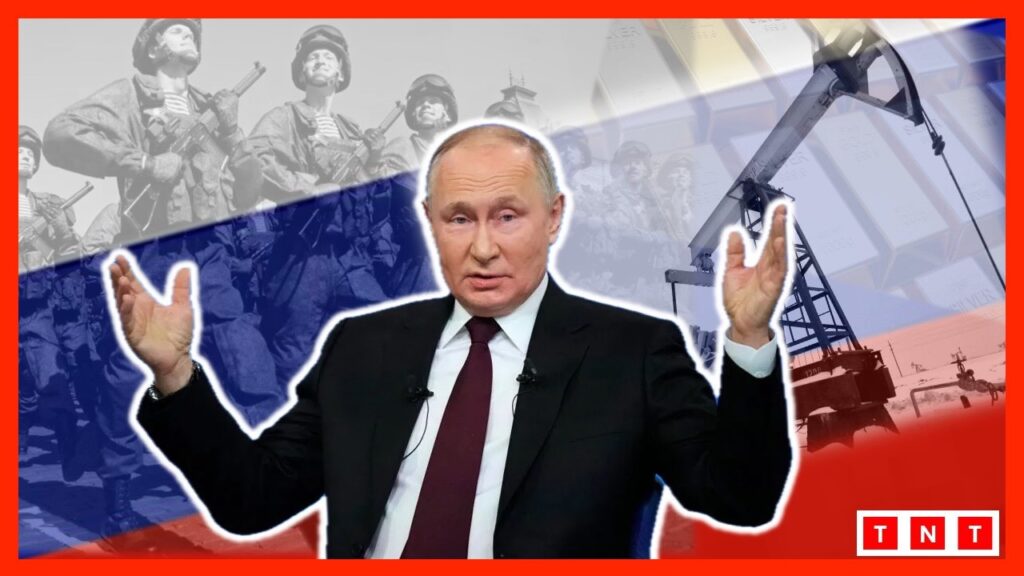
As the Russia–Ukraine war enters its fifth year in February 2026, Russia’s Economic Condition has emerged as a central concern for policymakers, investors, and international observers assessing the long-term impact of the conflict. Despite unprecedented Western sanctions since February 2022, Moscow has avoided economic collapse. However, the apparent resilience masks deepening structural weaknesses.
Russia continues to finance a costly military campaign that has reportedly resulted in nearly 1.2 million casualties. At the same time, war-related spending now absorbs close to 40 per cent of federal expenditure. While emergency measures and trade redirection have stabilised short-term indicators, long-term sustainability remains uncertain.
Economic Buffers and Adaptive Strategies
Record Reserves and Gold Accumulation
Russia’s financial buffers remain one of its strongest defensive tools. As of January 2026, international reserves reached a historic $826.8 billion. This increase was driven largely by currency revaluations and energy revenues.
These reserves are sufficient to cover between 18 and 24 months of imports or wartime expenditure. In addition, Russia holds around 2,326 tonnes of gold, ranking fifth globally. With gold prices more than doubling since early 2024 and reaching nearly $4,815 per ounce, the value of these holdings exceeds $220 billion.
This accumulation has gained importance as nearly $330 billion of Russian assets remain frozen abroad. Gold and yuan-based reserves now function as Moscow’s principal financial shield against external pressure.
Energy Export Realignments
Despite Western embargoes, Russia has successfully redirected much of its energy trade. Diesel exports rose by 19% in January 2026 to four million tonnes. New markets, particularly in Latin America, have absorbed surplus supply.
Liquefied Natural Gas (LNG) exports from the Yamal project remain significant. In January alone, the European Union absorbed 93% of output, generating nearly $1.3 billion ahead of a planned 2027 ban.
Crude oil exports have increasingly shifted towards China. Chinese imports rose by 36% to 1.5 million barrels per day. However, Indian purchases fell sharply following diplomatic pressure from Washington.
Meanwhile, metals and fertilisers contributed to a $50 billion trade surplus in 2025. This surplus supported the rouble, which stabilised between 90 ~ 95 per dollar.
Military-Industrial Expansion and Labour Stability
Defence spending now accounts for 38% of the 2026 budget, amounting to nearly $200 billion. This investment produced a 20% rise in arms manufacturing in 2025.
As a result, unemployment remains low at 2.8%. Real wages increased by approximately six per cent. Public debt also remains below 20% of GDP, limiting sovereign risk.
Officials argue that productivity reforms and industrial consolidation could add up to one per cent to annual growth. Furthermore, taxation reforms have reduced oil’s share of budget revenues from 50% to about 25%.
GDP Performance and Wartime Economic Momentum
Despite unprecedented sanctions and trade restrictions, Russia has maintained moderate economic momentum during the war years. After initial disruption in 2022, GDP expanded from earlier 1.4% growth to about 4.1% in both 2023 and 2024, driven largely by defence manufacturing, state investment, and redirected exports. Although growth slowed to nearly 1% in 2025 (and 1.3% projected for 2026) these figures indicate that wartime mobilisation has partially compensated for losses in civilian sectors. This pattern reflects a shift towards a state-led, militarised growth model, where fiscal stimulus and industrial support have cushioned external shocks, even as long-term productivity and innovation continue to weaken
Structural Pressures and Fiscal Stress
Falling Energy Revenues and Sanctions Enforcement
Despite export diversification, energy revenues are declining. In January 2026, oil and gas tax receipts fell by 50% year-on-year to $5.1 billion. This figure represents the lowest level recorded under President Putin.
In 2025, total energy revenues declined by 24% to $111 billion. Forecasts suggest another 30% fall in 2026, driven by weak prices and tougher enforcement.
The shadow tanker fleet faces growing restrictions. By early 2026, more than 600 vessels had been sanctioned. Detentions in Asia and Europe disrupted logistics chains. As a result, Baltic Sea exports may fall by half.
In addition, new US-India Trade Agreements have reduced India’s appetite for discounted Russian oil although India has officially denied. Officials now anticipate a revenue shortfall of nearly $29 billion.
Budget Deficits and Depletion of Wealth Funds
Russia’s fiscal position is deteriorating. The 2025 deficit reached 2.6% of GDP, equivalent to $72.9 billion. This represented a 63% increase from the previous year.
For 2026, projections range between 3.5 and 4.4%. Revenue gaps could exceed $39 billion if current trends persist.
To compensate, Moscow has accelerated gold sales. Since May 2022, National Wealth Fund gold holdings have fallen by 71% to 160 tonnes. Further disposals in 2025 amounted to nearly $30 billion.
Liquid assets in the fund have declined by 55% since the invasion. Therefore, despite record headline reserves, liquidity constraints are emerging.
Inflation, Interest Rates, and Civilian Slowdown
Macroeconomic pressures are intensifying. GDP growth slowed to ~1% in 2025, down from 4.3% in 2024. Projections for 2026 remain ~1.3%.
Interest rates stand at 18 per cent, discouraging private investment. Inflation rose to 6.4% in early 2026. A 22% VAT hike pushed food prices up by nearly 25%.
Labour shortages persist due to casualties and emigration. Civilian manufacturing continues to stagnate. Consumer demand is weakening, particularly in urban regions.
Ukraine’s External Support and Its Economic Impact on Russia
Western support for Ukraine continues to shape Russia’s economic burden. Since 2022, total commitments exceed $200 billion.
The European Union approved €90 billion in assistance for 2026–27. The United Kingdom pledged £3 billion annually until 2030. NATO members collectively provide nearly $46 billion each year.
Although US aid has shifted towards diplomacy under President Trump, European and NATO funding has compensated. This sustained assistance enables Ukraine to maintain pressure on Russian infrastructure.
Drone attacks on refineries and transport hubs have increased repair costs and disrupted output. Each strike compounds fiscal strain and raises insurance premiums for exporters.
The February 2026 Abu Dhabi talks produced only limited humanitarian outcomes. Territorial disputes remain unresolved, prolonging economic uncertainty.
Future Outlook and Negotiation Implications
Short-Term Runway and Medium-Term Risks
Current estimates suggest Russia possesses a financial runway of six to twelve months before severe constraints emerge. If present trends continue, reserve erosion could accelerate by mid-2027.
Optimistic scenarios depend on sustained gold prices, stable Chinese demand, and easing inflation. Under such conditions, growth may stabilise near two per cent.
However, downside risks dominate. A global slowdown, intensified sanctions, or oil prices below $60 per barrel could triple deficits. In such a case, austerity measures would become unavoidable.
Post-War Adjustment Challenges
An abrupt end to hostilities carries its own risks. Nearly 2.4 million demobilised soldiers would re-enter civilian life, many lacking transferable skills. Defence industries would contract sharply.
Short-term unemployment could rise. Regional economies dependent on military contracts would suffer. Therefore, even peace would trigger transitional instability.
Strategic Position in Negotiations
Economic pressures may gradually influence Moscow’s negotiating posture. Limited ceasefire concessions could emerge to ease financial stress, especially under renewed US mediation.
Nevertheless, President Putin continues to frame territorial control as non-negotiable. Analysts from CSIS and ISW argue that Russia risks becoming a second-tier economic power, lacking technological competitiveness and facing demographic decline.
No Russian firm currently ranks among the world’s top 100 corporations. This reflects widening gaps in innovation and productivity.
Will Russia Soften in the Next Negotiations?
Russia is unlikely to soften fundamentally in the next negotiation round. Current buffers provide a six to twelve-month window to absorb pressure while betting on Western fatigue or diplomatic recalibration. However, if oil prices fall further or reserves erode more rapidly, limited concessions on ceasefires or borders could emerge by mid-2026 to prevent deeper recession. Until then, the balance remains tilted towards stalemate unless external shocks force a strategic shift.
Any spike in oil prices driven by Middle East (US-Iran) conflict could provide a temporary fiscal boost to Russia and help sustain its war effort in the short term. Yet this effect is conditional, potentially volatile, and unlikely on its own to fundamentally alter Russia’s broader economic challenges.
Final Assessment
Russia’s Economic Condition Amid the Ukraine War: Assessment and Future Expectations reveals a fragile balance between resilience and erosion. Strong reserves, energy realignments, and military-led growth have sustained short-term stability. However, declining revenues, rising deficits, and shrinking sovereign funds expose deep vulnerabilities.
The longer the conflict persists, the more distorted the economic structure becomes. Civilian sectors weaken while fiscal dependency on defence spending intensifies. Without a political settlement, Russia faces prolonged stagnation and declining global influence.
For Moscow, economic logic increasingly favours de-escalation. Whether strategic calculations will align with financial realities remains uncertain. What is clear is that the cost of continuation is rising steadily, and the margin for error is narrowing.