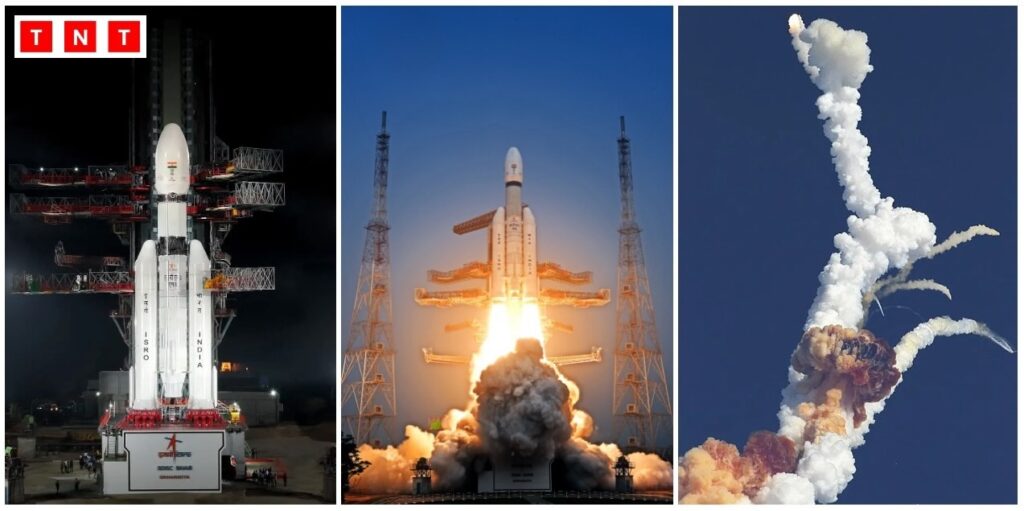
ISRO Mission Failures: Technical Setbacks or a Security Warning?
India’s space programme has long been regarded as one of the country’s most credible technological achievements. Operating on limited budgets, the Indian Space Research Organisation has consistently delivered high-impact missions, from the Mars Orbiter Mission in 2014 to the successful Chandrayaan-3 lunar landing in 2023. These achievements earned India global recognition for innovation, discipline, and efficiency.
However, in recent years, a series of ISRO mission failures has raised difficult questions about reliability, institutional safeguards, and system resilience. Especially since 2018, several important launches have encountered serious setbacks. Although ISRO has officially attributed these incidents to technical faults, the repeated involvement of strategic payloads has triggered debate over whether deeper scrutiny is required.
In an era where space assets form the backbone of national security and economic planning, even isolated failures carry long-term consequences.
A Timeline of Setbacks Since 2018
ISRO’s overall success rate remains high by international standards. Nevertheless, certain failures since 2018 have had disproportionate impact because of the nature of the missions involved.
In March 2018, communication satellite GSAT-6A became unusable after losing contact following orbit-raising manoeuvres. The agency later identified a power system anomaly as the cause. In September 2019, Chandrayaan-2 suffered a major setback when the Vikram lander lost control during descent and crashed on the Moon’s surface, even though the orbiter continued to function.
In August 2021, EOS-03, also known as GISAT-1, failed after the cryogenic upper stage of its GSLV launch vehicle did not perform as expected. A year later, in August 2022, the maiden SSLV mission placed its satellites into an unstable orbit due to sensor-related errors.
More recently, in May 2025, PSLV-C61 failed after a third-stage pressure anomaly, leading to the loss of EOS-09, a strategically important Earth observation satellite. In January 2026, PSLV-C62 experienced a similar malfunction, resulting in the loss of sixteen satellites, including a defence-related payload.
Although such incidents represent only a small fraction of ISRO’s launches, the clustering of failures in sensitive missions has drawn attention.
Strategic Significance of the Failed Missions
Many of the affected satellites were designed for Earth Observation, border monitoring, disaster management, and military surveillance. These systems support intelligence gathering, infrastructure planning, and emergency response.
When such assets fail, the consequences extend beyond financial loss. Operational gaps emerge in national monitoring systems. Data dependency on foreign sources increases. Strategic preparedness suffers. As a result, every major ISRO mission failure now receives scrutiny at the highest levels of government.
The consecutive PSLV anomalies in 2025 and 2026 were particularly concerning because the launcher had previously maintained an exceptional success record. These incidents challenged assumptions about the reliability of mature systems.
Government Attention and Institutional Response
Following the 2026 failure, ISRO initiated comprehensive technical reviews. Investigative teams examined manufacturing records, testing protocols, and flight telemetry. Plans for corrective launches were prepared for mid-2026.
In January 2026, National Security Advisor Ajit Doval reportedly visited the Vikram Sarabhai Space Centre as part of a broader security assessment ordered by the Prime Minister. Although official statements later emphasised technical causes, the visit reflected the seriousness with which the government viewed the situation.
Such attention underscores the growing recognition that space infrastructure is now part of India’s core strategic architecture.
Looking Beyond Engineering Explanations
Space missions are inherently complex. Minor deviations in materials, calibration, or integration can lead to catastrophic outcomes. Therefore, technical explanations for failures are often valid.
However, analysts argue that repeated anomalies in similar subsystems deserve deeper examination. The identical third-stage pressure issues in two successive PSLV missions suggest potential systemic weaknesses. These could arise from subtle manufacturing defects, process changes, or quality-control gaps.
In this context, independent audits, enhanced process validation, and third-party verification become essential tools for institutional learning.
Could Sabotage Be a Factor?
Sabotage in modern space programmes is extremely difficult. ISRO operates under multi-layered security, extensive testing, and strict access controls. Nevertheless, security experts acknowledge that no system is entirely immune.
The most plausible risk involves insider threats. Personnel with authorised access could theoretically introduce minor defects during assembly or testing. Supply chain compromise is another possibility, although vendor verification systems reduce this risk. Cyber interference during software integration is also conceivable, though PSLV’s inertial navigation limits real-time vulnerability.
Physical tampering at launch sites remains highly improbable due to constant surveillance.
Importantly, repeated failures with similar signatures generally point towards technical or procedural issues rather than deliberate action. Current investigations have found no evidence of foul play.
Why Technical Causes Remain the Dominant Explanation
Available data indicates that ISRO’s recent failures align more closely with engineering and production challenges than with external interference. Ageing infrastructure, manufacturing variability, bonding defects, and testing oversights are common causes in mature space systems worldwide.
Telemetry and sensor records usually enable engineers to trace such problems accurately. These records have so far supported technical explanations in ISRO’s case.
International experience also suggests that periods of rapid expansion often coincide with temporary quality-control stresses.
Reforms and Systemic Improvements
ISRO has historically demonstrated an ability to learn from failure. After Chandrayaan-2, extensive redesigns led directly to the success of Chandrayaan-3. A similar reform cycle is now underway for launch vehicles.
Recent measures include strengthened quality audits, expanded private-sector participation, digital component tracking, improved simulation facilities, and upgraded cybersecurity systems.
These reforms aim to restore confidence while supporting India’s growing commercial and strategic space ambitions.
Public Debate and the Role of Transparency
Public confidence in India’s space programme remains strong. However, social media speculation and geopolitical tensions often amplify fears of sabotage and foreign interference.
Transparent communication remains the most effective response. Detailed briefings, publication of investigation findings, and independent reviews help counter misinformation and reinforce credibility.
Readers can follow TNT’s coverage of ISRO https://tattvamnews.com/ and the official mission updates are available at: https://www.isro.gov.in
India’s Space Ambitions and the Way Forward
India is preparing for major milestones, including the Gaganyaan human spaceflight programme, indigenous space station modules, and expanded commercial launch services. These ambitions require consistent reliability and institutional maturity.
Every ISRO mission failure, therefore, carries lessons for the future. Rigorous audits, secure supply chains, skilled manpower development, and transparent governance will determine long-term success.
Space Minister Jitendra Singh has repeatedly stated that no confirmed sabotage has been detected so far. At the same time, he has emphasised the need for continuous improvement.
In an age of technological competition and strategic uncertainty, India cannot afford complacency in space. Vigilance, reform, and innovation will remain essential if the country is to preserve its hard-earned leadership in this critical domain.