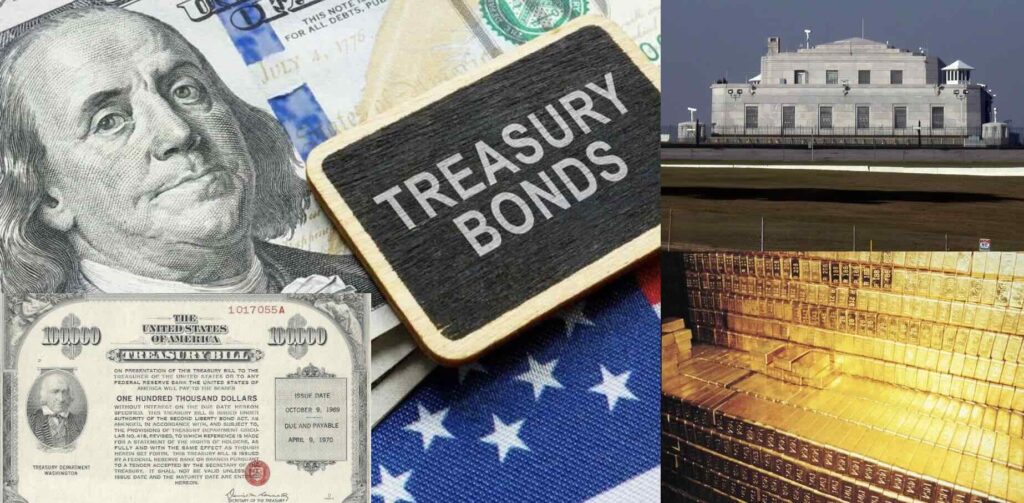
India’s Bold Reserve Realignment: A 21% Cut in US Treasuries Signals Deeper De-Dollarisation
India has executed a decisive shift in its foreign exchange management during a year defined by geopolitical tension and global economic uncertainty. In 2025, the Reserve Bank of India (RBI) reduced its holdings of US Treasury securities by 21%, marking the first annual decline in four years. This adjustment forms a central pillar of India’s de-dollarisation strategy, reflecting a deliberate move away from excessive reliance on dollar-denominated assets.
US Treasury holdings fell from USD 241.4 billion in October 2024 to USD 190.7 billion by October 2025. This occurred despite US Treasury yields remaining attractive, averaging above 4% throughout the year. Simultaneously, India accelerated gold accumulation, pushing reserves to historic levels. With total foreign exchange reserves now exceeding USD 700 billion, the realignment signals both confidence and caution in India’s long-term financial positioning.
The Treasury Sell-Off: A Calculated Reduction
India’s divestment from US Treasuries amounted to approximately USD 50.7 billion over the year. As a result, holdings fell below the USD 200 billion mark for the first time in recent memory. However, this reduction was not driven by market panic or short-term volatility. Instead, it reflects a strategic reassessment of risk exposure.
Throughout 2025, US bond yields remained largely stable. The 10-year Treasury note hovered near 4.16% by year-end, declining only modestly from 2024 levels. Therefore, yield erosion was not the primary trigger. Analysts instead point to rising US sovereign debt, potential tariff escalations under the new US administration, and persistent global uncertainty.
Other major holders, including Japan and China, also adjusted their Treasury positions. However, India’s reduction was among the most pronounced. This underscores India’s growing economic confidence and willingness to recalibrate reserve composition proactively rather than reactively.
The Gold Accumulation Drive: Strengthening Strategic Resilience
Alongside the Treasury reduction, the RBI significantly increased its gold reserves. By September 2025, holdings reached approximately 880 metric tonnes, valued at over USD 102 billion. Gold now accounts for 13.6% of India’s total forex reserves, up sharply from 9.3% in 2024.
This surge was driven by both fresh purchases and rising global bullion prices. In June alone, the RBI added nearly half a tonne of gold. Furthermore, India continued its policy of repatriating gold from overseas vaults to domestic storage, reinforcing sovereign control over assets.
Gold’s appeal lies in its role as a hedge against inflation, currency depreciation, and financial sanctions. In a year marked by currency volatility and geopolitical strain, this strategy proved prescient. According to World Gold Council data, India now ranks among the world’s top ten central bank gold holders.
The Dollar’s Turbulent Year: A Catalyst for Diversification
The US dollar experienced one of its weakest years in nearly a decade. In 2025, the US Dollar Index (DXY) declined by 9.4%, marking its steepest annual fall since 2017. From a level of 108.44 at the end of 2024, the index dropped to 97.82 by September 2025.
The first half of the year alone saw an 11% decline, the sharpest six-month fall in over 50 years. This weakness stemmed from US policy shifts, interest rate cuts, and renewed trade uncertainties. As a result, the risks associated with heavy dollar exposure intensified for reserve-holding nations.
Broader measures, such as the Nominal Broad US Dollar Index, reflected similar trends. These developments strengthened the case for diversification and reinforced the logic behind India’s de-dollarisation strategy.
BRICS and the Expanding De-Dollarisation Momentum
India’s reserve realignment aligns closely with the broader de-dollarisation discourse within the BRICS bloc. At the 2025 BRICS Summit, member nations expressed serious concerns over US tariffs and non-tariff measures. They reiterated commitments to expand trade settlement in local currencies.
Pilot initiatives for a BRICS-based payment system progressed during the year. While full implementation remains in early stages, a growing share of intra-BRICS trade has already shifted to non-dollar currencies, including the Chinese yuan and Russian rouble.
Although a complete replacement of the dollar is neither imminent nor straightforward, the direction is clear. BRICS expansion and sustained policy coordination point towards a gradually emerging multipolar financial order. Nevertheless, challenges related to currency stability, liquidity, and trust remain significant.
What This Means for India and Global Finance
For India, this reserve realignment enhances resilience against external shocks. By reducing exposure to dollar volatility and strengthening gold buffers, the RBI safeguards the nation’s expanding forex reserves. Gold’s strong performance in 2025 further supports the strategic rationale behind this shift.
Critics argue that reduced Treasury exposure could limit stable interest income if the dollar rebounds. However, India appears willing to trade short-term yield certainty for long-term strategic security. Globally, similar moves by large economies could incrementally raise US borrowing costs and reshape capital flows.
As 2026 unfolds, developments within BRICS and policy responses from the United States will remain critical indicators. Together, they may well define the next chapter of global financial realignment.