Venezuela in Turmoil: Post-Maduro Chaos, Security Threats, and the Reluctant U.S. Oil Giants
On January 3, 2026, Venezuela entered uncharted territory. U.S. special forces carried out a high-risk operation in Caracas that resulted in the capture of President Nicolás Maduro and his wife, Cilia Flores. The Trump administration labelled the raid “Operation Just Cause,” drawing explicit parallels with the 1989 U.S. intervention in Panama. President Donald Trump described the mission as a decisive blow against “narco-terrorism,” citing Maduro’s U.S. indictments and Venezuela’s role in global drug trafficking networks.
More than a week later, Venezuela remains engulfed in unrest. The removal of Maduro has not delivered stability. Instead, it has deepened political fractures, weakened internal security, and intensified economic uncertainty. While Washington pushes for rapid recovery through oil-sector investments, U.S. oil giants remain notably reluctant.
Political Instability and the Emerging Power Vacuum
The operation’s success exposed serious fractures within Venezuela’s power structure. Reports indicate that insiders assisted U.S. forces by disabling air defences and supplying precise coordinates. These suspicions culminated in the arrest of General Javier Marcano Tábata between January 7 and 10. Once head of the Presidential Honor Guard and military counterintelligence, Tábata now faces charges of espionage, treason, and betrayal.
Gunfire accompanied his dismissal at his residence. The incident highlighted growing paranoia within the regime’s remnants. As one of Maduro’s closest confidants, his alleged defection underscored deep disloyalty within Venezuela’s military and intelligence apparatus.
An interim administration led by Delcy Rodríguez has since launched internal purges. Authorities released some political prisoners while cracking down on suspected collaborators. Protests have erupted across Caracas and other cities. Some demonstrators demand Maduro’s return. Others call for immediate elections.
Venezuela’s entrenched criminal geopolitics further complicate any transition. Drug trafficking networks, money laundering operations, and long-standing ties with Russia, China, and Iran remain intact. Analysts warn that removing Maduro alone does not dismantle these structures. Instead, rival factions may now compete more aggressively for control.
Security Breakdown and Rising Street-Level Violence
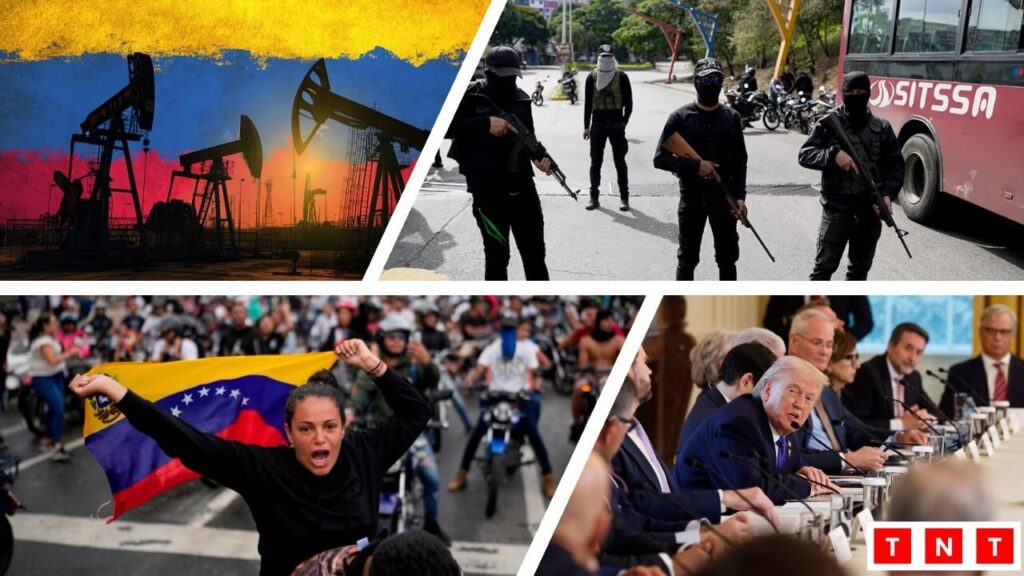
The political turmoil has triggered a sharp deterioration in security. Pro-Maduro paramilitary groups, known as colectivos, have mobilised across urban centres. Armed militias have erected roadblocks and checkpoints in Caracas and other cities. They reportedly search vehicles and mobile phones for signs of U.S. links or support for the raid.
Videos circulating on social media show colectivos patrolling on motorbikes, creating a climate of fear. Explosions and sporadic gunfire have forced residents indoors. The atmosphere remains volatile and unpredictable.
On January 10, the U.S. State Department issued an urgent security alert. It advised all American citizens to leave Venezuela immediately if conditions allowed. The advisory reaffirmed Venezuela’s Level 4 “Do Not Travel” status, citing risks of wrongful detention, kidnapping, violent crime, and terrorism.
With the U.S. embassy in Caracas suspended, consular assistance remains minimal. Reports of shelter-in-place orders and ongoing militia activity illustrate how quickly public order has collapsed. This breakdown has also stalled humanitarian access and disrupted daily life.
Oil Ambitions Meet Corporate Reluctance
Venezuela’s oil reserves sit at the centre of Washington’s strategy. The country holds the world’s largest proven reserves, yet production has fallen from more than three million barrels per day in the 1990s to under one million today. Years of mismanagement, sanctions, and infrastructure decay have hollowed out the sector.
President Trump has framed oil revival as both an economic and geopolitical priority. He argues that rapid investment could stabilise Venezuela, lower global energy prices, and advance U.S. interests. On January 9, Trump summoned executives from ExxonMobil, Chevron, and ConocoPhillips to the White House. He urged investments that could exceed $100 billion to modernise Venezuela’s oil industry.
The administration offered sweeping guarantees. These included physical security, revenue protections, and safeguards against future nationalisation. An executive order signed on January 10 sought to place Venezuelan oil revenues in U.S.-controlled accounts. Trump also demanded that Venezuela sever ties with Chinese and Russian energy firms.
Despite the pressure, U.S. oil giants refused to commit. ExxonMobil’s CEO Darren Woods reportedly described Venezuela as “uninvestable” under current conditions. Executives cited political instability, massive refurbishment costs, weak legal protections, and unresolved arbitration disputes from past expropriations.
Low global oil prices further undermine the business case. Industry leaders warned that returns could take decades. They insisted that legal reforms, contract clarity, and lasting security must come first.
International Fallout and Strategic Implications
The raid has polarised global opinion. Colombia has voiced support. Russia and China condemned the operation as imperial overreach. The United Nations and human rights organisations raised legal concerns and warned of escalation.
For Venezuela, the risk of humanitarian collapse looms large. Millions remain displaced. Public services are strained. Economic recovery hinges on oil, yet corporate hesitation delays any meaningful revival.
Trump’s aggressive posture, including threats of blockades and asset seizures, signals a confrontational U.S. approach. However, the reluctance of oil majors exposes a fundamental limit to political power when commercial risk remains high.
Venezuela now stands at a dangerous crossroads. The post-Maduro phase has delivered unrest rather than resolution. Militias patrol the streets. Political authority remains fragmented. Despite Washington’s ambitions, U.S. oil giants are unwilling to bet billions on instability.
For now, caution prevails. Until security, legality, and governance improve, Venezuela’s vast oil wealth will remain untapped, and its future uncertain.