Alleged Drone Attack on Putin’s Valdai Residence Remains Unproven as Peace Talks Hang in Balance
No Evidence Emerges for Alleged Ukrainian Drone Attack on Putin’s Residence
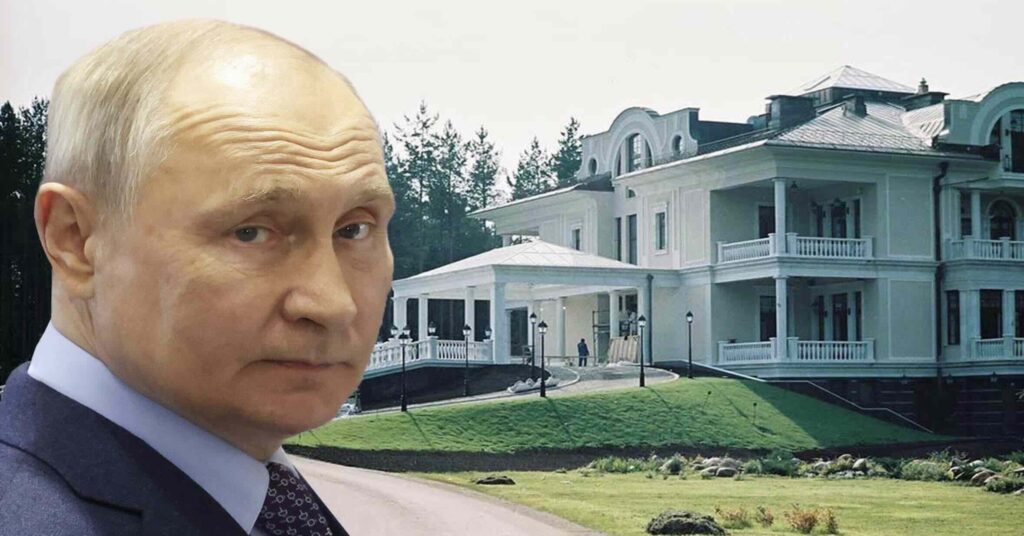
Russia’s claim that Ukraine launched a large-scale drone attack on President Vladimir Putin’s Valdai residence in north-western Russia remains unproven. As of December 31, 2025, no new evidence has emerged to support the allegation. Moscow first raised the claim following the night of December 28–29.
The alleged drone attack has surfaced at a sensitive moment. U.S.-brokered peace talks between Russia and Ukraine remain fragile, and diplomatic tensions continue to simmer.
The Kremlin maintains that 91 long-range Ukrainian drones targeted Putin’s official retreat near Lake Valdai in the Novgorod region. Russian officials say air defence systems intercepted all drones. They report no casualties and no damage.
Russia Stands by Claims, Declines to Offer Proof
Despite growing scrutiny, Russian authorities have refused to release supporting evidence. The Kremlin argues that a fully repelled attack does not require proof. Officials say the Defence Ministry handles operational details.
Foreign Minister Sergei Lavrov described the alleged incident as an act of “state terrorism.” He accused Ukraine of attempting to derail U.S.-led peace efforts. Kremlin spokesman Dmitry Peskov added that Russia is reviewing its negotiating position. He framed the incident as a direct threat to presidential security.
However, inconsistencies persist. Russia’s Defence Ministry earlier reported that air defences intercepted between 18 and 47 drones over the Novgorod region that night. This figure does not match later claims of 91 drones aimed at the Valdai residence.
Ukraine Rejects Allegations as Fabrication
Ukraine has firmly rejected the allegations. Kyiv has described the alleged drone attack as a fabrication designed to justify further Russian aggression.
President Volodymyr Zelenskyy dismissed the claim as propaganda. Foreign Minister Andrii Sybiha pointed to the lack of evidence and conflicting Russian accounts.
Ukrainian officials warned that such accusations could serve as a pretext for new strikes on government buildings in Kyiv. They recalled earlier attacks, including a missile strike on the Cabinet of Ministers complex in September 2025.
Independent Analysts Find No Corroboration
Independent assessments have further weakened Moscow’s narrative. The Institute for the Study of War reported no evidence supporting Russia’s claim. Analysts noted the absence of satellite imagery, debris, explosion footage, radar data, or eyewitness accounts.
Open-source intelligence groups detected no unusual activity near Valdai. Local residents reported hearing no explosions or air defence fire during the alleged attack window.
Many analysts believe the scale of the claimed operation makes silence implausible. They see the episode as an attempt to shape diplomatic positioning rather than a verified security incident.
Who Benefits from the Putin Residence Drone Allegation?
If the alleged drone attack proves false, analysts still see clear strategic motives behind the narrative. Russia does not require provocation to strike Ukrainian leadership or infrastructure. It has done so repeatedly without justification.
By portraying Ukraine as attempting to assassinate the Russian president, Moscow reframes itself as a victim. The claim hardens domestic opinion and strengthens internal cohesion. It also creates grounds to tighten negotiating positions.
The narrative plays a role abroad as well. It shapes perceptions in Washington at a moment when U.S. mediation remains central.
Ukraine, by contrast, gains little from such an act. A direct strike on Putin’s residence would mark extreme escalation. It would risk alienating key partners, especially the United States. It would also undermine diplomatic momentum at a time when Kyiv depends heavily on Western political and military support.
For President Zelenskyy, whose position relies on sustained international backing, such an operation would be strategically irrational.
Trump Reacts, Then Expresses Doubt
The controversy emerged days after Zelenskyy met U.S. President Donald Trump at Mar-a-Lago on December 28. Trump later said peace talks were “95% done,” though disputes remain over territory and the Zaporizhzhia nuclear plant.
After speaking with President Putin on December 29–30, Trump said he felt “very angry” about the alleged incident. He initially appeared to accept Putin’s account.
Trump later softened his stance. He acknowledged publicly that the attack “might not have happened,” reflecting uncertainty within the U.S. administration.
Kanwal Sibal Flags Diplomatic Damage from Zelenskyy’s Rhetoric
Former Indian Foreign Secretary Kanwal Sibal has argued that Ukraine’s denials face credibility issues. He pointed to President Zelenskyy’s Christmas Eve address on December 24.
In the speech, Zelenskyy spoke of a shared Ukrainian “dream.” Many interpreted the language as a veiled wish for President Putin to “perish,” though he did not name him.
Sibal described such rhetoric as unusual and diplomatically damaging. He said it helps explain why scepticism persists among international actors, including President Trump.
Sibal also defended Prime Minister Narendra Modi’s expression of “deep concern” over the alleged incident. He argued that India’s caution aligns with the tone of recent Ukrainian messaging.
Russia Signals Retaliation, But No Action Follows
Russian officials have issued strong rhetorical warnings. They have not announced concrete retaliatory steps.
Peskov said Russia’s armed forces “know how and when to respond.” Lavrov claimed that officials have identified targets and timing for retaliation.
Foreign Ministry spokeswoman Maria Zakharova said any response would not be diplomatic. Former president Dmitry Medvedev warned of a “reaction with war” and hinted at personal danger for Zelenskyy.
Symbolic signals also drew attention. Russia’s UVB-76 “Doomsday Radio” station broadcast Swan Lake, a transmission historically linked to political crises. Despite speculation, no military action followed.
International Responses Remain Muted
International reaction has remained limited. Ukraine criticised statements from India, the UAE, and Pakistan for expressing concern over unverified claims.
Kyiv argued that these responses ignored prior Russian strikes on Ukrainian cities.
As of December 31, no major escalation has occurred. Peace negotiations continue, though under visible strain.
Peace Process Remains Fragile
With no evidence produced and denials holding firm, the Alleged Drone Attack narrative highlights the risks posed by unverified claims. Analysts warn that perception management now carries as much weight as battlefield developments.
For now, the situation remains tense but static. Rhetoric continues to dominate. The future of the peace process will depend less on alleged incidents and more on whether restraint prevails.