Western Allies Align on Ukraine Peace Draft as Russia Signals Defiance
By International Correspondent
Berlin/Washington/Brussels/Moscow — December 18, 2025
Western and Ukrainian leaders have coalesced behind a high-stakes peace framework aimed at ending nearly four years of war in Ukraine. But Moscow’s reactions this week underscore deep divisions that could render even a meticulously negotiated draft plan moot. In parallel, European capitals are locked in a contentious summit over financing Ukraine’s defense and reconstruction, highlighting the fluid interplay between diplomacy, economics and military realities.
Western Alignment: A Draft Plan Ready for Moscow
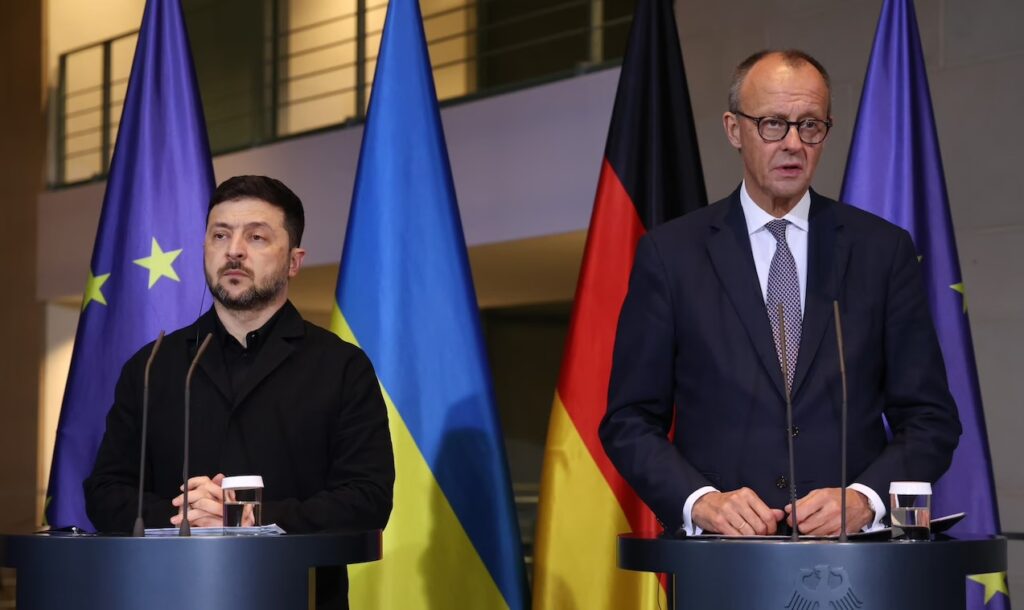
After intensive talks in Berlin on December 15–16, Ukrainian President Volodymyr Zelenskyy, senior U.S. envoys and European leaders unveiled a roughly 20-point draft peace document that U.S. officials claim resolves “90% of difficult issues.” The centerpiece remains robust post-ceasefire security guarantees, potentially resembling NATO-style commitments, designed to deter future attacks without formal NATO membership for Ukraine. These include provisions pointing to U.S. military obligations if Russia violates an agreed ceasefire.
Officials from Germany, the United Kingdom, France and Poland have publicly backed sustained support and potential deployment of a European-led multinational force, including training and equipment for Ukraine’s peacetime military structure.
Zelenskyy described the Berlin outcome as “very workable” and cautioned that formal presentation to Moscow could occur “within days” once final checks are completed. Yet, he reiterated Ukraine’s unwavering stance on territorial integrity, refusing to formally cede control of Crimea or the occupied Donetsk, Luhansk, Zaporizhzhia and Kherson regions without consent from the Ukrainian people — a non-starter for Russia.
Moscow’s Stance: Rejection with Strategic Posturing
In stark contrast, Russian President Vladimir Putin used high-level military meetings to reaffirm Moscow’s core demands and publicly reposition Russia’s aims:
-
Putin warned that if substantive peace talks fail, Russia will seek to extend its territorial gains in Ukraine, framing such expansion as securing a “buffer security zone” and “liberation of historical lands.”
-
Moscow insists Russia’s control over Russian-claimed regions — several internationally unrecognised annexations — should be solidified as preconditions for any settlement.
-
Putin rejected foreign troop deployments, labelling any NATO member presence as unacceptable, and stressed Moscow’s preference for achieving goals “by diplomacy or force.”
Kremlin spokespersons have minimised the notion of outright rejection while branding some peace terms “unacceptable,” asserting normal diplomatic bargaining.
Taken together, Russia’s messaging signals a strategic calculus: leverage battlefield control, international fatigue and geopolitical fractures to extract maximal concessions. Analysts caution that this reflects both political posturing and a real determination not to compromise core territorial aims.
EU Summit: Financing Ukraine Amid Diplomatic Deadlock
Parallel to the peace draft process, European Union leaders convened in Brussels on December 18 to confront one of the most sensitive issues yet — using frozen Russian sovereign assets to finance Ukraine’s defense and reconstruction.
-
The EU moved to indefinitely freeze approximately €210 billion in Russian central bank assets, bypassing routine six-month renewals to avoid veto threats from pro-Russian governments within the bloc.
-
Leaders debated backing a €90 billion “reparations loan” for Ukraine using this asset pool, with assurances that Kyiv would repay only if Russia pays war reparations.
-
Belgium’s government has demanded ironclad legal and security guarantees before assenting to the plan, resisting disproportionate liability for potential Russian retaliation or legal suits.
Ukrainian President Zelenskyy arrived in Brussels urging decisive action to utilize frozen assets, framing it as a message to Russia that Europe is unified and serious about deterrence.
The summit outcome remains unsettled as Hungary and other wary governments add complexity. Leaders acknowledged that any final package will influence both Ukraine’s immediate financial runway and the broader diplomatic tenor with Moscow.
The Ground Reality: Continued Hostilities and Strategic Uncertainty
While diplomatic maneuvers unfold, hostilities persist across the front lines. Both sides continue air and missile strikes, underscoring the harsh reality that negotiations are not matched by halts in combat.
Western defense officials reiterate that strategic patience and sustained aid are essential not only for Ukraine’s defense but also for broader European security. Some NATO members have publicly affirmed readiness to “do what it takes” to protect allied territory and deter Russian aggression.
Assessment: Unity Without Moscow?
The Berlin draft reflects rare Western cohesion under current diplomatic dynamics, blending U.S. initiative with European military and financial strategy. Yet without Russian engagement that aligns with Ukraine’s sovereignty expectations, the draft risks becoming a blueprint without implementation. As Putin’s rhetoric signals escalation rather than accommodation, the coming weeks — particularly decisions out of Brussels and any direct U.S.-Russia communication — will shape whether this initiative becomes a breakthrough or merely another phase in a protracted conflict.