The Islamist Terror Ideology the West Recognises — Yet Refuses to Confront
In December 2025, Australia—long regarded as a model of strict gun control and insulation from mass terrorism—suffered its deadliest attack since the 1996 Port Arthur massacre. The issue was not a failure of recognition; authorities understood the ideological nature of the violence. The failure lay in what followed—evasion, reframing, and an unwillingness to confront Islamist terror ideology with clarity and resolve. On 14 December, two terrorists—father and son, inspired by the Islamic State (ISIS), opened fire at a Hanukkah celebration near Bondi Beach in Sydney. Fifteen people, including children, were killed, and dozens were injured. The attackers carried ISIS flags and were linked to radical preaching networks. Australian authorities treated the incident as targeted antisemitic terrorism, while US Director of National Intelligence Tulsi Gabbard openly linked the attack to permissive immigration policies that had allowed what she described as a “massive influx of Islamists.”
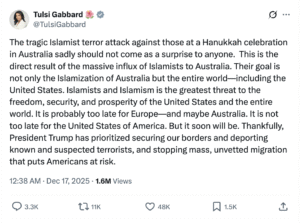
Her remarks struck a nerve because they exposed a deeper contradiction. Western governments repeatedly acknowledge the ideological roots of Islamist terrorism. However, they continue to adopt policies that indirectly sustain those very roots. Strategic alliances, selective humanitarianism, and cultural taboos around criticism of political Islam have created a dangerous feedback loop. As a result, the West often appears more committed to managing optics than dismantling the ecosystem that produces radical Islamism.
The Pakistan Conundrum: Sheltering Terrorists While Receiving Western Support
The contradiction is not new. Its modern roots trace back to 9/11 (11 September 2001), when Al-Qaeda killed nearly 3,000 people in the United States. Osama bin Laden, the architect of those attacks, was eventually located in Abbottabad, Pakistan, in 2011. His compound stood close to a prestigious military academy. That discovery raised uncomfortable questions about the role of Pakistan’s security establishment, particularly the Inter-Services Intelligence (ISI). Islamabad denied institutional complicity, yet doubts have never faded.
The pattern repeated itself over the years. The 26/11 (26 November 2008) Mumbai terror attacks killed 166 civilians including several Americans, and were executed by Lashkar-e-Taiba operatives trained and guided from Pakistan. Indian and international investigations pointed to ISI involvement. David Headley, a US–Pakistani national was also involved in planning and ISI links. More recently, the 22 April 2025 Pahalgam attack in Kashmir killed 26 tourists, mostly Hindus. The Pakistani Resistance Front claimed responsibility, but security agencies identified it as a Lashkar-e-Taiba proxy operating with Pakistani backing.
Despite this record, Western—particularly American—engagement with Pakistan continues with remarkable consistency, even with full awareness of these linkages. Under the second Trump administration in 2025, Washington approved a $686 million F-16 upgrade package for Pakistan. This approval did not exist in isolation. In the months following April 2025, Pakistan also benefited from additional US-backed military assistance, loan rollovers, and multilateral financial relief packages, including IMF-linked programmes supported by Washington’s vote and influence. This was in addition to continued security cooperation, spare parts supplies, training arrangements, and indirect financial flows routed through various aid, reimbursement, and coalition-support mechanisms.
The justification focused on countering China and maintaining regional leverage. However, critics argue that such assistance sends a permissive signal. US aid, arms, and commercial engagements do not operate in a vacuum. In Pakistan’s opaque security ecosystem, resources inevitably pass through institutions dominated by the military and the Inter-Services Intelligence (ISI). This is the same apparatus repeatedly accused of breeding, training, shielding, and redeploying jihadist proxies for regional leverage. It tells Pakistan that support for jihadist proxies carries few long-term consequences. In effect, a state accused of exporting Islamist terrorism continues to enjoy Western military patronage.
Europe’s Strategic Blindness: Ukraine First, Everything Else Later
Europe’s response to Islamist terrorism has grown increasingly selective. Since 2022, European political and security capital has been overwhelmingly absorbed by the Ukraine war. While Russia’s invasion deserves condemnation, the single-minded focus on Ukraine has come at a cost. Domestic security threats linked to Islamist extremism have been deprioritised, under-policed, or reframed as secondary concerns.
Several European governments have diverted intelligence resources, funding, and political attention towards Eastern Europe. As a result, Islamist networks operating within European cities have benefited from reduced scrutiny. Radical preachers, foreign-funded mosques, and online extremist ecosystems continue to operate under the banner of religious freedom. European policymakers appear reluctant to confront these structures, fearing social unrest or accusations of discrimination.
This imbalance has created a dangerous illusion. Europe presents itself as morally consistent abroad while remaining strategically evasive at home. Islamist terrorism in the West is no longer treated as a civilisational threat. Instead, it is managed as a law-and-order inconvenience, even as attacks continue to occur with grim regularity.
When Policy Fear Replaces Governance: A British Case Study
Britain offers one of the clearest examples of how policy fear and ideological caution have paralysed state institutions, even when the nature of the problem was well understood internally. From the 1990s through the 2010s, organised grooming gangs sexually exploited thousands of vulnerable girls across towns such as Rotherham, Rochdale, Huddersfield, and Telford. In Rotherham alone, independent inquiries estimated that at least 1,400 girls were abused between 1997 and 2013.
Investigations revealed that the perpetrators were overwhelmingly men of Pakistani Muslim background. Yet police, social workers, and local councils repeatedly ignored evidence. Officials later admitted that they feared being labelled racist or ‘Islamophobic’. As a result, victims were abandoned, while offenders operated with impunity under the nose of UK police.
The scandal exposed a broader truth. When institutions refuse to acknowledge patterns rooted in ideology or culture, they enable abuse. Even in 2025, renewed audits and reviews show reluctance to openly discuss the role of religious attitudes towards non-Muslim women. Islamist terrorism in the West does not emerge in isolation. It thrives in environments where ideological scrutiny is actively discouraged.
A Persistent Wave of Attacks Across Europe and the United States
A chronology of major Islamist attacks in the West since 11 September 2001
What follows is a chronologically ordered overview of major Islamist-inspired mass-casualty attacks and high-profile incidents in Western countries since 11 September 2001. This is not an exhaustive catalogue of every incident, but a representative mapping of scale, frequency, and evolution.
Europe:
11 March 2004 — Madrid, Spain (train bombings) | 191 killed. At the time Europe’s deadliest Islamist attack; it profoundly altered Spanish domestic politics and highlighted vulnerabilities in civilian transport networks.
7 July 2005 — London, United Kingdom (7/7 bombings) | 52 killed on the Underground and a bus. The attacks underscored the threat posed by home-grown Islamist cellsoperating inside major Western capitals.
29 March 2010 — Moscow, Russia (metro bombings) | Approximately 40 killed. Though often treated separately from Western Europe, the attack formed part of the broader European–Eurasian jihadist threat ecosystem.
7–9 January 2015 — Paris, France (Charlie Hebdo shootings; Hyper Cacher siege) | 17 killed. Targeted journalists and Jewish civilians, signalling the convergence of ideological enforcement and antisemitic violence.
13 November 2015 — Paris, France (Bataclan and coordinated attacks) | 130 killed; hundreds injured. A large-scale, ISIS-directed operation using multiple teams and weapons, marking the deadliest Islamist attack in modern French history.
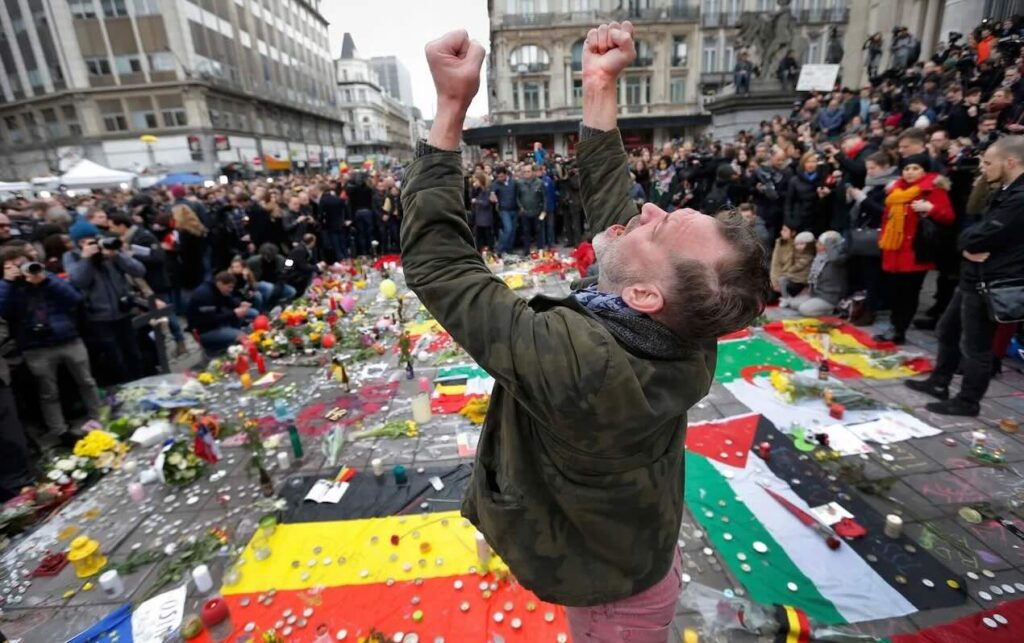
22 March 2016 — Brussels, Belgium (airport and metro bombings) | 32 killed. Struck European transport hubs and institutions, reinforcing the cross-border operational reach of ISIS networks.
14 July 2016 — Nice, France (truck ramming attack) | 86 killed during Bastille Day celebrations. A low-tech but high-impact assault on a symbolic national event, demonstrating the lethality of vehicle attacks.
2 December 2015 / 19 December 2016 / multiple dates — France, Germany, United Kingdom | A succession of knife attacks, vehicle ramming, and small-cell assaults, including the Normandy church killing. These incidents illustrated the durability of inspired rather than centrally directed jihadist violence.
22 May 2017 — Manchester, United Kingdom (Arena bombing) | 22 killed at a concert venue. A suicide bombing at a soft target frequented by young civilians, reinforcing public-space vulnerability.
North America and the transatlantic dimension
11 September 2001 — United States (New York, Washington DC, Pennsylvania) | Nearly 3,000 killed. Al-Qaeda’s coordinated aircraft attacks redefined global counterterrorism doctrine, reshaped security law, and inaugurated the modern era of transnational jihadist violence.
15 April 2013 — Boston, United States (Marathon bombing) | 3 killed. An early indicator of domestic radicalisation influenced by global jihadist narratives.
2 December 2015 — San Bernardino, United States | 14 killed. A married couple inspired by jihadist ideology carried out a mass shooting, blurring lines between foreign and domestic terrorism.
12 June 2016 — Orlando, United States (Pulse nightclub massacre) | 49 killed. The attacker pledged allegiance to ISIS during the assault, making it the deadliest Islamist-inspired shooting in US history.
22 October 2014 — Ottawa, Canada (Parliament Hill attack) | One soldier killed. A lone-actor assault on national institutions, demonstrating transatlantic exposure to Islamist violence.
Persistence beyond the “caliphate”
2019 onwards — Europe and North America | Following the territorial defeat of ISIS, frequent lower-scale attacks continued: stabbings, vehicle ramming, and knife assaults inspired by online jihadist propaganda. The threat shifted in form, not substance.
15 March 2019 — Christchurch, New Zealand | A white-supremacist massacre (not Islamist-motivated). Included here for contrast, highlighting that mass extremism is multi-ideological, though often selectively framed.
14 December 2025 — Bondi Beach, Sydney, Australia (Hanukkah shooting) | 15 killed. ISIS flags and evidence of ideological inspiration were reported, marking Australia’s deadliest recent terror incident and underscoring the continued global resonance of jihadist propaganda.
Pattern, not anomaly
These cases demonstrated that geographic distance and stricter borders do not neutralise ideological reach. Taken together, these attacks reveal a clear structural pattern, not isolated aberrations:
Large-scale coordinated operations (2004 Madrid, 2005 London, 2015 Paris, 2016 Brussels)
Sustained lone-actor and small-cell violence throughout the 2010s and 2020s
Persistent targeting of soft civilian spaces—transport hubs, concerts, celebrations, religious sites
In many cases, perpetrators were asylum seekers, recent migrants, or second-generation immigrants who radicalised within socially marginalised environments. Authorities frequently cited “integration failures,” yet policy responses remained cautious, fragmented, and politically constrained.
The Hamas-led attacks on Israel on 7 October 2023 added another dimension. Nearly 1,200 people were murdered, with documented massacres, rapes, and kidnappings—the deadliest antisemitic violence since the Holocaust. Yet significant segments of Western academia and protest movements reframed the atrocities as abstract “political resistance,” systematically diluting their Islamist character. That reluctance did not reduce violence; it normalised it.
Permissive Policies, Selective Outrage, and Moral Inconsistency
Post-2015 asylum policies across Europe allowed large-scale migration without robust ideological screening. Governments hesitated to deport radicalised individuals, citing human rights obligations. At the same time, the term “Islamophobia” became a rhetorical shield against legitimate scrutiny of Islamist doctrine.
The inconsistency becomes starker when compared with Western responses to India. When India deports illegal migrants, counters Pakistan-backed terrorism in Kashmir, or enacts citizenship laws to protect persecuted non-Muslims, Western institutions respond with condemnation. UN resolutions, NGO reports, and media narratives portray India as illiberal. However, the same actors rarely apply comparable standards to Pakistan or radical Islamist groups.
This selective outrage undermines credibility. It also reinforces the perception that Islamist terrorism in the West is tolerated as long as it aligns with geopolitical convenience.
Uprooting the Problem or Continuing to Water It
The Bondi attack should have shattered lingering illusions. From Australia to Europe to Washington, the pattern is now unmistakable: Islamist terror ideology is recognised, yet decisive confrontation is persistently deferred. From Abbottabad to Brussels, from Rotherham to Sydney, the evidence forms a coherent pattern. Islamist terrorism in the West is not a random phenomenon. It is sustained by policy choices, ideological evasions, and strategic hypocrisy.
Western governments understand the threat. Yet they continue to fund questionable allies, suppress uncomfortable debates, and prioritise short-term narratives over long-term security. Until Europe and its allies confront these contradictions with honesty and resolve, the cycle will continue. The tree of extremism does not grow by accident. It is watered by denial, and it bears fruit in blood.