Trump World War Warning Sparks Global Alarm Amid Stalled Ukraine Peace Push
Escalating Frustration as Trump Warns of Third World War
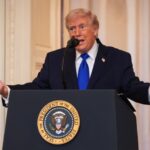
US President Donald Trump has issued his starkest caution yet on the Russia–Ukraine conflict, stating that the war “could end up in third world wars” if negotiations fail. His remarks, delivered on 11 December 2025, signal deep concern inside the White House as casualty numbers rise and political resistance grows in both Kyiv and Moscow.
The warning also surfaced as the President expressed frustration with delays in peace talks. White House Press Secretary Karoline Leavitt confirmed that Trump was “extremely frustrated” with both sides for slowing what Washington views as the most urgent diplomatic challenge of his term.
Rising Casualties and Mounting Pressure
Trump Cites 25,000 Deaths in a Month
The President’s tone hardened after intelligence updates indicated that around 25,000 people were killed in the previous month. The figure includes soldiers on both sides as well as civilians caught in frontline strikes.
Trump stated that he wants “the killing to stop,” adding that global powers are “playing games” despite the spiralling human cost. His language suggests a shift in Washington’s approach, moving from warning about escalation to insisting that further delay raises the risk of a catastrophic global conflict.
A Dramatic Shift from Earlier Statements
Previously, Trump argued that the Ukraine war might “lead to World War III” if Russia remained unchecked. However, he is now drawing a direct line from continued fighting to the possibility of a third world war. The shift is significant, because it reframes the war as a global trigger point rather than a regional crisis.
The US Peace Plan and Its Controversial Demands
Washington is pushing an updated 20-point peace framework, reduced from an earlier 28-point version. According to diplomatic sources, the new plan was refined through direct discussions with Russia.
The proposal contains several elements that have triggered anger in Kyiv and concern across Europe.
Territorial Concessions and Security Limits
The framework requires Ukraine to accept that Russian-held territories remain under Moscow’s control. This would formalise Russia’s occupation of areas seized since 2014 and during the full-scale invasion.
In addition, Kyiv would commit to staying out of NATO and limiting the size and capability of its armed forces. As a result, Ukraine’s long-standing goal of Euro-Atlantic integration would be suspended indefinitely.
A Non-Aggression Pact and Election Conditions
The plan includes a multi-party non-aggression pact involving Russia, Ukraine and major European states. Washington believes this is essential to preventing any future invasion.
The document also demands national elections in Ukraine within about 100 days of a ceasefire. Both the US and Russia have insisted on this condition, arguing that political legitimacy is crucial for long-term stability.
Amnesty Clause Draws Sharp Criticism
One of the most controversial points is the blanket amnesty for wartime actions. This clause would shield Russian officials and military personnel from prosecution for war crimes. Critics argue that such a provision undermines international law and could embolden aggressors in future conflicts.
Kyiv Pushes Back with a Counter-Proposal
Ukraine has submitted its own 20-point counter-proposal to Washington. Kyiv insists that any decision about territorial concessions must be made by the Ukrainian people through a national referendum.
Furthermore, Ukraine is demanding robust security guarantees from both the US and Europe. Officials argue that without a strong deterrent, Russia could exploit any settlement to prepare for a future offensive.
Europe Fears Washington Is Sidestepping Allies
European governments are increasingly anxious about the US–Russia-centric nature of the talks. Several leaders believe that Washington is pressuring Kyiv into a deal that weakens Ukraine’s sovereignty and rewards Russia’s aggression.
There is also concern that a rushed settlement—driven by Trump’s desire to secure a peace breakthrough before Christmas 2025—could fracture the Western alliance. Some analysts warn that a concession-heavy deal may embolden Russia, especially in the Baltics, and could influence China’s calculations over Taiwan.
Strategic Risks and Geopolitical Stakes
A Deal That Could Destabilise Kyiv
If Kyiv is pushed into accepting extensive territorial losses, its domestic political structure may weaken rapidly. Analysts warn that such an outcome could fuel internal unrest, damage public trust, and undermine Ukraine’s long-term stability.
A Precedent for Future Aggression
A peace plan that legitimises Russia’s conquests may incentivise future land grabs by Moscow or other revisionist powers. Consequently, this would erode the post-1945 European security order and weaken institutions designed to deter expansionist behaviour.
Western Alliance Faces a Critical Test
The ongoing negotiations reveal growing tensions within the Western bloc. European governments fear being sidelined, while the US continues to dominate the diplomatic process.
If the talks collapse, these divisions may deepen, especially if Washington places blame on Kyiv or reduces its military posture in Europe.
What Lies Ahead in the Final Days of 2025
Negotiators are racing to determine whether Ukraine and Russia can agree to the revised framework. Diplomats say discussions are “advancing rapidly,” yet major disagreements persist over borders, security guarantees and the future of Crimea and Donbas.
If a deal emerges, Washington is likely to present it as a difficult yet necessary step to end the bloodshed. However, Ukraine may emerge from the agreement territorially reduced and strategically restricted.
If the process fails, Trump may escalate his public warnings and use the Trump World War Warning narrative to justify tougher pressure on Kyiv or to reshape America’s military posture in Europe and the Indo-Pacific.