Escalating Shadows: The 2025 China–Japan Diplomatic Crisis
Rising Tempers in a Volatile Region
East Asia enters another volatile chapter as the China–Japan diplomatic crisis widens across military, political, economic, and ideological fronts. What began in early November as a dispute over Taiwan has escalated into radar lock-ons, hostile diplomatic exchanges, suspended trade channels, and cultural boycotts. The region now witnesses an unmistakable shift: Japan is not only reinforcing its defence posture close to Taiwan but is also arming the Philippines, signalling a broader coalition against Chinese assertiveness.
Japan’s internal debate over nuclear capability, once unthinkable after the Second World War, has resurged. Several Japanese lawmakers have publicly argued that the nation cannot remain dependent indefinitely on the United States’ nuclear umbrella, a conversation that Beijing has seized upon to accuse Tokyo of “militaristic revival.”
Taiwan as the Trigger: Japan’s Survival Line
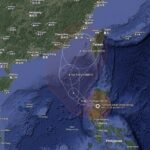
The spark ignited on 7 November when Prime Minister Sanae Takaichi warned that a Chinese blockade of the Bashi Channel could pose “a situation threatening Japan’s survival”. This declaration effectively placed Taiwan’s security within Japan’s defence perimeter. Beijing denounced the statement as interference, accusing Tokyo of violating the 1972 Joint Communiqué.
China’s rhetoric soon turned incendiary. Osaka’s Chinese Consul General issued a belligerent social media post—later deleted—hinting at physical violence. Japanese officials condemned it, and the United States backed Tokyo’s protest. For Beijing, however, Takaichi’s stance was a provocation that revived grievances from wartime aggression.
At the United Nations, the two nations exchanged sharply worded letters. Chinese envoy Fu Cong called Japan’s security posture a threat to regional stability, while Tokyo’s representative rejected Beijing’s claims as distortions.
Economic Blows, Cultural Boycotts, and Detention Politics
China quickly supplemented rhetoric with punitive measures. On 16 November, Beijing issued a travel advisory urging its citizens to avoid Japan. Booking cancellations surged, and flights were cut by almost 40%. Cultural programmes halted overnight, Japanese films were pulled from cinemas, and music tours were postponed.
Japan responded with parallel advisories for its citizens in China. Although both sides avoided sweeping trade sanctions, Beijing’s suspension of Japanese seafood imports and stalled negotiations on beef exports hit key industries already strained from Fukushima wastewater disputes.
The most consequential issue below the diplomatic surface remains China’s detention of Japanese nationals under national security charges. A Japanese executive from Astellas Pharma received a three-and-a-half-year sentence in July 2025. Tokyo argues these detentions are politically motivated, and the chilling effect on Japan’s corporate presence in China is now substantial.
Clashes at Sea and in the Air: A Military Tightrope
The East China Sea, particularly around the Senkaku/Diaoyu Islands, has long been a flashpoint. Tensions intensified on 16 November when Chinese coast guard ships entered territorial waters, prompting Japanese vessels to move in. On 2 December, a confrontation involving fishing fleets from both sides added another layer of danger.
China’s three-day live-fire drills in the Yellow Sea from 17–19 November, widely seen as a warning to both Japan and Taiwan, further fuelled unease.
The most alarming incident occurred on 6 December. Two Chinese J-15 fighters from the carrier Liaoning locked fire-control radar on Japanese F-15s near Okinawa. Fire-control radar use is considered a precursor to missile engagement and is among the most provocative acts short of actual fire. Japan’s Defence Minister Shinjiro Koizumi issued a formal protest, calling the act dangerous and unacceptable.
Beijing countered that Japanese aircraft had disrupted legitimate naval exercises, accusing Tokyo of fabricating the narrative.
The confrontation came as Japan accelerated the deployment of electronic warfare units on Yonaguni Island to counter Chinese radar. This is part of a broader military modernisation that includes long-range missiles, cyber units, and expanded marine brigades.
Japan’s Expanding Defence Footprint: Arming the Philippines
A crucial, often overlooked, dimension of the crisis is Japan’s deepening military cooperation with the Philippines. This partnership marks Japan’s most assertive security engagement in Southeast Asia since 1945.
Japan’s New Strategic Outreach
Under its updated security laws and the 2023 Official Security Assistance (OSA) mechanism, Tokyo has agreed to supply Manila with:
advanced air-defence radar systems,
maritime surveillance capability,
patrol vessels, and
potentially, its latest surface-to-ship missile systems.
For Beijing, these actions extend the confrontation beyond the East China Sea into the South China Sea, bringing Japan into alignment with the Philippines’ resistance to Chinese maritime pressure. China publicly accuses Japan of “arming proxies”, although Manila frames the partnership as necessary for regional stability.
Japan’s Nuclear and Military Shift: Breaking Historical Boundaries
For the first time since the Second World War, Japan’s political class is openly debating the possibility of hosting US nuclear weapons, joint nuclear planning, and even developing its own deterrent. While no official policy shift has occurred, the debate signals a major ideological transformation. Several prominent figures in Japan’s ruling party argue that China’s expanding nuclear arsenal and North Korea’s missile advances demand a reconsideration of long-standing taboos.
Parallel to this, Japan’s defence budget continues to climb, crossing the NATO benchmark of 2% of GDP in 2025. Tokyo is acquiring counter-strike missiles, strengthening island defences, and restructuring its Self-Defence Forces into more flexible joint commands. Beijing labels these moves as proof of a revival of Japanese militarism.
Allies and Adversaries: The Wider Strategic Landscape
The crisis is drawing in global players. Taiwan has aligned itself closely with Japan, lifting food import bans and boosting cultural exchanges. Australia has backed Tokyo diplomatically, calling for calm after the radar incident. The United States remains central to the equation, with President-elect Donald Trump urging restraint in talks with both sides.
On the opposite side, Russia, North Korea, and Pakistan have criticised Japan, accusing it of destabilising the region.
Social media ecosystems across East Asia are saturated with commentary. OSINT accounts highlight radar lock footage, while Japanese users split between applauding Takaichi’s firmness and criticising the escalation.
A Region on Edge and Uncertain Pathways Forward
South Korea and Singapore have made quiet mediation offers, but neither Beijing nor Tokyo shows willingness to soften its position. China insists that Japan must retract its statements on Taiwan. Japan refuses, maintaining that its posture is defensive and aligned with long-standing policy.
The crisis now spans military brinkmanship, economic retaliation, and ideological confrontation. One misstep—whether a naval collision or an aerial miscalculation—could trigger broader conflict. As the balance of power in East Asia shifts, the world watches a diplomatic feud transform into a structural rivalry with far-reaching consequences.
Japan’s growing defence outreach to partners like the Philippines and its internal debates on nuclear capability indicate that the region’s security architecture is undergoing its most significant change in decades. Dialogue remains the only practical off-ramp, yet neither nation is ready to de-escalate.