Bangladesh Election Schedule By Mid-December 2025
Bangladesh’s Election Commission prepares to announce the much-awaited schedules for the 13th parliamentary elections
and a national referendum in mid-December 2025. Chief Election Commissioner AMM Nasir Uddin confirmed this timeline
during a recent press interaction in Dhaka. As a result, the nation gears up for polls tentatively slated for early
February 2026, marking a pivotal moment post-political upheaval.
The dual events—parliamentary voting and a referendum on the July National Charter—will occur on the same day,
streamlining logistics despite complexities. Therefore, EC intensifies preparations, from voter list finalisation to
security deployments. This Bangladesh election schedule disclosure promises clarity amid stakeholder anticipation.
Key Timeline and CEC’s Confirmation
AMM Nasir Uddin, successor to Kazi Habibul Awal, stated the schedules would drop in the second week of December.
Speaking after a mock voting exercise at Sher-e-Bangla Nagar Government Girls’ High School, he emphasised readiness.
“The exact dates will follow soon,” the CEC noted, highlighting the need to familiarise voters absent from polls for 15
years.
The 13th Jatiya Sangsad elections target early February 2026, aligning with interim government directives to vote before
Ramadan. EC eyes a free, fair process, with final voter lists expected by June 2026 if delays arise. In addition, the
referendum gains legal backing via a recent ordinance, authorising joint execution.
Mock polls tested dual-ballot efficiency, assessing ideal environments. Nasir Uddin stressed time trials for
simultaneous voting, ensuring smooth operations. Consequently, public awareness campaigns loom, jointly led by
government and EC.
Extensive Preparations Across 22 Critical Areas
EC convened a high-level meeting with over 30 ministries, covering 22 vital issues for the Bangladesh election schedule
execution. Discussions spanned polling station upgrades, uninterrupted power, and manpower logistics. Remote areas,
including hills, secure helicopter aid for materials and officials.
Law enforcement coordination featured prominently, with prior sessions alongside police, Ansar, BGB, RAB, and army. A
three-tier security blanket activates from schedule announcement day, enforcing zero-tolerance on code violations.
Misinformation curbs via AI monitoring and communal harmony measures protect minorities.
Other priorities include exam rescheduling, loan-defaulter data, media publicity, medical teams, and postal voting for
expatriates and detainees. Fire safety, weather updates, and transport curbs round out plans. Earlier, October and
November dialogues engaged 47 parties like BNP and Jamaat, plus civil society.
Referendum Campaign and Voter Engagement Push
No full-scale referendum drive has launched yet, but preparations accelerate post-ordinance. CEC Nasir Uddin affirmed
joint government-EC efforts to educate citizens. “Once campaigns start, awareness levels will clarify,” he said,
underscoring legal authorisation.
Expatriate Bangladeshis gain postal voting access for the first time, expanding participation. Prisoner balloting and
minority safeguards feature in holistic strategies. Therefore, EC builds trust through impartial duties, avoiding past
pressures.
Voter list accuracy tops priorities, purging 16 lakh deceased entries. Nasir Uddin prioritises credible, internationally
acceptable polls based on December 2025 or June 2026 timelines if reforms extend.
Security and Law-Order Improvements Noted
CEC praised enhanced stability, with forces actively curbing incidents. “The situation has improved markedly,” Nasir
Uddin observed, though isolated thefts persist. Multi-agency involvement ensures further gains, vital for participatory
voting.
Stakeholder dialogues since September—teachers, journalists, experts—foster consensus. EC’s zero-tolerance on violations
signals resolve. In addition, budget allocations and executive magistrate appointments enforce conduct codes.
Stakeholder Dialogues and Political Consensus
EC held phased talks with registered parties, including BNP, Jamaat, and National Citizen Party. Civil society inputs
shaped plans. Nasir Uddin stressed bridging divides through dialogue, echoing commitments for neutral processes.
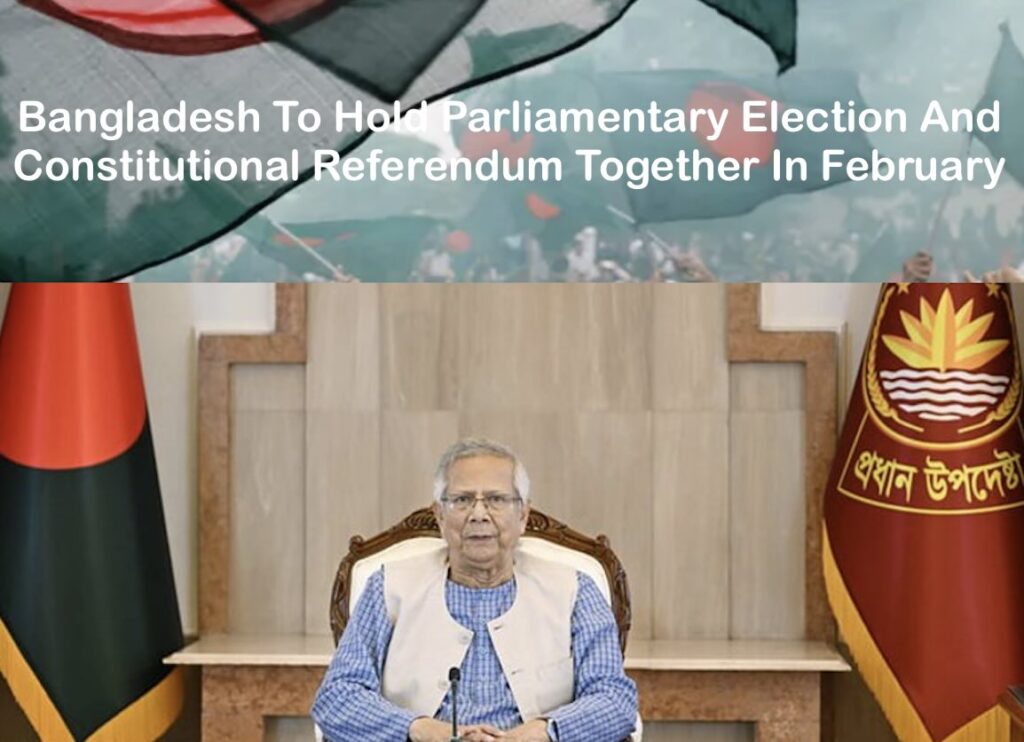
Interim leader
Muhammad Yunus assured timely polls, boosting confidence. Despite challenges like dual events, EC presses
forward. Critics note tight timelines, but officials deem it feasible.
Impacts on Voters and Political Landscape
Citizens face refreshed voting processes after 15 years, with mock demos aiding familiarity. Expatriates celebrate
inclusion, while remote voters gain airlift support. Parties gear up post-schedule, eyeing code compliance.
Minorities and detainees secure protections, enhancing inclusivity. Media and AI vigilance combats fake news. Overall,
this Bangladesh election schedule rollout promises transparency and participation.
The mid-December announcement will lock in dates, propelling Bangladesh towards democratic renewal. As EC fine-tunes
logistics, stakeholders unite for success. Track developments in our politics hub for real-time insights.