U.S. Buildup Near Venezuelan Coast Intensifies US War on Venezuela Fears
A Crisis Edges Toward Confrontation
The spectre of a potential US war on Venezuela now looms over the Caribbean as massive American naval forces gather near the country’s northern coast. Tensions, simmering for years, have surged dramatically with the launch of U.S. Southern Command’s Operation Southern Spear. This deployment—Washington’s largest in the region since the 1994 Haiti intervention—has raised concerns that the standoff may escalate beyond pressure tactics and drift into open conflict.
The presence of the USS Gerald R. Ford carrier strike group, amphibious assault ships carrying thousands of Marines, and more than 240 Tomahawk cruise missiles signals a shift in Washington’s posture. Although the U.S. insists the operation targets narcotics networks, regional observers believe the move aims to corner Nicolás Maduro’s regime and exert decisive leverage.
Reports from Reuters and the BBC describe B-52 bomber flights skimming Venezuelan airspace, RC-135 reconnaissance probes, and new civilian aviation warnings. Together, these developments point towards a transition from diplomatic coercion to potential kinetic operations.
“This isn’t mere theatre,” said Dr. Elena Vargas, a security analyst at the Wilson Centre. “The U.S. is positioning itself to strike Venezuelan airfields, ports, and command hubs at short notice.”
Venezuela’s Military Balance: Outgunned but Not Helpless
A Strained but Structured Force
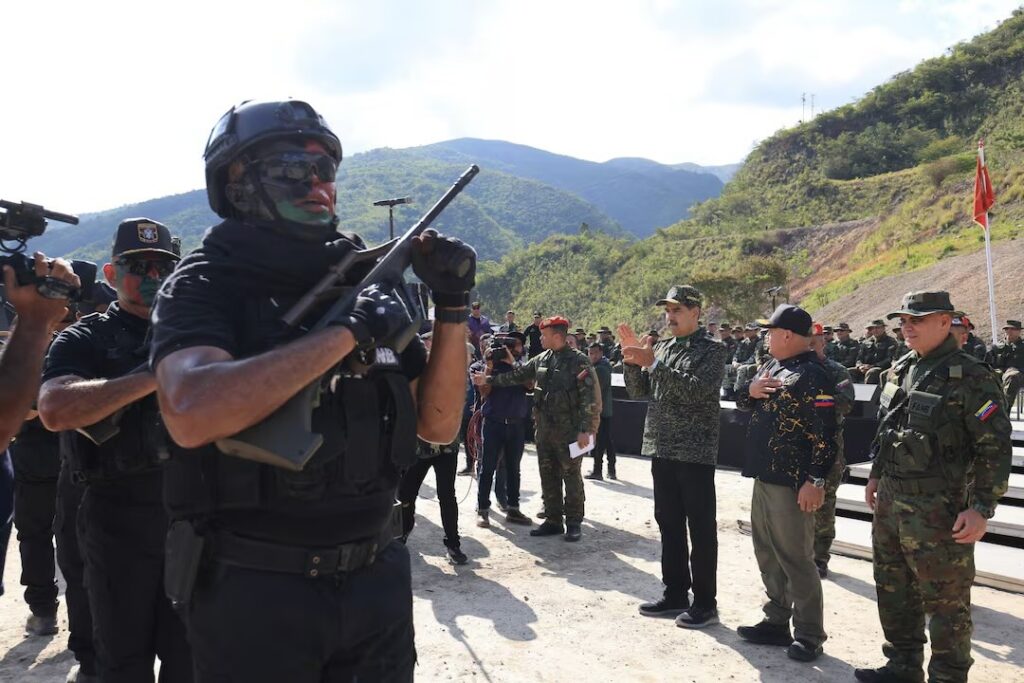
Venezuela maintains around 123,000 active personnel, supported by up to 100,000 reservists and a claimed eight million-strong militia. However, economic collapse has eroded readiness. Maintenance backlogs affect aircraft, ships, and even small arms. Despite this, Caracas has recently mobilised 200,000 troops in large-scale drills designed around urban and jungle warfare. These exercises suggest that the military is preparing for attritional conflict rather than conventional battles.
Air Defences: Strong on Paper, Fragile in Execution
At the centre of Venezuela’s defensive doctrine lies a multi-layered system built on Russian S-300VM, Buk-M2E, and Tor-M2E platforms, supported by Chinese JY-11B radars. These systems form the backbone of Venezuela’s attempt to delay U.S. air superiority.
Yet their survival prospects are limited. U.S. forces possess unmatched SEAD/DEAD (Suppression and Destruction of Enemy Air Defences) capabilities. Stealth aircraft, electronic warfare assets, and Tomahawk salvos would likely eliminate long-range radars within hours. Once those radars fall, medium- and short-range units would be hunted methodically.
The vulnerability is worsened by the small number of operational S-300VM batteries, estimated at only two to four.
Naval and Anti-Ship Capabilities: A Strategic Weakness
A key gap in Venezuelan defence is the absence of land-based anti-ship missiles. This omission leaves its coastline exposed against U.S. destroyers and amphibious groups.
Its only meaningful naval deterrents are:
Kh-31A supersonic anti-ship missiles launched from Su-30MK2 fighters
Iranian-equipped frigates armed with C-802 missiles
Limited patrol craft and coastal radars
While the Kh-31A poses a theoretical danger to U.S. ships, Venezuela’s ability to launch coordinated salvos under heavy U.S. air pressure remains doubtful. Naval vessels, meanwhile, remain highly vulnerable to American airpower.
Air Force Capabilities: Limited and Declining
Venezuela technically fields:
Around 21 operational Su-30MK2s
Around 18 upgraded F-16s
However, years of sanctions have starved the fleet of spares. Pilot flight hours are minimal. Only a few aircraft can generate sustained sorties. A U.S. first strike could destroy many aircraft on the ground.
The country’s drone arsenal—comprising Russian Orlan-10s and Iranian-style Mohajer-6 variants—has grown, yet it cannot offset the overwhelming U.S. advantage.
Ground Forces: The Only Place Venezuela Can Fight Back
The land domain remains Maduro’s strongest card. Venezuelan forces include:
125,000 active troops
100,000 reserves
Militia units numbering in the millions (though poorly trained)
Thousands of Igla-S MANPADS, a real threat to low-flying aircraft
Special forces trained for urban resistance
Exercises involving 200,000 mobilised personnel indicate preparation for prolonged guerrilla warfare centred around Caracas. Yet concerns persist over internal loyalty: Western intelligence suggests up to 30% of officers may be unreliable.
Such divisions raise the prospect that a U.S. intervention could quickly trigger civil conflict independent of foreign involvement.
Foreign Backers: Support with Clear Limits
Russia: Technical Aid but No Troop Surge
Russia remains Venezuela’s primary military supplier. Approximately 120 Russian advisers support air-defence systems. A Kalashnikov production facility is under development. However, Moscow’s commitments in Ukraine restrict deeper involvement. No recent major arms flights have been confirmed.
China: Economic Leverage Over Military Escalation
China has lent around $60 billion to Venezuela over two decades, though much has been repaid through oil shipments. Beijing recently extended another $4 billion credit line. Huawei systems underpin Venezuela’s surveillance network, and Chinese “fishing militias” reportedly collect maritime intelligence. Still, China appears cautious, preferring economic influence over confrontation with the U.S.
Iran: Asymmetry and Drones
Iran provides drone technology, including ANSU-100 UAVs, and likely participates in a joint drone factory. Hezbollah-linked networks facilitate smuggling. Yet Iran’s overstretched regional posture limits direct intervention.
Together, these powers offer political cover and asymmetric tools. However, none appears willing to confront the U.S. directly over Venezuela.
Can Venezuela Resist?
Air Defences: Strong on Paper, Vulnerable in Practice
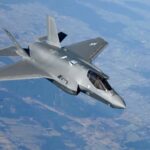
Venezuela’s air-defence network is sophisticated but fragile. U.S. forces would target long-range radars first, using Tomahawks, F-35s, and electronic warfare. Once those systems fall, the remaining Buk and Tor units would be disabled in sequence. Limited numbers of S-300VM batteries and a lack of mobility reduce survivability.
Anti-Ship Capability: A Critical Strategic Gap
Caracas failed to acquire long-range, land-based coastal missiles. As a result, its anti-ship arsenal rests on:
Su-30MK2 fighters carrying Kh-31A missiles
Fragile naval vessels equipped with C-802 missiles
The Su-30 threat is real, but sortie generation under U.S. air dominance is unlikely.
Air Force Prospects: Minimal
Chronic shortages of spares and fuel limit flight hours. Many jets may not be combat-ready. A first strike could neutralise the fleet rapidly. Drones offer reconnaissance but cannot change outcomes.
Ground Warfare: Maduro’s Only Real Domain
If resistance endures, it will be on the ground. Venezuela can leverage dense urban areas, jungle terrain, and large manpower pools. Igla-S MANPADS pose local risks. Yet cohesion remains uncertain. A fractured command could turn resistance into an internal civil war.
Strategic Reality: Asymmetric Resistance Only
Venezuela cannot win conventionally. The U.S.—with carrier aviation, Arleigh Burke destroyers, Marines, AC-130s, Reaper drones, and around 15,000 regional personnel—would dominate air and sea within days.
Venezuela can, however:
Inflict limited asymmetric losses
Conduct ambushes
Transition to urban and jungle insurgency
No evidence supports rumours of advanced weapons such as hypersonics.
Political Landscape
No Western country has condemned the U.S. encirclement. Despite CIA activity aimed at destabilisation, Maduro retains a hardened inner circle. However, the political opposition remains strong, and Venezuela’s humanitarian crisis limits long-term resilience.
Bottom Line
Venezuela can resist—but only asymmetrically, and only after its conventional forces collapse. A US war on Venezuela would overwhelm air and naval defences rapidly. The aftermath would likely involve insurgency, fragmentation, and prolonged instability.
Proxy War Risks: Could This Become a “Reverse Ukraine”?
Some analysts warn that Venezuela could become a proxy battleground. If Russia, China, and Iran supply asymmetric aid, the conflict could echo the attritional dynamics seen in Donbas. Yet geography favours the U.S. Short supply lines, regional allies, and overwhelming logistics limit the scope for foreign intervention.
Moreover, Venezuela’s internal fragmentation differs sharply from Ukraine’s unified national defence in 2022.
Diplomacy: A Narrow Window Remains
Brazil is pushing for mediation, and some voices in Washington advocate restraint. Yet as military assets crowd the Caribbean, the margin for miscalculation narrows.
The region now stands at a dangerous crossroads. Whether the crisis escalates into a US war on Venezuela depends less on Caracas and more on decisions taken in Washington.