European Leaders Criticise Trump’s Ukraine Peace Plan, Demand Further Refinement
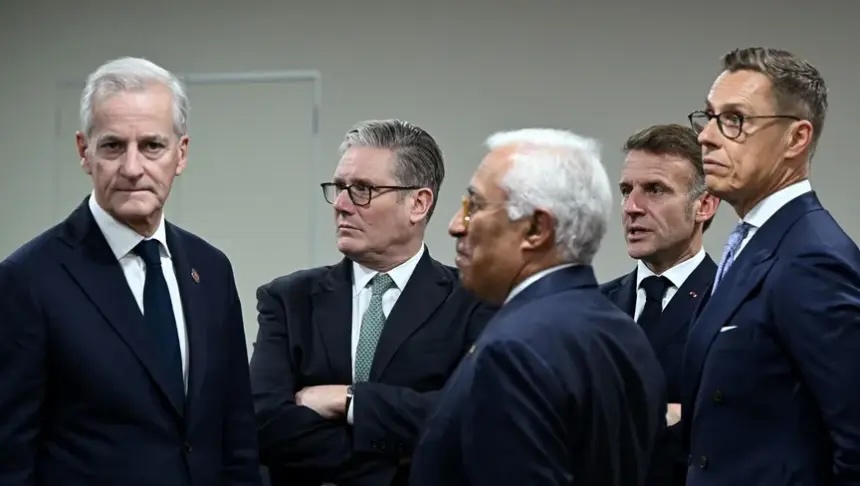
European leaders have recognized President Trump’s 28-point peace plan for Ukraine as a preliminary step. However, they insist it needs significant changes to create a fair and lasting resolution amid the ongoing conflict. The proposal includes controversial points such as Ukraine surrendering parts of Donbas to Russia, reducing its military by half, limiting U.S. aid, banning NATO presence, and elevating Russian cultural and religious status. European capitals stress that the plan must not permit borders to be changed by force and that Kyiv’s security and sovereignty remain the top priority.
Geneva Talks and Deadline Pressure
On November 23, 2025, officials from the U.S., Ukraine, and Europe met in Geneva to discuss the peace plan. Their goal was to find a way to end the nearly four-year war with Russia. President Trump set a deadline of November 27 for Ukraine to accept the plan but showed flexibility, noting the proposal is not final. Ukraine’s delegation, led by Chief of Staff Andriy Yermak, was joined by representatives from the UK, France, Germany, and the U.S. The European Union and the E3 coalition called for revisions that would offer stronger security guarantees to Ukraine.
Ukraine’s Position and Sovereignty Concerns
Kyiv has not completely rejected the peace plan but views it as a difficult and significant challenge. The Ukrainian government opposes elements that would drastically reduce its military or force territorial concessions without fair dialogue. Its leadership prefers revising the plan point by point, objecting to demands that undermine national dignity and freedom. European leaders support Ukraine’s stance and emphasize Kyiv’s active involvement in any agreement.
European and International Reactions
European powers have raised concerns that the plan mainly favors Russian demands, potentially leaving Ukraine defenseless after peace is established. They call for a balanced deal that involves all parties and respects international law. Meanwhile, some U.S. Republicans denounce the plan as appeasement. Despite this, President Trump continues to press Kyiv towards a decision, expressing willingness to negotiate changes.
Details of the Peace Proposal
The plan, developed with U.S. leadership and some Russian input, includes:
- Ukraine’s sovereignty recognized, but alongside a comprehensive non-aggression pact involving Russia and Europe.
- A renunciation of Ukraine’s NATO membership ambitions and prohibition of NATO troops on Ukrainian soil.
- Territorial concessions that acknowledge Crimea, Luhansk, and Donetsk as Russian-controlled, and creation of a demilitarized buffer zone in Donetsk.
- A halving of Ukraine’s armed forces and limits on aid from the U.S. and allies.
- Recognition of Russian as an official language and elevation of the Russian Orthodox Church in Ukraine.
- The establishment of a Ukraine Development Fund and joint reconstruction projects.
- Amnesty for all involved parties and a Peace Council, headed by President Trump, to oversee enforcement.
Kyiv and European allies argue that many of these terms reward Russian aggression and threaten Ukraine’s sovereignty and security.
Ongoing Diplomacy and Outlook
Diplomatic talks in Geneva continue with high-level envoys working to craft a viable ceasefire plan. Parallel U.S.-Russia discussions complement this process. The looming November 27 deadline adds pressure on Kyiv. Both Ukraine and European partners emphasize that any agreement must involve Kyiv fully and guarantee lasting peace without sacrificing territorial integrity.
This sensitive situation highlights the challenge of balancing peace efforts with protecting Ukraine’s sovereignty amid intense international diplomacy. The coming days will be critical in shaping the final peace framework.