Al Jazeera’s Bangladesh Coverage: A Flawed Narrative That Omits Critical History, Geopolitics And Killings After Sheikh Hasina’s Departure
The recent Al Jazeera Bangladesh coverage on India’s position on extraditing Sheikh Hasina attempts to explore Delhi’s view but misses key context and ultimately presents an unbalanced narrative. The article’s omissions, particularly regarding Bangladesh’s violent political past and the geopolitical stakes influencing current events, reduce the depth readers expect. The phrase Al Jazeera Bangladesh coverage becomes central here, as the gaps in the report significantly weaken its claim to contextual understanding.
Missing Historical Depth
The story begins with a literary vignette of a young and imaginary Bangladeshi footballer suddenly thrust into political turmoil. While this device adds colour, it does not offer readers the historical grounding necessary to understand the forces that have shaped Bangladesh’s present crisis. Bangladesh’s political history is inseparable from the trauma of August 15, 1975, when Sheikh Mujibur Rahman and almost his entire family were massacred. As per UN official report, 18 members of Sheikh Hasina’s family members were killed. She survived only because she was abroad, and India provided her refuge during those dangerous years. The aftermath saw repeated coups, assassinations, and national instability. These facts remain essential for understanding why the current political landscape is so fragile.
The Al Jazeera Bangladesh coverage sidesteps these events with surprising brevity. The unresolved nature of the Mujib family murders in which, along with the fact that several plotters went unpunished for decades, is entirely absent. This lack of historical completeness restricts the reader’s ability to assess today’s crisis through the lens of Bangladesh’s long-standing political volatility.
Selective Political Context and Omitted Actors
The article adopts a visibly critical tone towards Bangladesh’s judiciary and its recent rulings. However, it fails to explain how present actions reflect a broader pattern that has persisted since the country’s independence. Bangladesh has experienced periods of authoritarian governance, widespread political arrests, and regular outbreaks of political violence. Without acknowledging this continuity, the narrative appears disconnected from the nation’s deeper challenges.
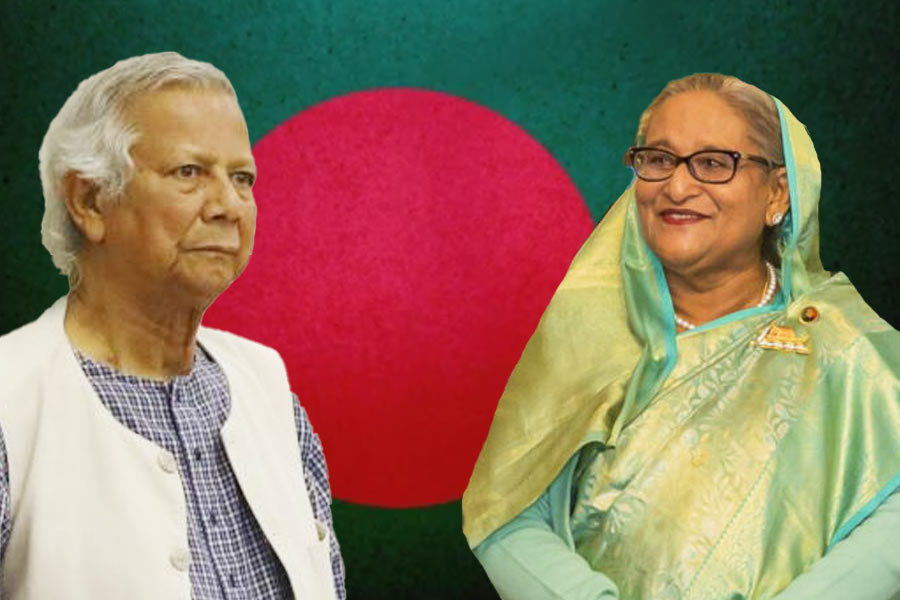
A notable absence in the Al Jazeera Bangladesh coverage is caretaker leader Muhammad Yunus. His sudden rise to power has been accompanied by allegations of political partiality, pro-Western sympathies, and harsh reprisals against supporters of the Awami League. Numerous reports from Indian and Bangladeshi outlets claim that violence against Hindus and Awami League workers has increased since his takeover – several hundreds have been killed, looted and raped. Yet the Al Jazeera article treats Yunus as a neutral figure, glossing over accusations regarding his legitimacy and governance choices. This omission leaves readers without essential insights necessary to evaluate the political stakes.
Geopolitical Forces in Shadow
A deeper issue in the Al Jazeera Bangladesh coverage is its reluctance to acknowledge the global power dynamics driving current tensions. Sheikh Hasina has openly accused the United States of interfering in Bangladesh’s domestic affairs and attempting to destabilise her government. These claims have circulated widely in South Asian and Bangladeshi political discourse, yet they find almost no space in the article.
Conversely, Yunus is widely viewed as aligned with Western interests and has received consistent US and European support. His leadership, according to multiple regional analyses, aligns with Western expectations on Bangladesh’s political direction. The article also overlooks India’s need for a predictable and democratically elected government on its eastern border. For Delhi, stability in Bangladesh is not merely strategic but essential for security, counter-terror operations, and border management.
The omission of these geopolitical factors creates an impression that India’s refusal to extradite Hasina is based solely on sympathy or procedural caution. In reality, the intersection of regional politics, global influence, and shifting alliances forms a crucial part of India’s stance, but the Al Jazeera Bangladesh coverage does not explore this context.
Clearly, the Al Jazeera article refrains from explicitly analysing this broader geopolitical rivalry involving US influence, Yunus’s ambitions, and Hasina’s stance. Instead, it focuses narrowly on the legal and diplomatic reasons India may not extradite her, without placing the trial within a deeper framework of political motivations linked to international influence and strategic control.
A Weak Legal-Diplomatic Framing
The article relies heavily on legal explanations for India’s decision, citing traditions of asylum and concerns about whether Hasina would receive a fair trial in Bangladesh. These are important points, but when presented without political or historical context, they become insufficient. The Al Jazeera Bangladesh coverage reduces India’s policy to a formality rather than a complex strategic calculation shaped by decades of regional experience.
This narrow framing also neglects the ongoing international debate surrounding the legitimacy of Bangladesh’s caretaker administration. Many analysts argue that elections have been postponed to consolidate power. Others highlight that legal cases against Hasina may carry political motivations. Without acknowledging these possibilities, the narrative appears overly simplistic.
Verdict: Selective and Shallow Reporting
The Al Jazeera Bangladesh coverage ultimately provides a partial and sometimes skewed understanding of Bangladesh’s political crisis. By excluding the traumatic history of political assassinations, understating the actions of the current leadership, and disregarding the influence of global power rivalry, the report fails to give readers a comprehensive view. India’s concerns regarding democratic continuity and regional stability, which lie at the heart of its refusal to extradite Hasina, are relegated to the margins when they should be central to the discussion.
For readers who seek a full geopolitical picture, the omissions severely undermine the article’s credibility. A story of such consequence demands depth, awareness of historical memory, and an honest confrontation with the forces shaping Bangladesh’s future.