Modern Grammar of Warfare — Drones, and the Way India Is Writing Its Own Chapter in the Sky
From the deserts of Rajasthan to the labs of Bengaluru, India’s unmanned revolution is gathering altitude. What began as a borrowed technology is now becoming a language of its own — one that could define the next era of warfare.
There was a time when wars were fought in trenches and decided by tanks. Then came the missiles, satellites, and smart bombs — weapons that rewrote how nations projected power. Today, that grammar has changed again. In the modern syntax of warfare, sentences are written not with steel and sweat but with silicon, sensors, and spinning rotors.
From Gaza to Donetsk, from the South China Sea to Ladakh, drones have become both scouts and assassins — tiny machines that hover where humans can’t, and strike before the enemy even hears them coming. They are the punctuation marks of a new military language — one that India is now learning to speak fluently, and soon, perhaps, to compose in.
For New Delhi, this is no longer about catching up. It’s about authorship.
The Defence Research and Development Organisation (DRDO), with its allies in the public and private sector, is scripting an ambitious new chapter — one where India not only flies drones but defines their doctrine.
This is the story of that transition — from dependence to design, from imitation to innovation — and how the country’s aerospace ecosystem is preparing to draft its own grammar in the evolving story of war.
The New Families of Aerial Combat
The modern battlefield no longer fits into old categories of manned or unmanned, offensive or defensive. Drones now exist in overlapping families, each evolving faster than doctrines can catch up.
HALE — The Stratospheric Watchers
High-Altitude, Long-Endurance systems — the HALEs — fly above 50,000 feet, where they can see a nation’s entire front in a single sweep. They are strategic sentinels rather than strike platforms, built for persistence, not aggression.
The Northrop Grumman RQ-4 Global Hawk, with its near-mythical endurance, remains the global archetype — a reference point for every country seeking theatre-wide intelligence.
Some Indian concepts under development blur this boundary between MALE and HALE, chasing similar ceiling and endurance on lighter frames.
MALE — The Workhorses of the Middle Sky
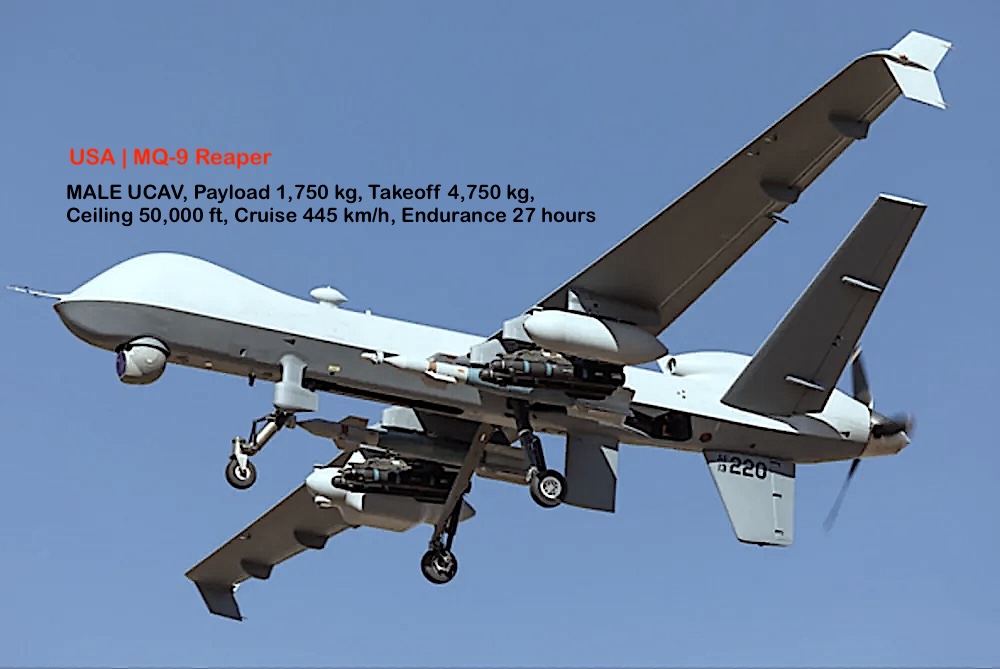
Below them cruise the Medium-Altitude, Long-Endurance (MALE) drones, the true workhorses of twenty-first-century warfare. They loiter between 25,000 and 30,000 feet, stay aloft for over a day, and carry payloads heavy enough to see and strike in a single sortie.
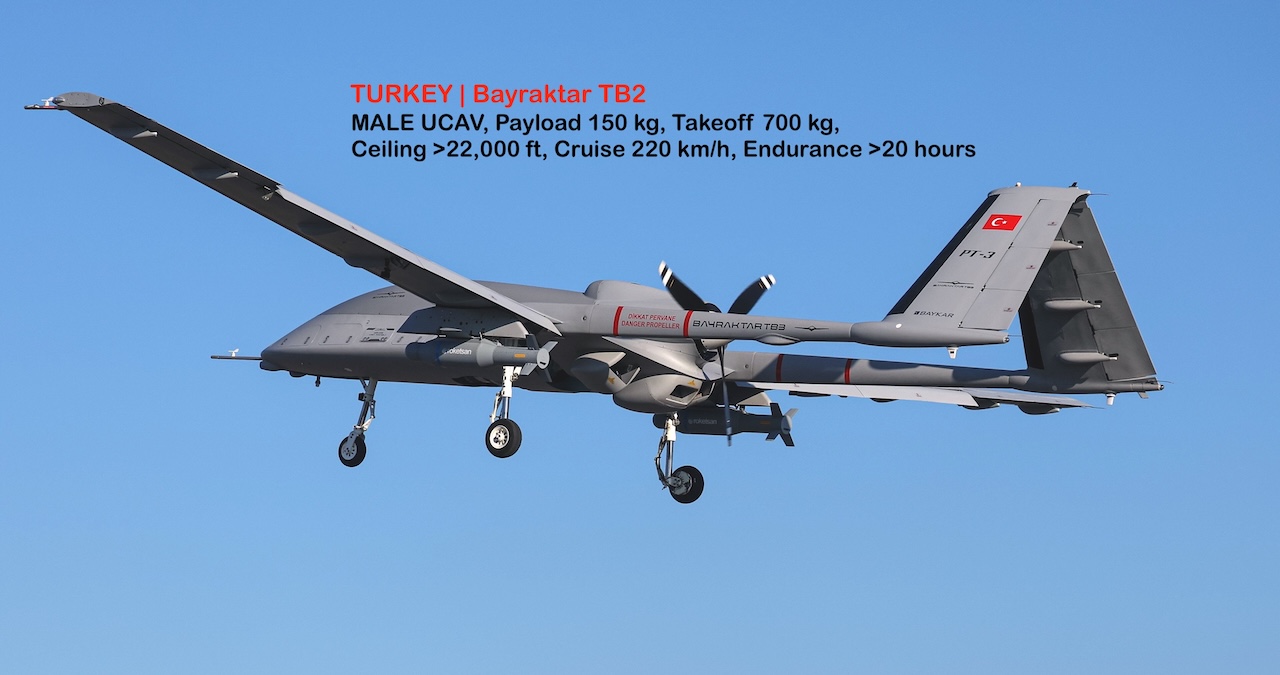
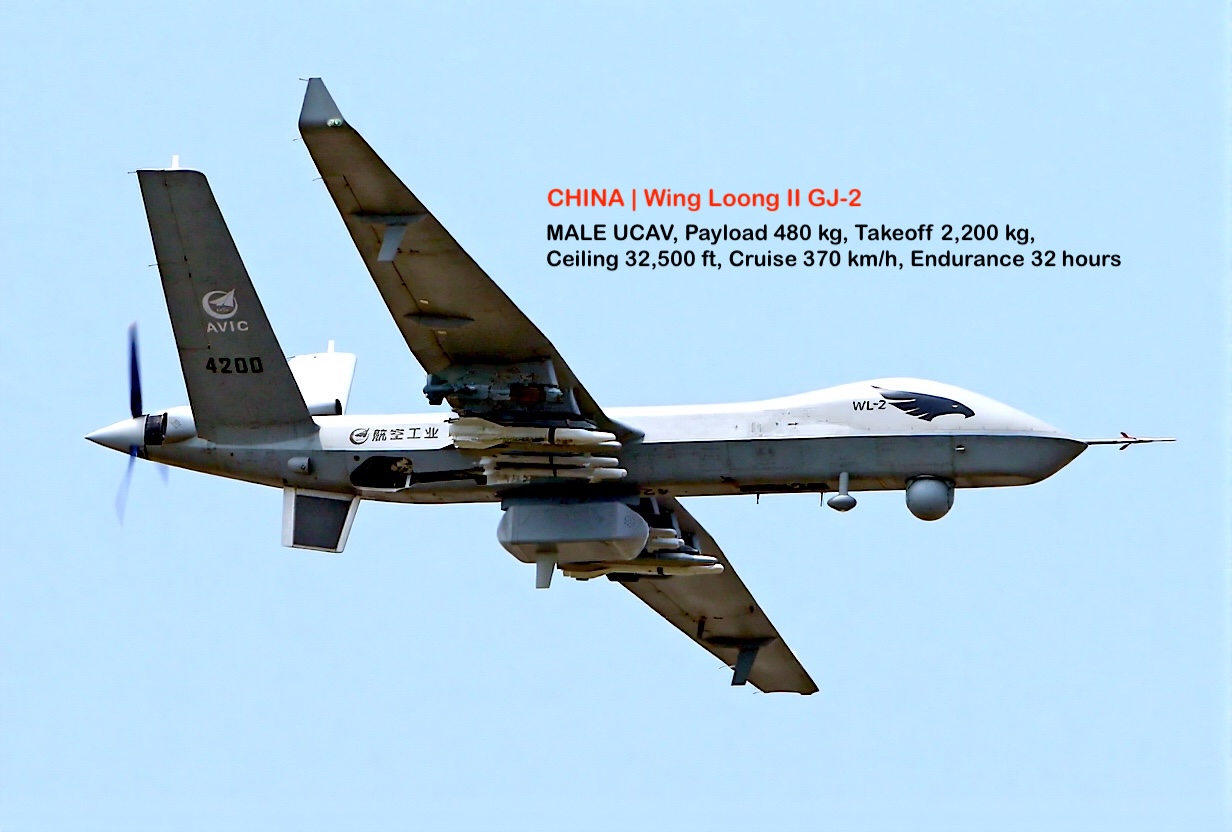
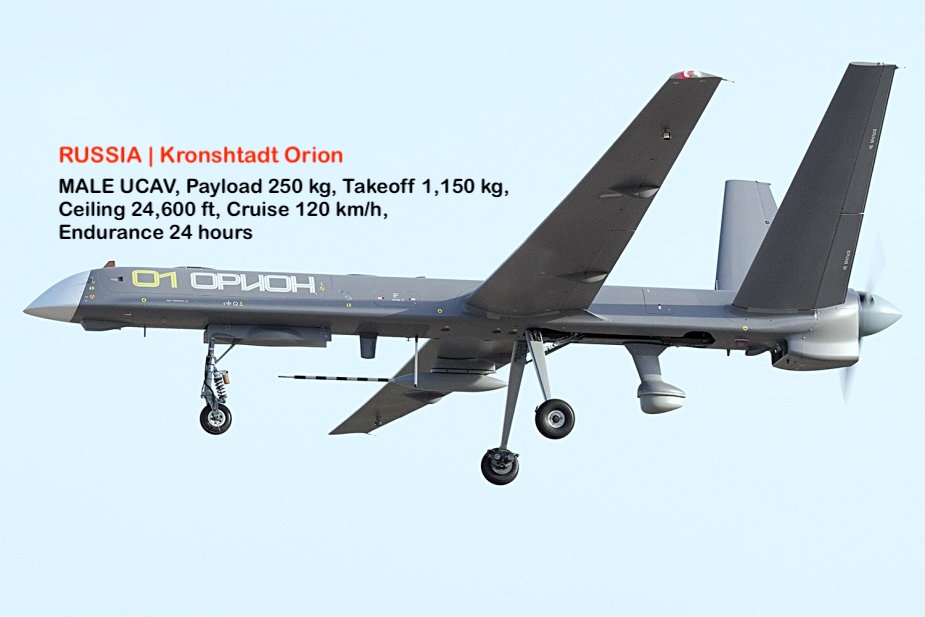
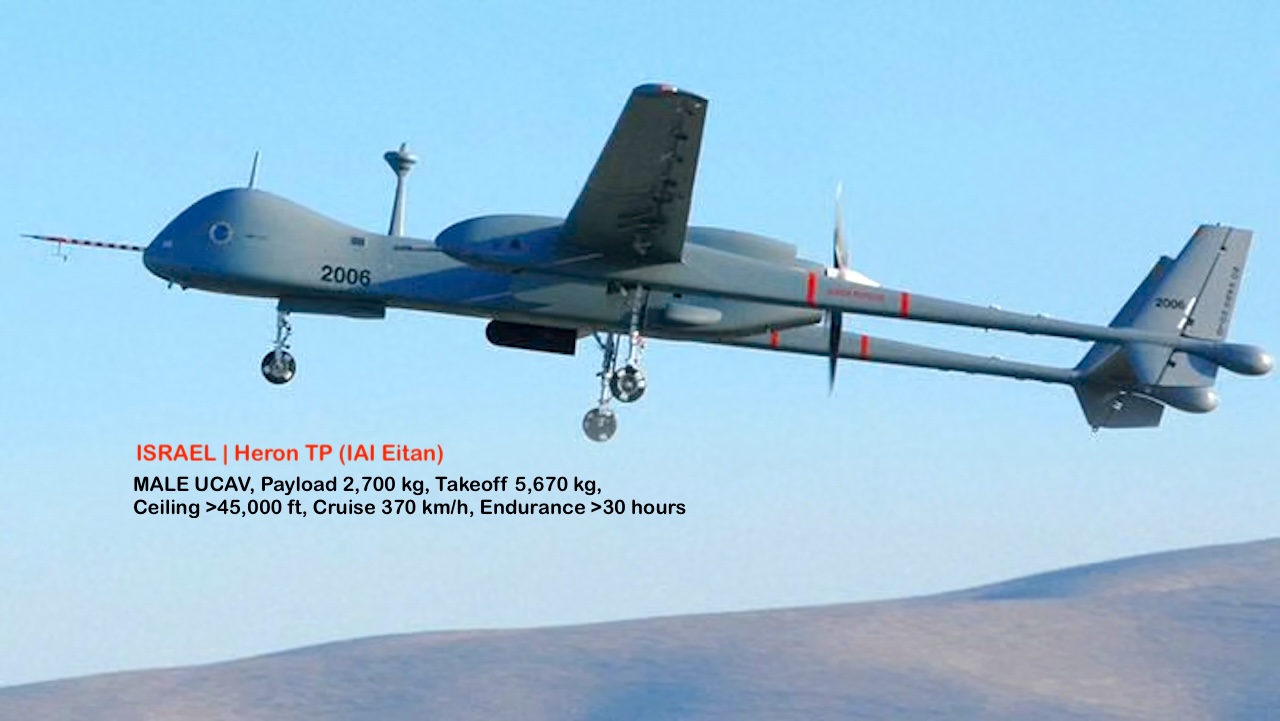
The world’s most famous machines live here — America’s MQ-9 Reaper, Israel’s Heron TP, Turkey’s Bayraktar TB2, China’s Wing Loong II, and Russia’s Orion. Each has drawn its own blood and headlines.
Other notable examples include:
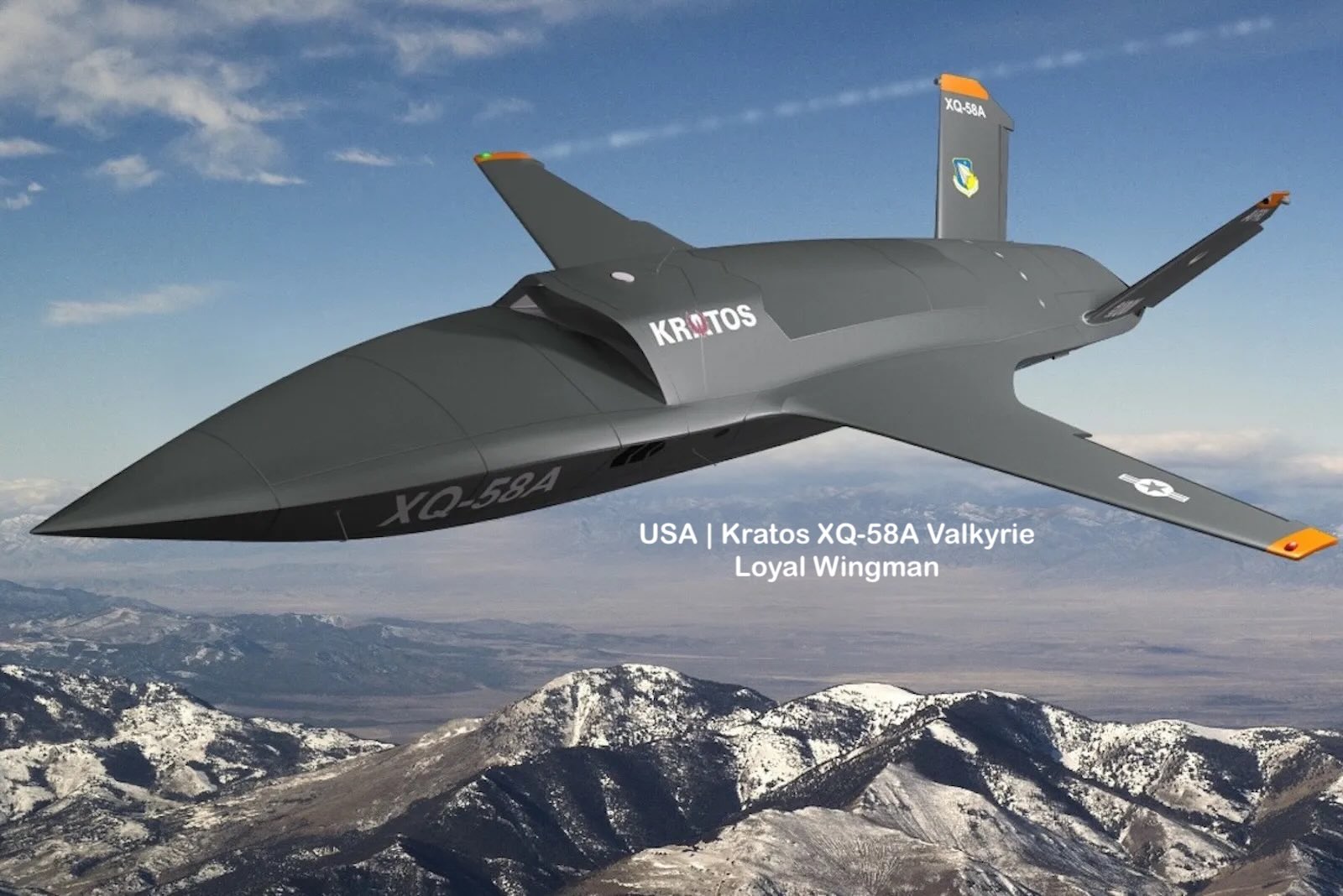
- American: MQ-1 Predator and Kratos XQ-58A Valkyrie
- Turkish: Bayraktar Akıncı, and TAI Anka
- Israeli: IAI Heron, IAI Eitan and Elbit Hermes 900
- Chinese: CASC CH-4 and CH-5 Rainbow
- Russian: S-70 Okhotnik and Kronshtadt Orion
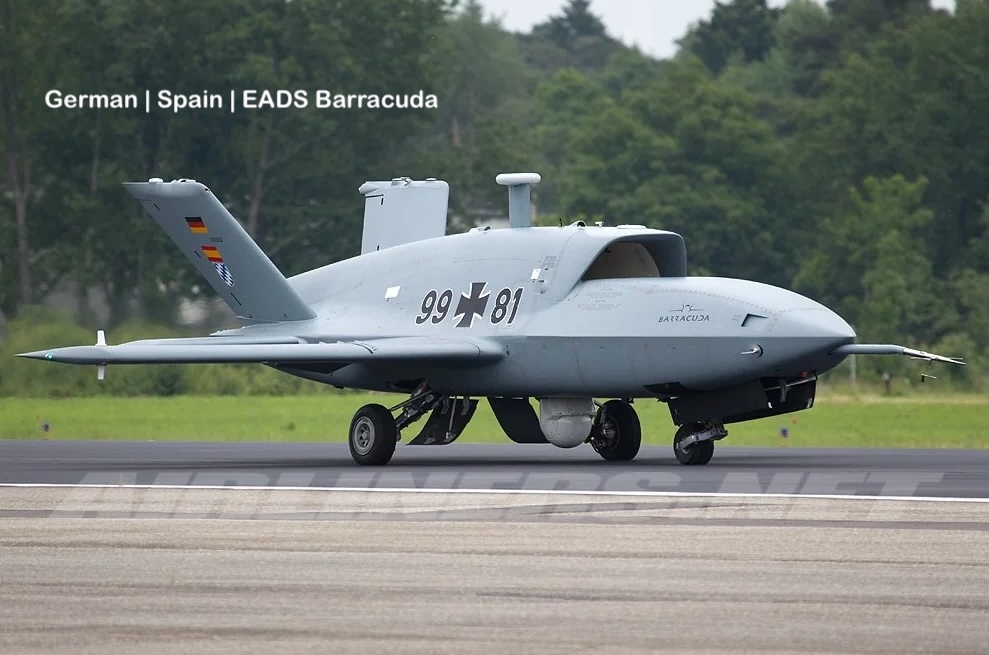
- European: EADS Barracuda (Germany/Spain) and Eurodrone (Airbus–Dassault Aviation–Leonardo)
- Indian: DRDO TAPAS and FWD Kaal Bhairava
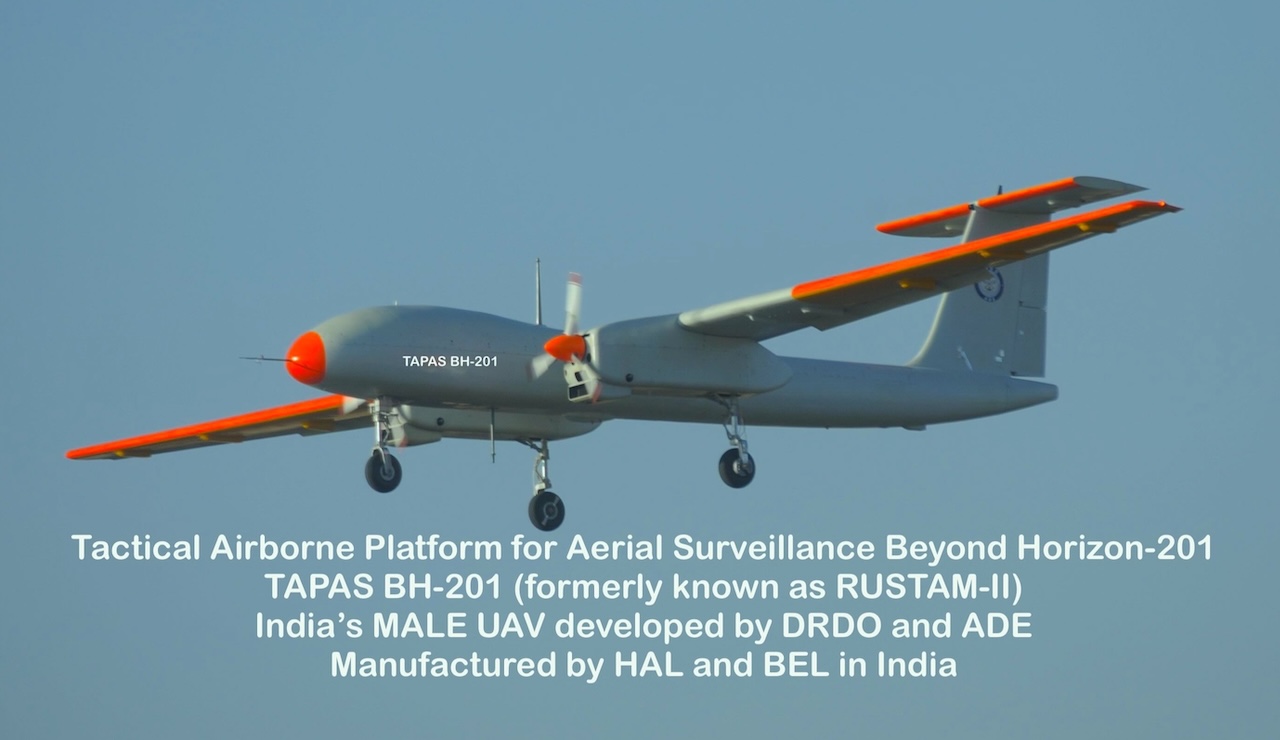
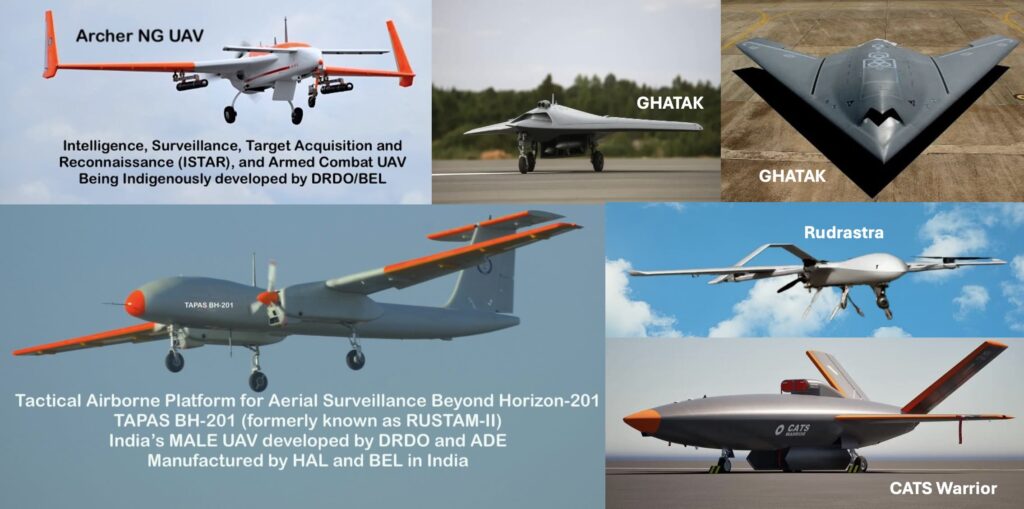
India’s answer, the DRDO TAPAS-BH-201 (earlier name Rustom-II), now in advanced stage of deployment and join that club. Built to deliver 18-hour endurance with modern sensors and precision munitions, TAPAS is designed not just for surveillance but for persistent presence — the kind of aircraft that can watch, record, and if needed, retaliate.
Turkey’s Bayraktar TB2 sits at an interesting crossroad — long endurance, small body, and remarkable affordability. It operates in the blurred line between tactical and MALE categories, proof that clever design can outmatch size.
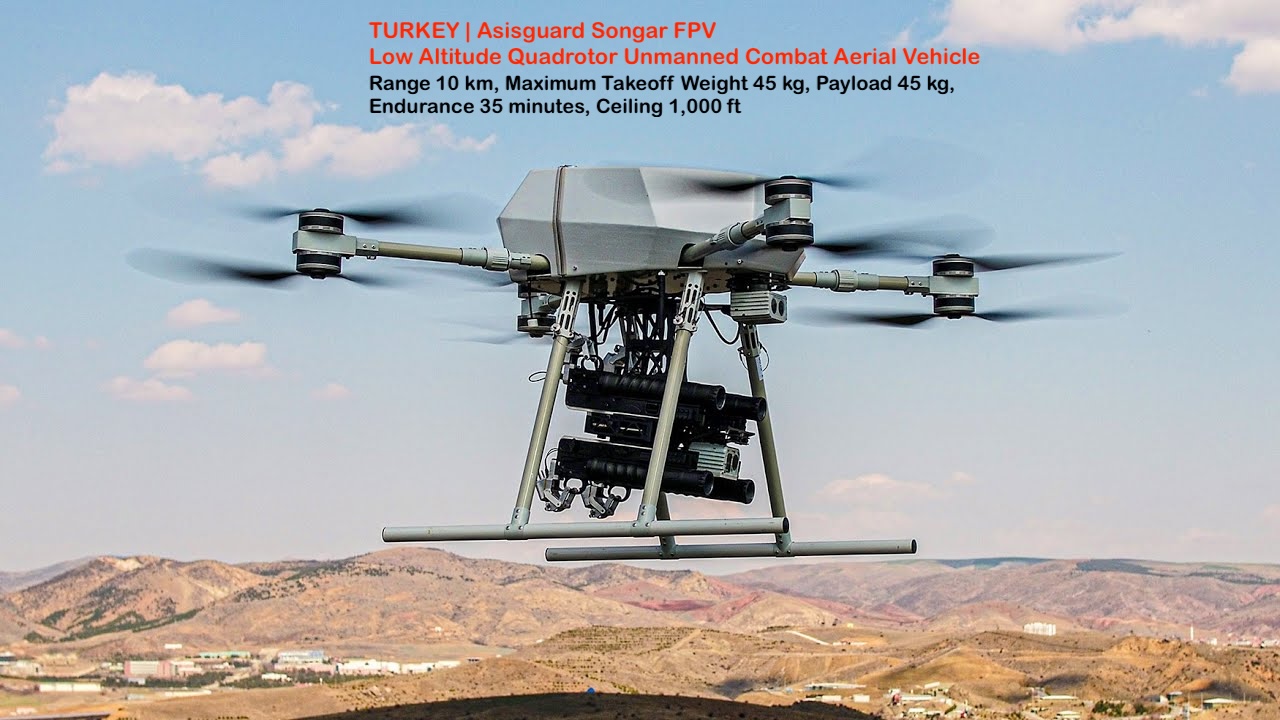
Although the Bayraktar TB2 has been celebrated as a battlefield veteran — from Syria and Libya to Azerbaijan and Ukraine — its performance against a strong Air Defence (AD) network remains debatable. During Operation Sindoor in May 2025, Turkey reportedly supplied around 350 drones, including Bayraktar TB2 and Asisguard Songar models, to Pakistan and even provided operational support.Yet the campaign proved sobering — Indian AD systems detected and neutralised most of these drones before they could act, exposing the limitations of the TB2 in heavily defended airspace.
Loitering Munitions — The One-Way Revolution
If MALE drones are hunters, loitering munitions are assassins. These “suicidal” drones linger above the battlefield until a target appears, then plunge in a final, explosive dive.
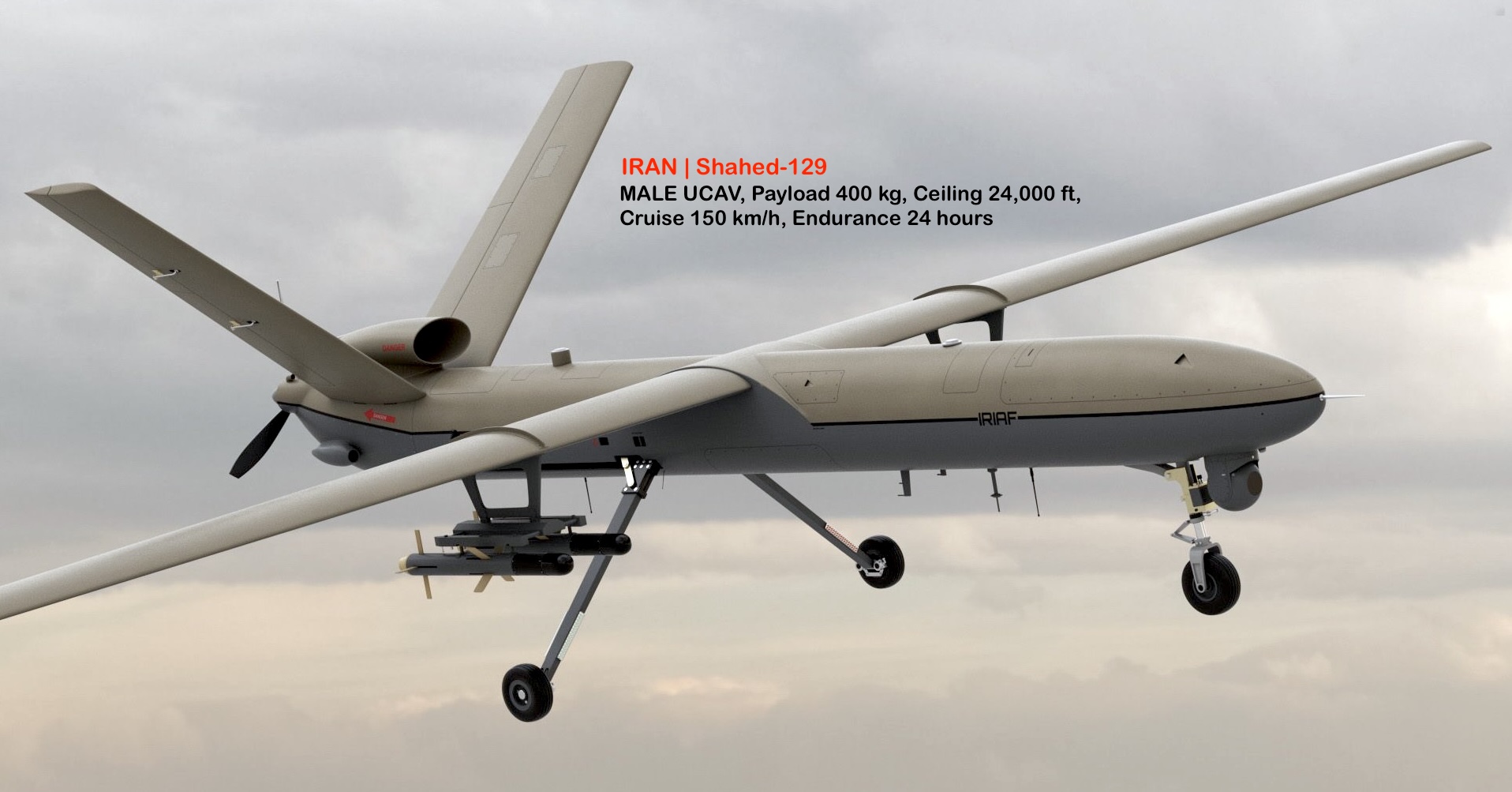
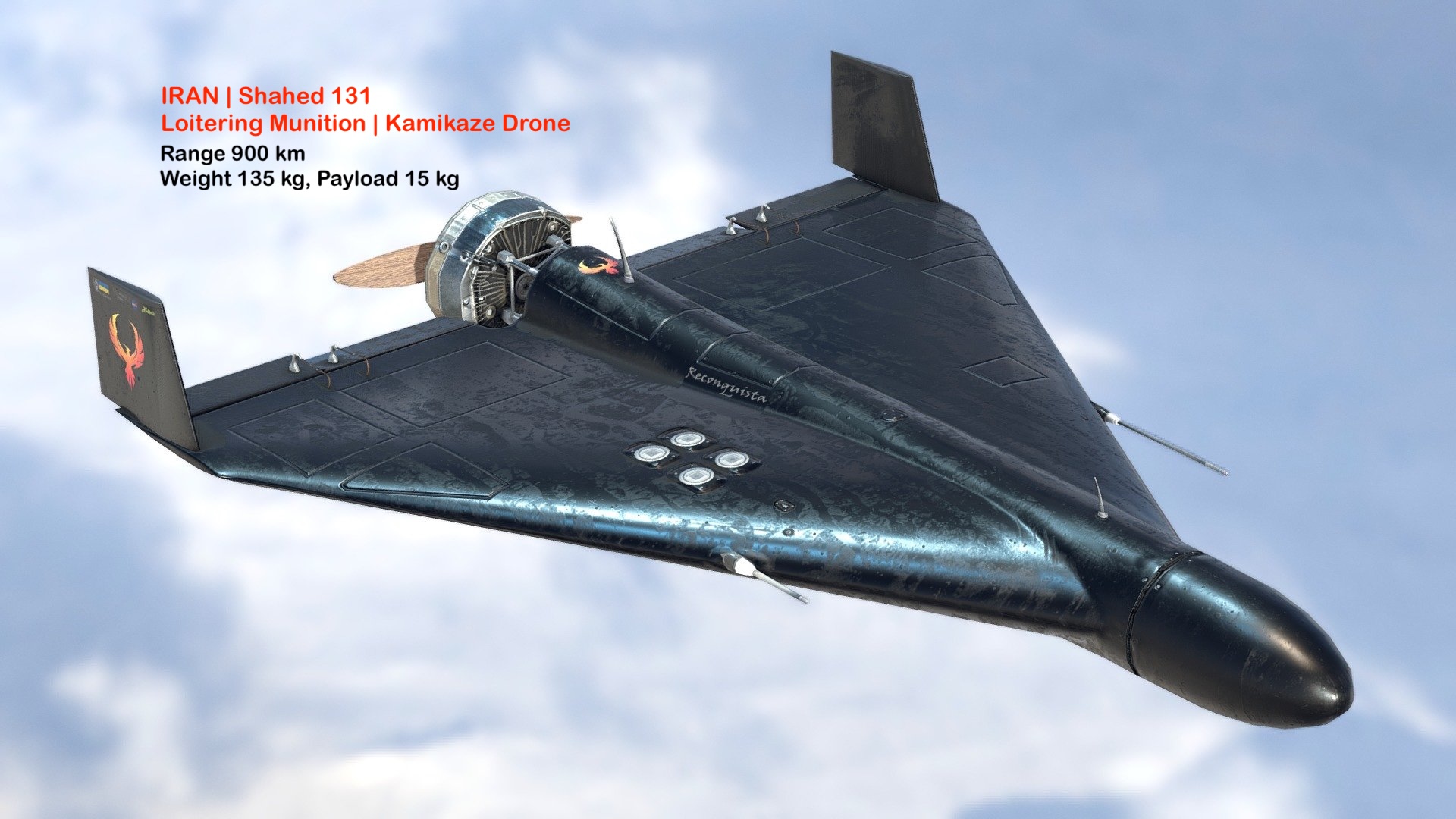
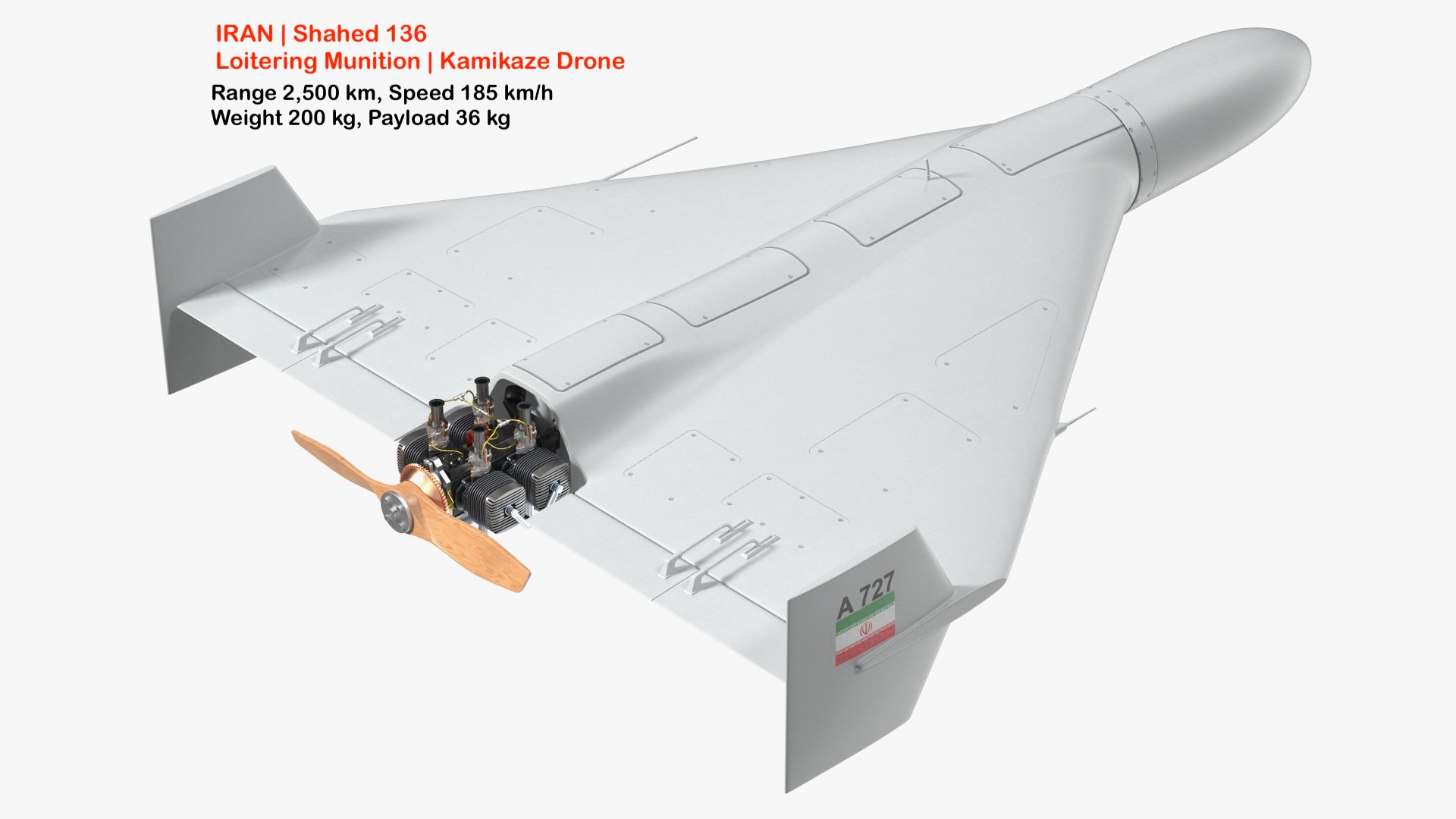
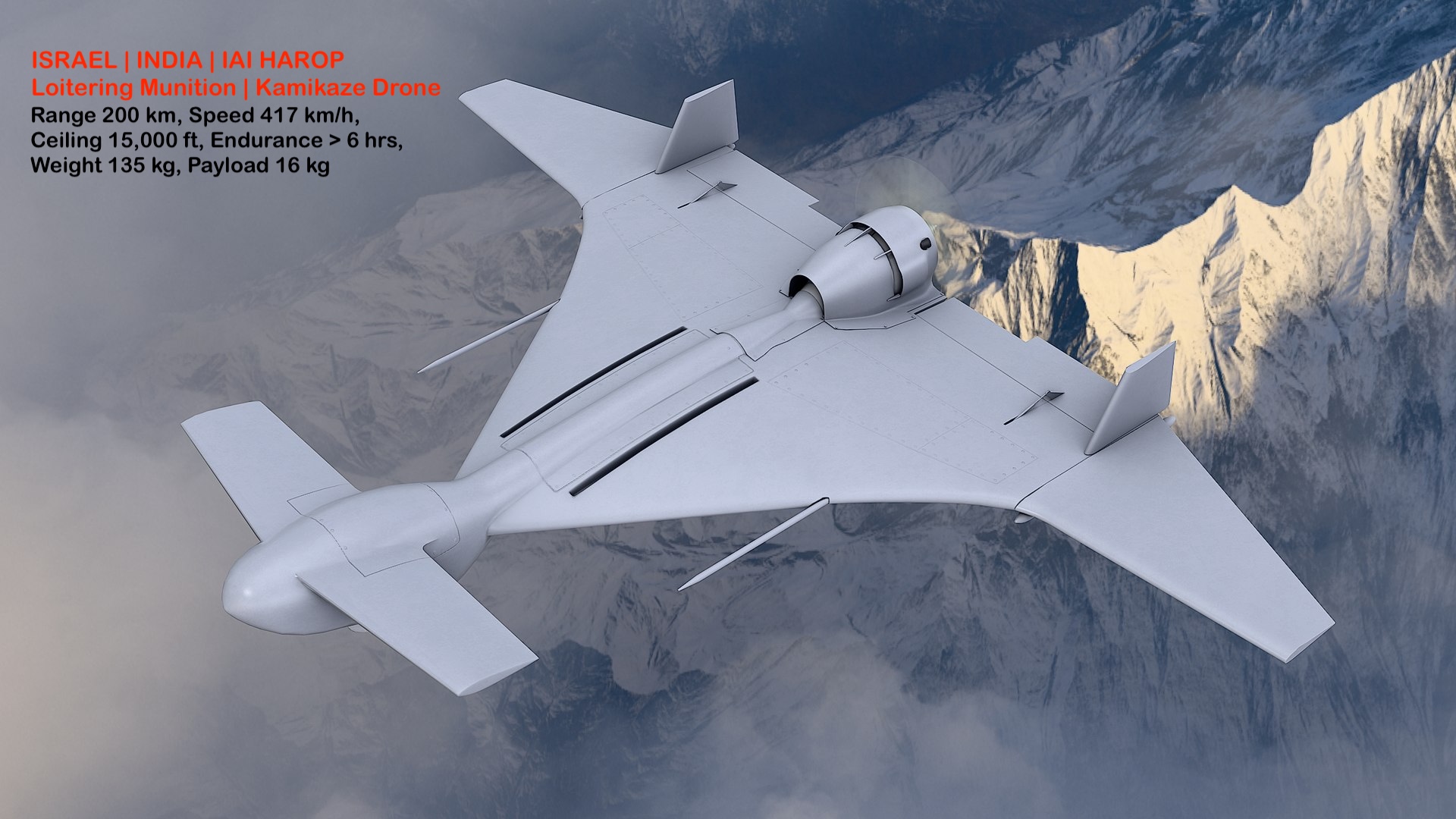
Iran’s Shahed-136, rebadged in Russian service as the Geran-2, rewrote the cost calculus of modern war: cheap enough to be mass-launched, costly enough to force defenders to burn expensive interceptors. Israel’s IAI Harop — long part of India’s inventory — homes on radar emissions like a moth to flame, neutralising surface-to-air batteries with ruthless efficiency.
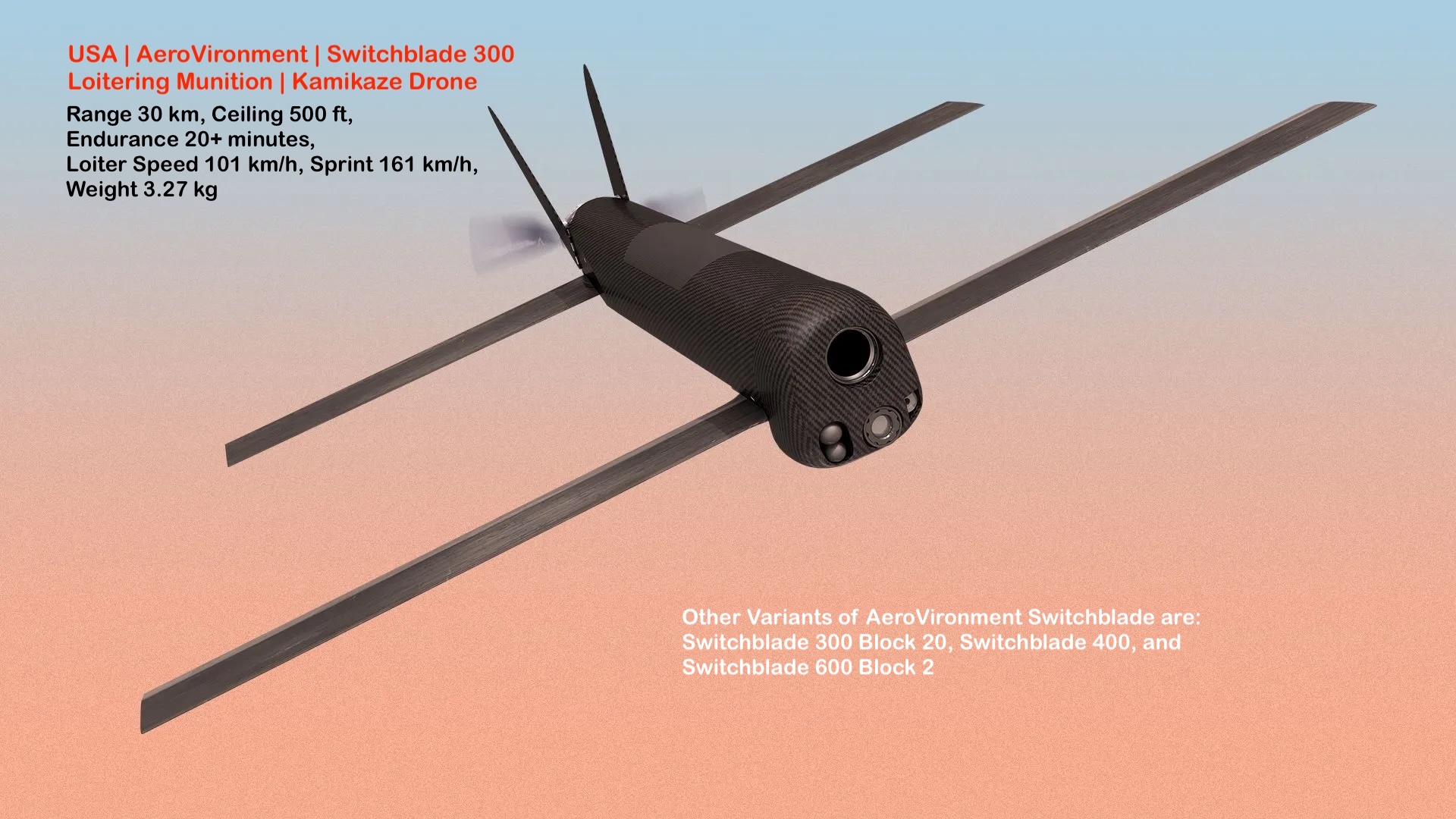
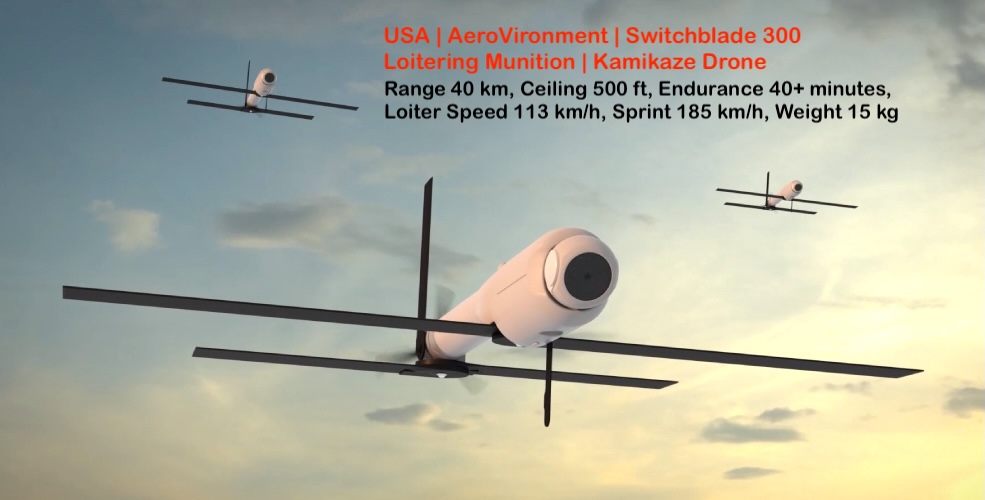
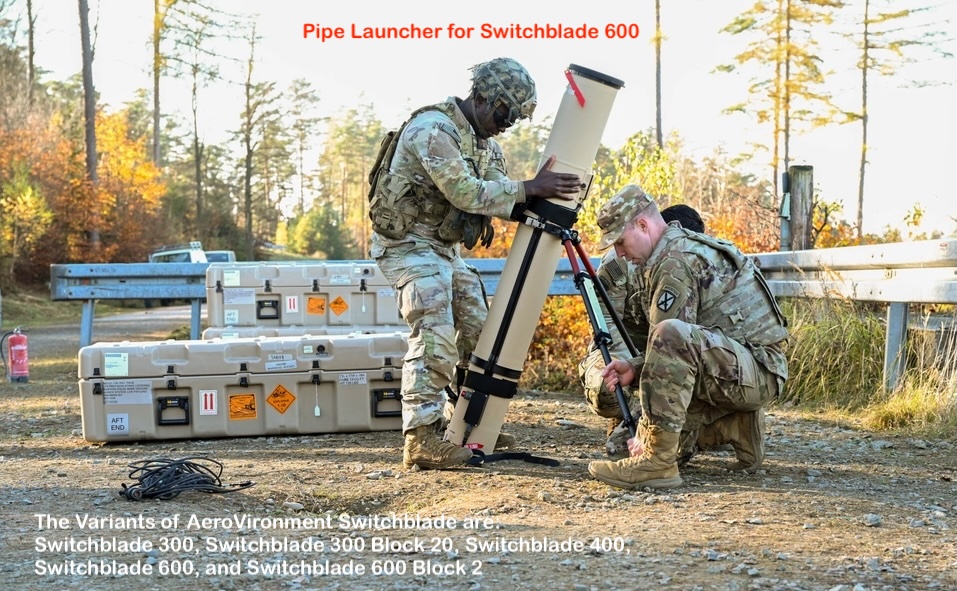
At the short-end of the spectrum sits the AeroVironment Switchblade family — small, portable loiterers designed for squad-level use. The Switchblade 300 is light enough to fit in a soldier’s backpack, launched from a tube and steered via a handheld controller or datalink; it is intended for rapid, precision strikes against exposed personnel and light vehicles at the tactical edge. The heavier Switchblade 600 trades portability for punch: with greater range, speed and a larger warhead, it is built to defeat armour and hardened positions. Together, these systems turn a platoon’s reconnaissance into immediate kinetic effect.
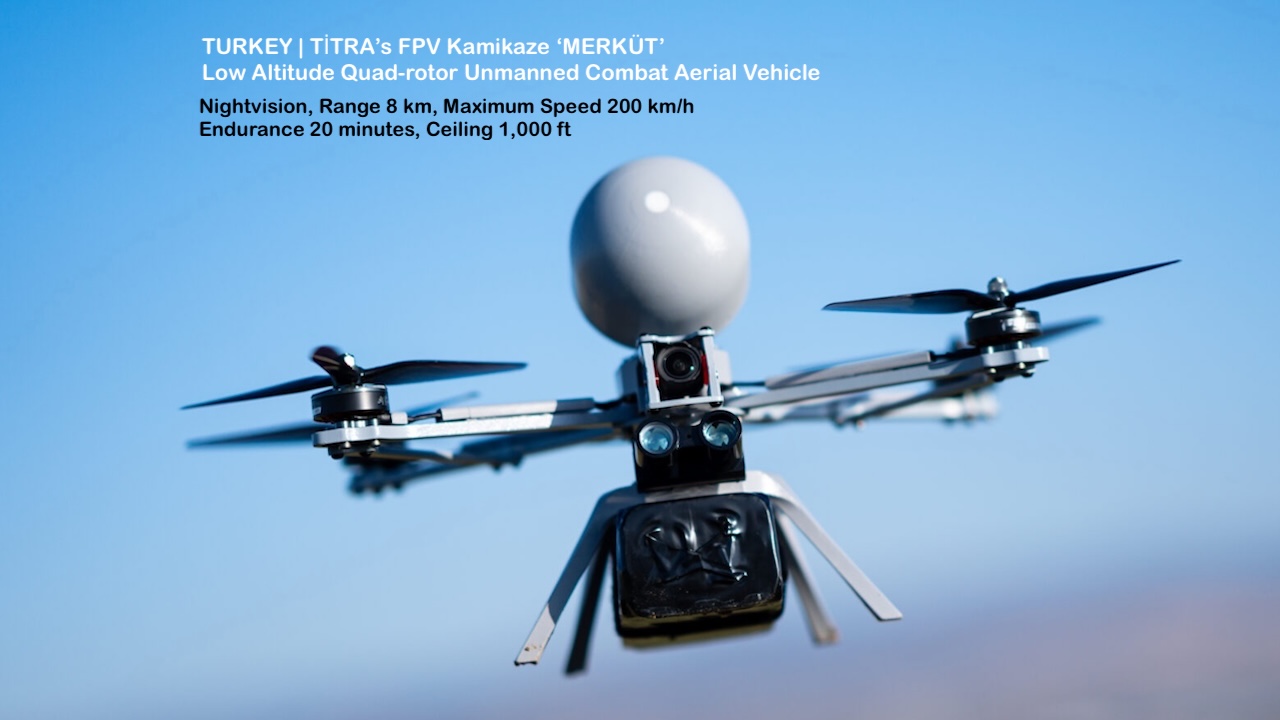
Other notable loiterers populate the theatre: Russia’s ZALA Lancet family and the Lancet variants used in Ukraine offer heavier payloads and longer stand-off ranges; China’s compact tactical loiterers (several commercial and military designs) mirror the global trend towards small, affordable strike assets; and a host of improvised or commercial conversions — FPV kamikaze drones and modified quadcopters — serve as short-range, low-cost strike options in many conflicts.
From the man-portable Switchblade to theatre-range Lancet and Shahed types, loitering munitions have democratised precision strike. They are the cruise missiles of the masses — inexpensive, expendable, and terrifyingly effective.
FPV Drones — War in First Person
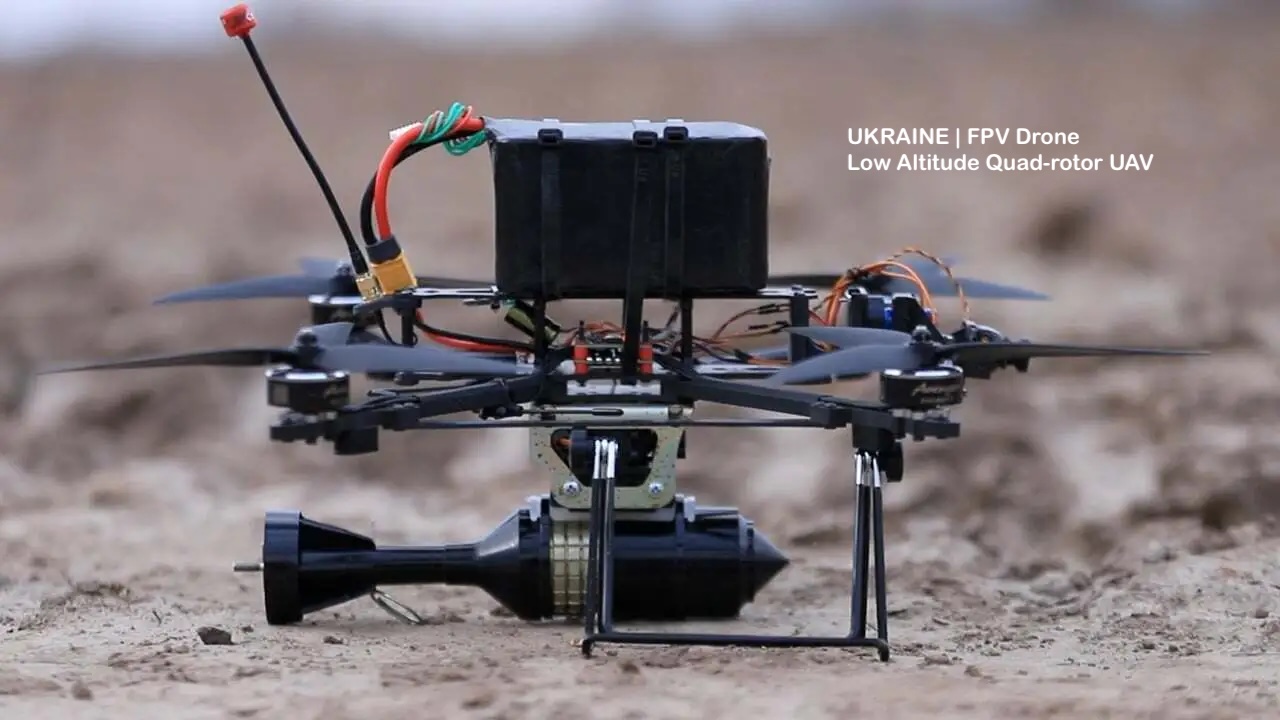
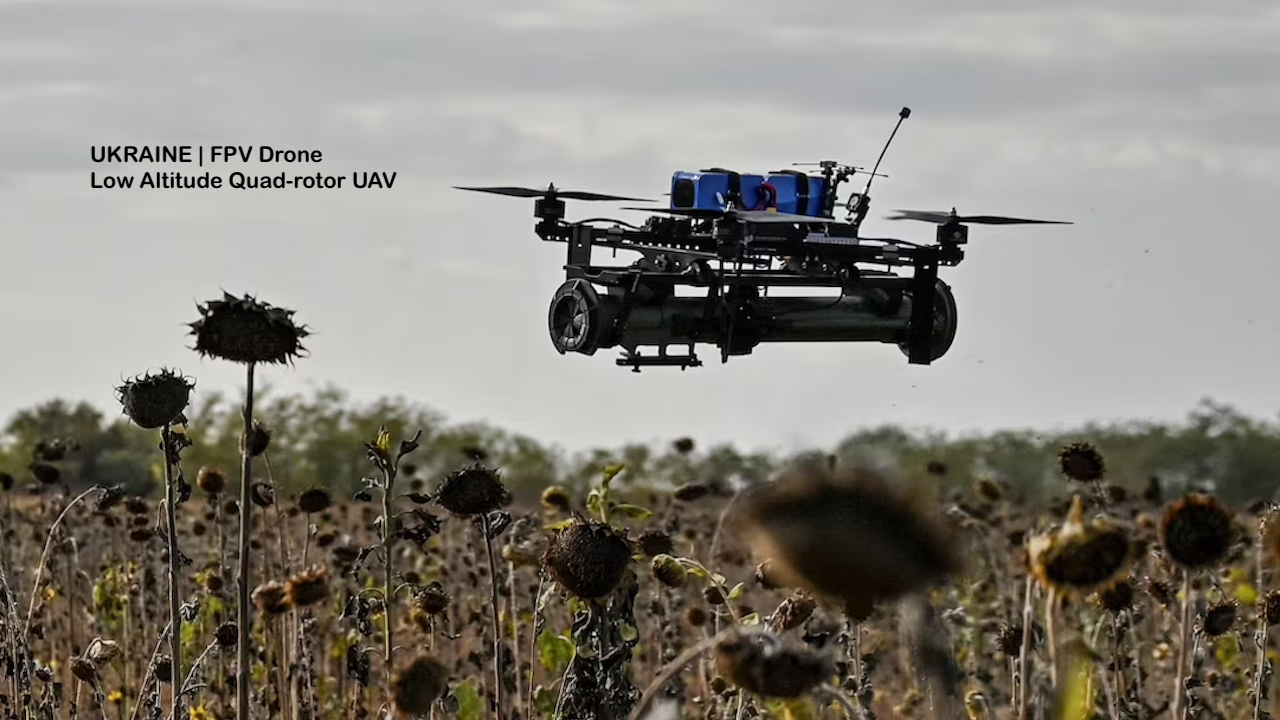
At the other end of the scale are the FPV (First-Person-View) drones — the ad-hoc racers turned assassins of trench warfare. Piloted through head-mounted goggles, they scream through alleys, bunkers, and tree lines, carrying a grenade or shaped charge to the target.
They are the weapon of immediacy — low-cost, high-agility, and brutally personal. In Ukraine, entire brigades have been built around these improvised strike platforms. Indian innovators have taken note, with local startups designing terrain-adapted FPV systems for mountain and urban use.
Stealth UCAVs — The Coming Shadow Fleet
Beyond endurance and affordability lies the next frontier — stealth Unmanned Combat Aerial Vehicles (UCAVs). These flying wings are built not to be seen, combining stealth shaping, internal weapon bays, and autonomous strike logic.
Notable stealth / low-observable drones (by status)
Operational / fielded (or reported to be in service)
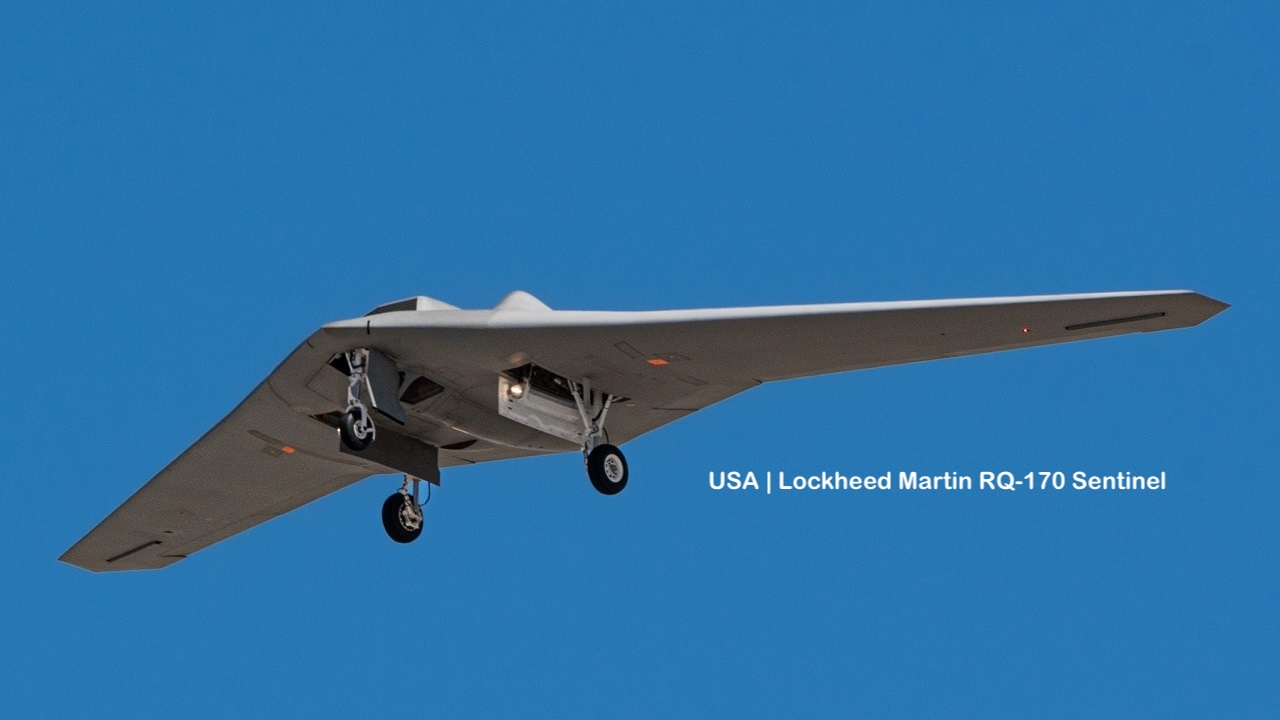
Lockheed Martin RQ-170 Sentinel (USA) — low-observable ISR platform; widely described as stealthy and used for deep reconnaissance.
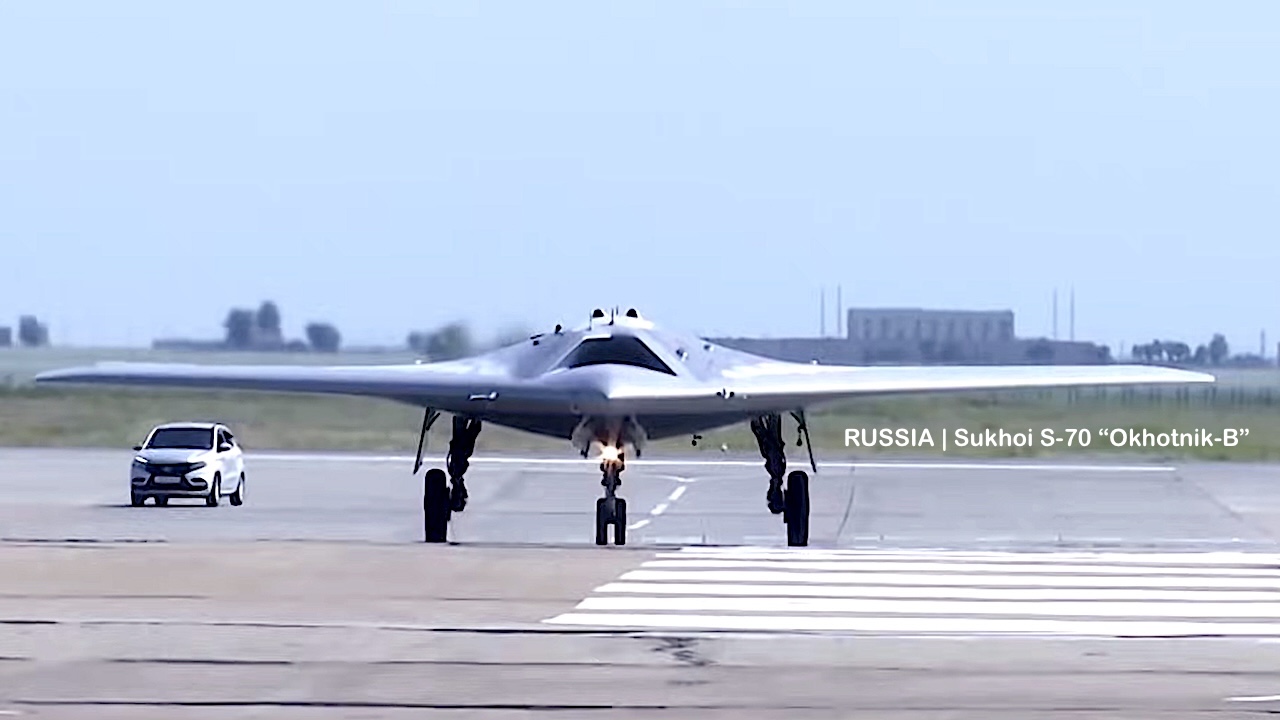
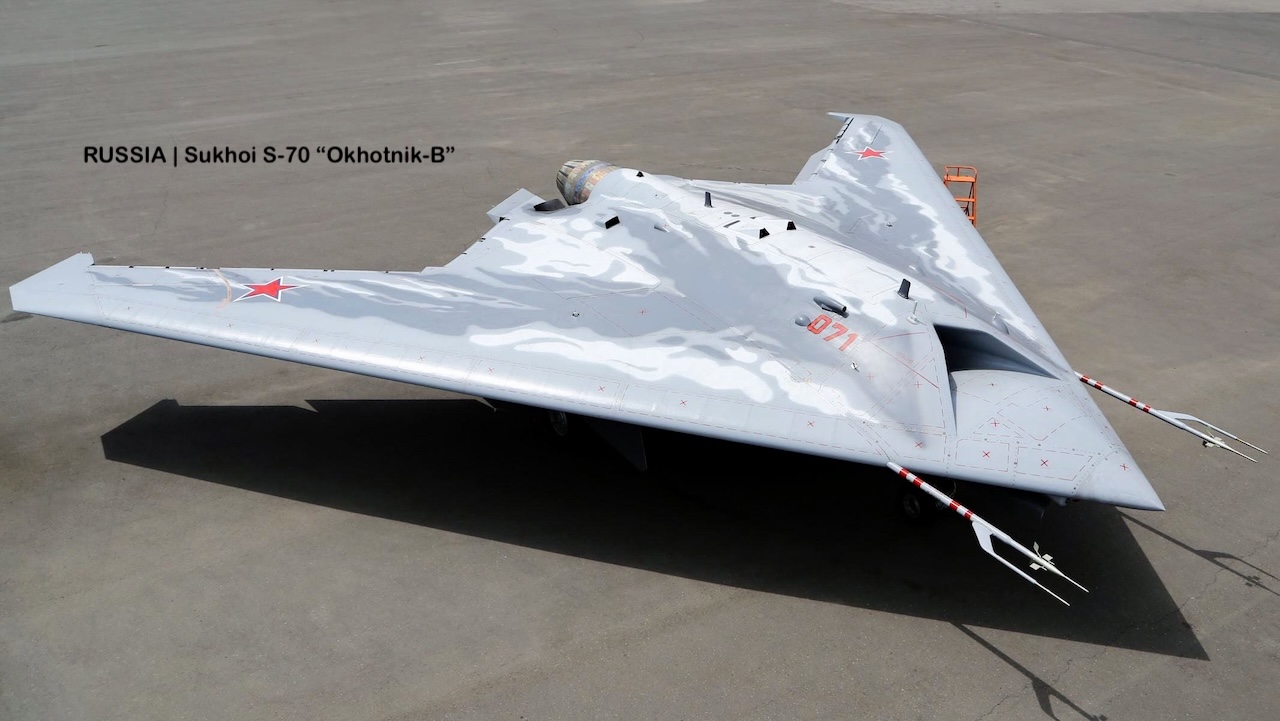
Sukhoi S-70 “Okhotnik-B” (Russia) — heavy flying-wing UCAV with low-observable shaping; tested with Su-57 operations.
Kratos XQ-58A Valkyrie (USA) — an attritable “loyal wingman” with reduced RCS (semi-stealthy) intended to operate alongside manned fighters.
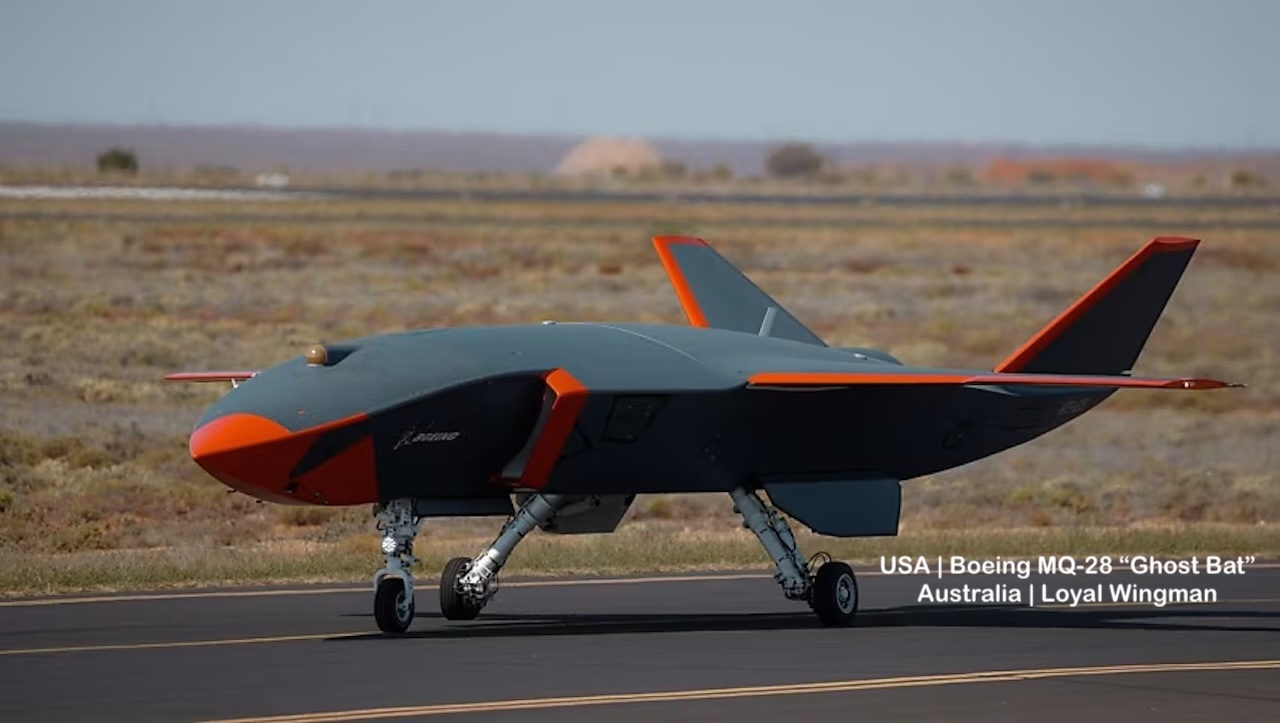
Boeing MQ-28 “Ghost Bat” / Loyal Wingman (Australia) — low-observable loyal wingman concept in advanced testing/early service.
Demonstrators / prototypes
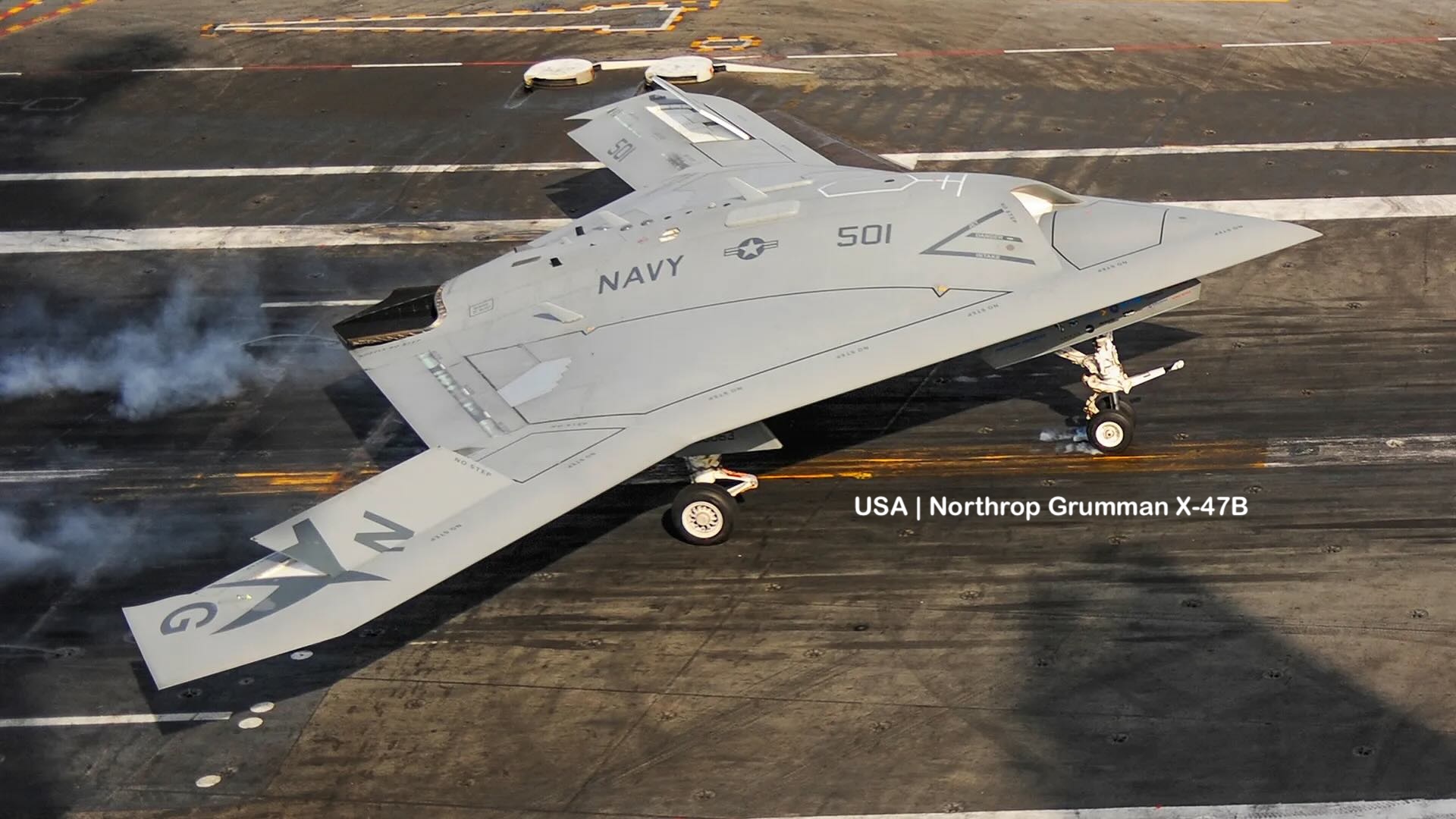
Northrop Grumman X-47B (USA) — carrier-based stealth UCAV demonstrator; validated deck operations and low-observable aerodynamics.
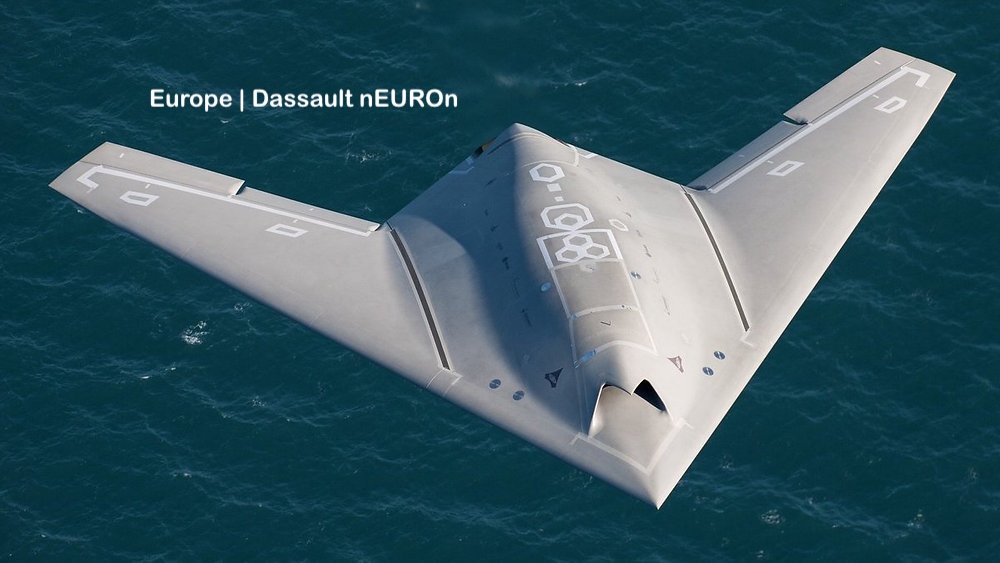
Dassault nEUROn (Europe) — European stealth UCAV demonstrator led by Dassault; technology demonstrator for future stealth combat drones.
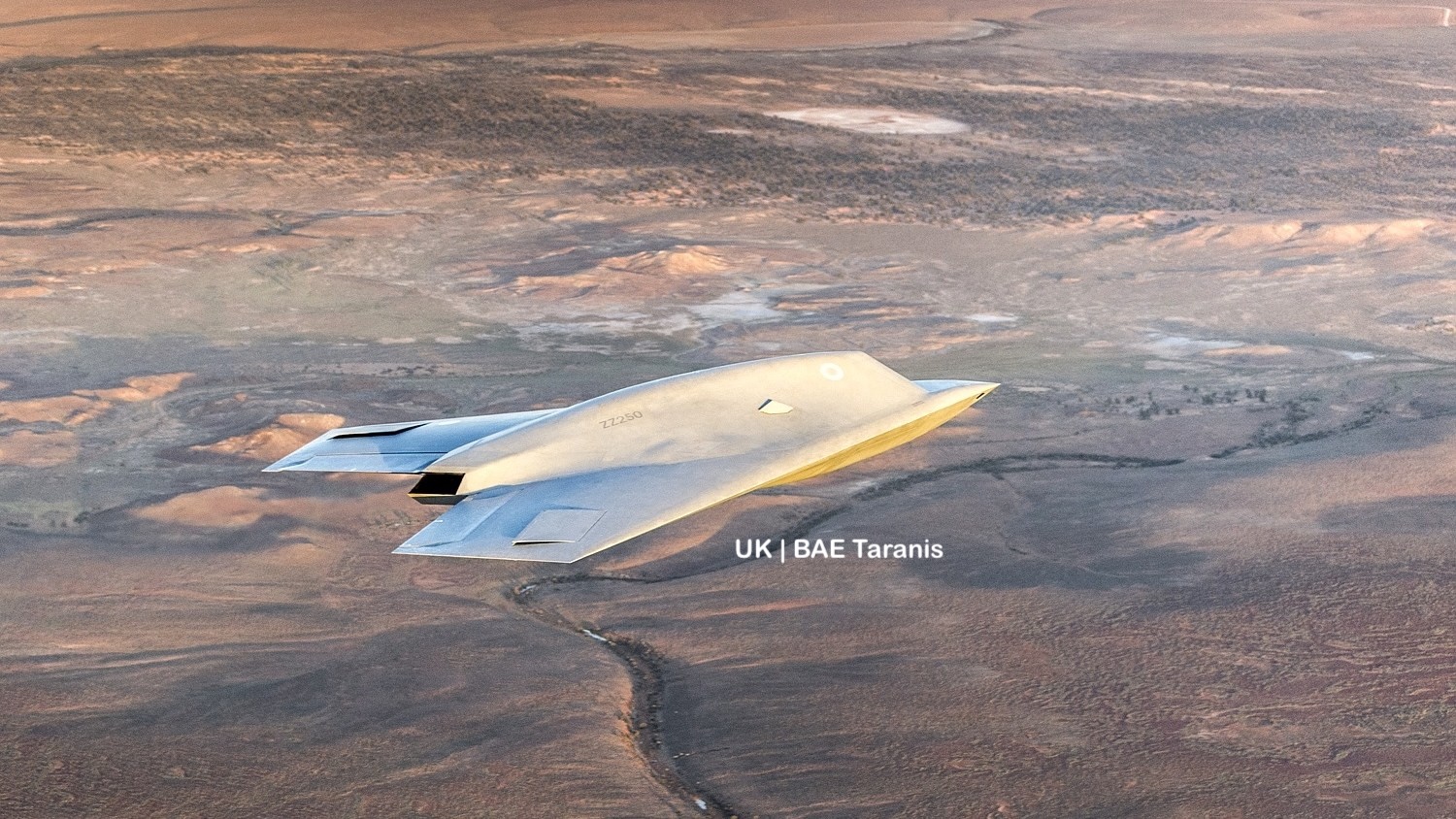
BAE Taranis (UK) — British stealth UCAV demonstrator focused on autonomy and low observability (technology demonstrator).
- EADS Barracuda (Germany/Spain) — stealthy UCAV demonstrator concept (development/demos).
Northrop Grumman/Boeing (various X-series) — past demonstrators like the Boeing X-45 (J-UCAS family) explored low-observable UCAV concepts.
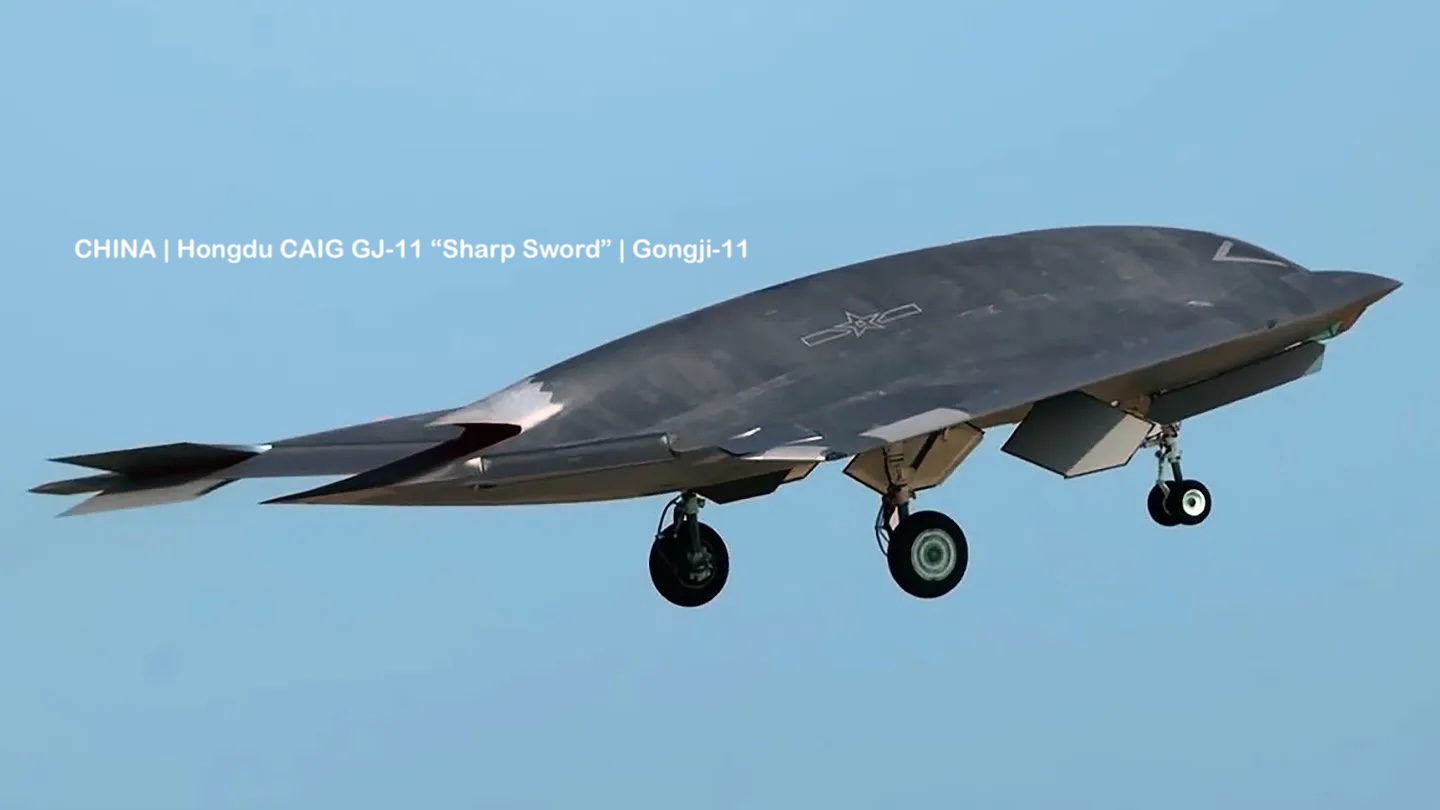
Hongdu / CAIG GJ-11 “Sharp Sword” / Gongji-11 (China) — flying-wing stealth UCAV demonstrator; publicised in Chinese exhibits and media.
“Dark Sword” / conceptual programs (China) — LO (low-observable) UCAV concepts and demonstrators (documented in defence reporting).
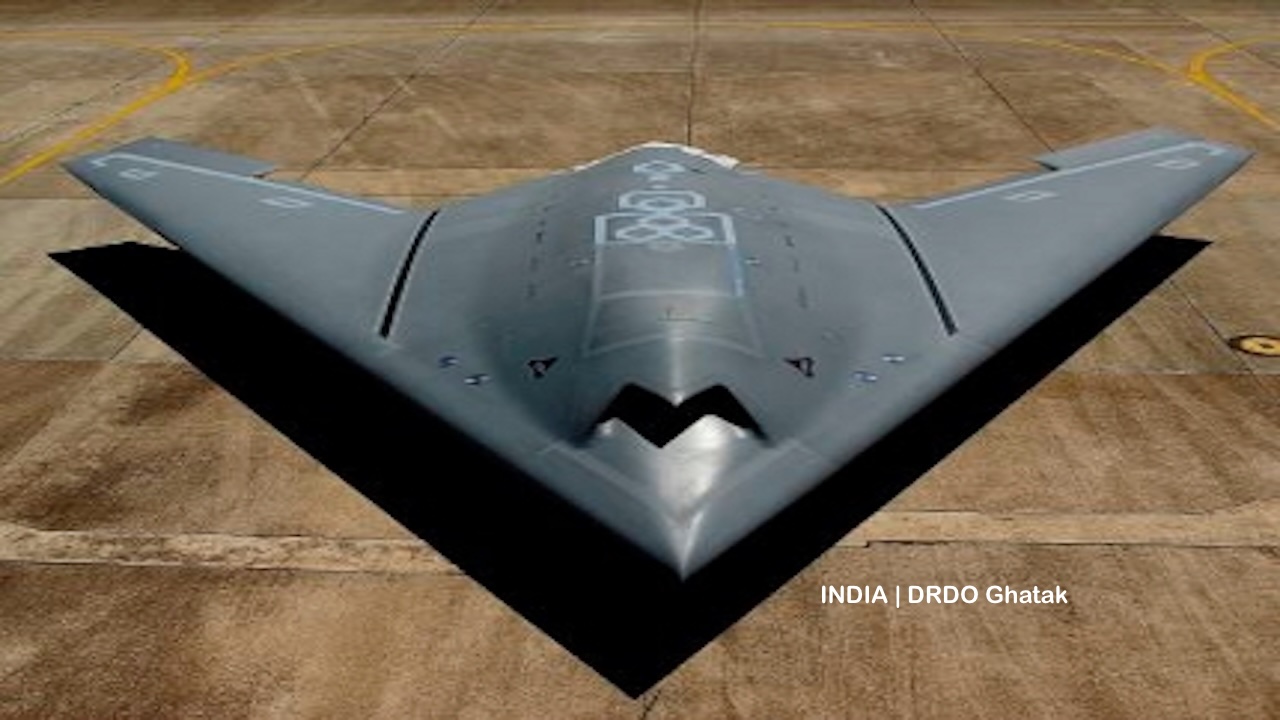
DRDO Ghatak (India) — indigenous flying-wing stealth UCAV under the AURA programme; demonstrators tested, full-scale prototype expected later this decade.
India’s leap into this club is the DRDO Ghatak (घातक) — a jet-powered stealth UCAV under the AURA programme. Ground tests of scaled demonstrators are under way, and a prototype flight is expected later this decade. The plan: internal payloads of around 1.5 tonnes, a combat radius beyond 1,000 kilometres, and enough AI to fly, fight, and survive.
When it finally takes to the air, Ghatak will mark India’s most ambitious aerospace experiment since the Light Combat Aircraft. Its rivals — Russia’s S-70 Okhotnik, America’s X-47B, and Europe’s nEUROn — prove that this class of aircraft is not a fantasy but a coming necessity.
The “Loyal Wingman” — A New Kind of Teammate
Between the cheap and the stealthy lies a new species: the Loyal Wingman — an unmanned companion that fights beside manned fighters.
Think of it as an obedient partner rather than a servant: it can scout ahead, jam radars, or fire weapons under the pilot’s supervision. In combat, two to four such drones may accompany a single aircraft, extending its reach without risking human life.
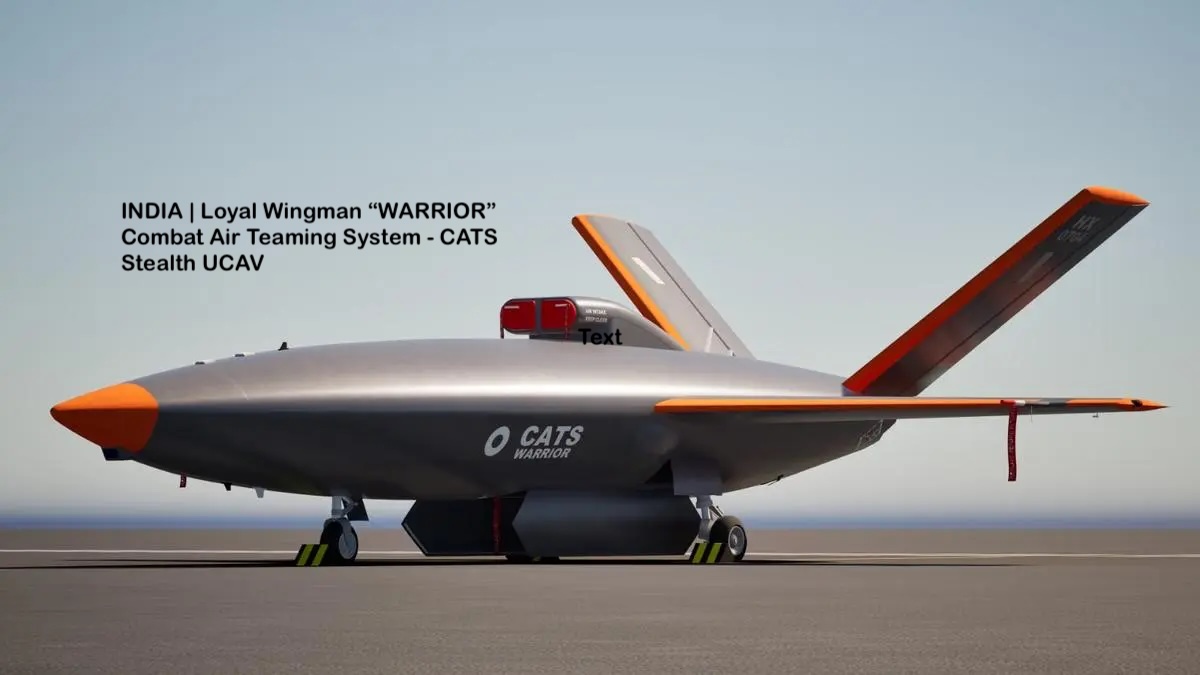
The United States has the Kratos XQ-58A Valkyrie, Australia fields the Boeing MQ-28 Ghost Bat, Russia flies the Okhotnik with the Su-57 — and India is preparing its own under HAL and DRDO’s CATS Warrior programme.
For now, these drones launch from runways or transports; true in-flight bay launches from the “mothership” remain a futuristic dream. But that dream is now closer than it looks.
Swarm Drones — When Machines Think in Packs
If Loyal Wingmen are followers and unmanned companions of the manned mothership, swarm drones are collectives — hundreds of small, AI-linked machines flying as a system of their own. Each unit talks to the other, sharing data, adjusting formation if one falls, and overwhelming enemy defences with the sheer intelligence of numbers.
Swarm technology is what happens when biology meets code.
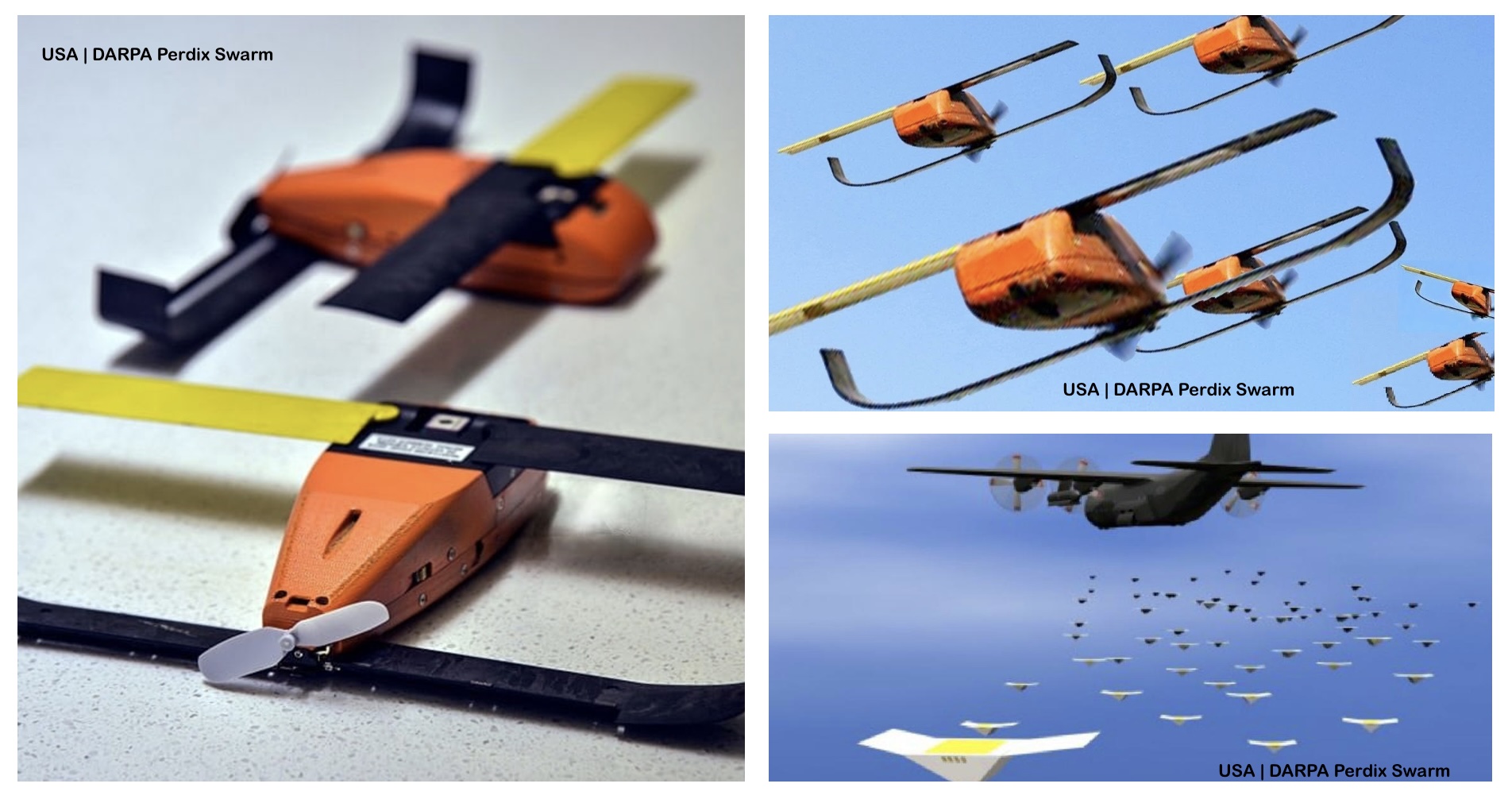
Swarm drones come in a wide range of sizes depending on their mission. At the micro end, the U.S. DARPA Perdix drones — just 165 mm long, 300 mm in wingspan, and weighing 290 grams — are designed for reconnaissance, sensor saturation, and electronic confusion, and sometimes for scouting larger munitions rather than carrying explosives themselves.
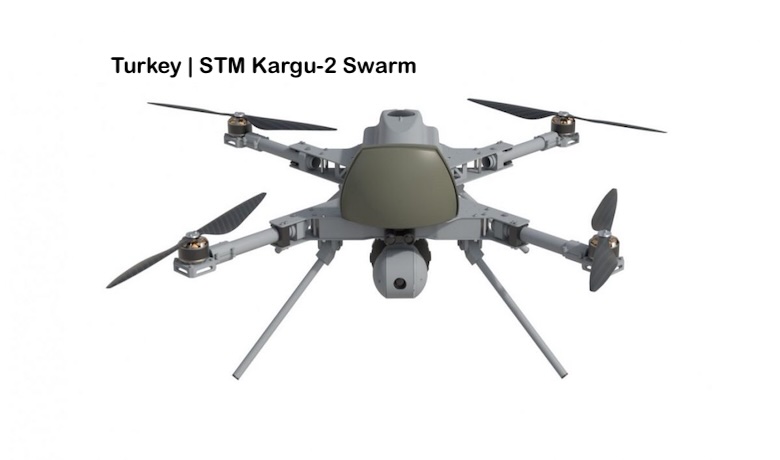
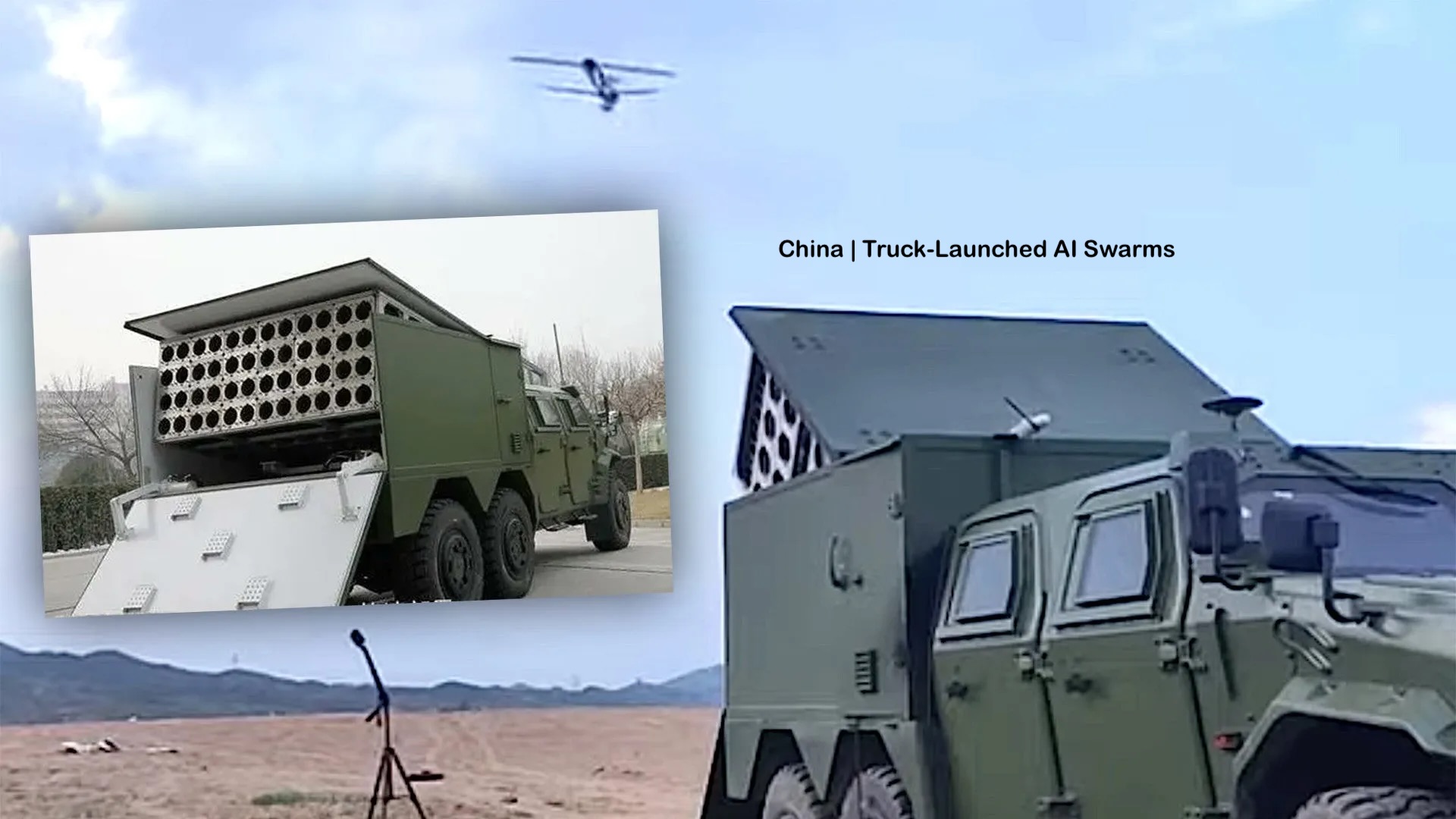
China has repeatedly showcased large formations of mini-UAVs launched from pods or trucks, demonstrating coordinated path planning and target assignment at scale. STM Swarm Kargu-2, weighing around 6.8 kg each, has been tested by Turkey in small autonomous swarms for coordinated kamikaze strikes — among the first tactical, precision, armed swarm-strike demonstrations.
Israel is widely believed to field advanced swarming technologies, though most details remain classified. Some operations in Gaza and Lebanon suggest coordinated mini-UAV behaviour. Russia has shown early swarm experiments, but no battlefield-proven autonomous swarms have been publicised or seen yet.
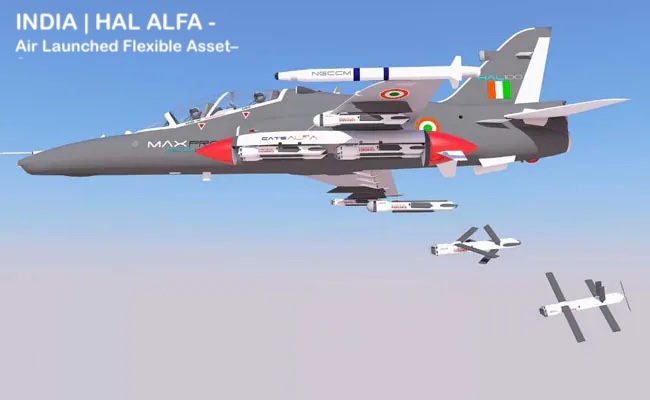
India’s ALFA-S system, built by HAL and NewSpace Research, has already demonstrated coordinated flight and in advance stage of testing.
Here, the distinction is crucial: a Loyal Wingman is controlled by the pilot in the mothership flying behind it (at a tactically safe distance to lower detection risk and avoid being targeted first); a swarm takes cues from its peers. One operates in hierarchy; the other operates as a hive.
Swarms are not just a weapon — they are the first glimpse of collective artificial intelligence in combat.
Choosing the Right Eye in the Sky
No single drone type dominates the battlefield. Each serves a mission, a philosophy.
For persistent maritime and border surveillance, MALE drones like the Reaper and Heron remain unmatched. For massed, low-cost attrition, Shahed-type loiterers redefine cost efficiency. For squad-level strikes, FPVs and Switchblades deliver lethality within minutes. For high-risk deep strikes, stealth UCAVs such as the Ghatak promise entry into airspaces that manned aircraft fear.
Endurance, however, is not range. A drone that flies for 20 hours may only loiter briefly at a distant front if half that time is spent getting there — a nuance that decides the real worth of every specification sheet.
The Global Benchmarks and India’s Place Among Them
The MQ-9 Reaper remains the benchmark — the hunter-killer that changed the U.S. way of war with 27-hour endurance and precision payloads. India’s limited naval acquisition recognises its unmatched maritime eyes, though cost and control issues keep it elite. India is making its advanced next variant MQ-9B SkyGuardian in India.
The Bayraktar TB2, once the “people’s drone,” proved that smart engineering could tilt wars in Libya, Syria, and Nagorno-Karabakh — until sophisticated air defences clipped its wings during Operation Sindoor.
Israel’s Heron and Harop, meanwhile, have been India’s most trusted allies in the sky. The Heron family has patrolled our borders for years, while the Harop — part drone, part missile — gives India a standoff strike option that few nations possess.
The Harop’s simplicity is its brilliance: it loiters, sees, decides, and kills — or aborts. It embodies the cold efficiency of drone warfare in its purest form.
India’s Rising Fleet — From Workshop to War Zone
A decade ago, India’s unmanned story was confined to surveillance and target drones. Today, the portfolio spans reconnaissance, logistics, kamikaze, and stealth platforms.
TAPAS — The Patient Workhorse
The TAPAS (Rustom-II) is India’s pragmatic step toward MALE self-reliance — twin-boom, long-legged, capable of carrying sensors and, soon, weapons. Trials with the Air Force and Navy continue; operational induction is expected by 2026. Its success will anchor India’s indigenous surveillance grid.
GHATAK— The Ambitious Shadow
The Ghatak UCAV aims higher — a stealth strike aircraft for the 2030s, pairing with future fighters like Tejas Mk2. Its progress will depend on the maturity of stealth shaping, Kaveri engines, and autonomous flight systems. But the ambition is unmistakable: to build a platform that flies unseen and fights unheard.
Industry, Innovation, and Indigenisation
The Indian drone ecosystem is a mosaic — government labs, startups, and private giants moving in parallel.
Operational systems such as Nagastra-1R (loitering munition), ideaForge SWITCH and Netra (tactical UAVs), ALFA-S (swarm drones) and Lakshya (target drone) are already in service.
Upcoming programmes — Kaala Bhairav, Archer-NG, Bhargavastra, and HAL’s CATS Warrior — promise swarm, anti-swarm, and teaming capabilities.
Archer-NG is DRDO’s next-generation MALE UAV, developed with BEL and HAL, featuring 24–30+ hour endurance, a 300–400 kg payload, autonomous take-off/landing, and weaponisation for guided bombs, ATGMs, SAAW, Astra Mk-1, and loitering munitions—tailored for ISTAR and precision-strike missions. It has successfully completed its maiden flight, and service-ready armed Archer-NG is awaited.
Many private sectors including startups (such as Asteria Aerospace, ideaForge, Bharat Forge, NewSpace, Throttle Aerospace, Zen Technologies, Zuppa, Dixon, DCM Shriram, Dhaksha, Paras, RRP Defence, Garuda Aerospace) are innovating fast, producing low-cost FPVs, kamikaze drones, and AI-enabled systems tailored for India’s terrain — from Himalayan altitudes to maritime patrols.
Tata Advanced Systems Limited (TASL) has developed a suite of indigenous UAVs, most prominently its Aerial Loitering System (ALS) family of loitering-munition “kamikaze” drones and VTOL surveillance platforms. The ALS-50 is a Vertical Take-Off and Landing (VTOL) loitering munition with an operational range of about 50 km, autonomous mission modes, EO/IR live feed, and abort/recovery options for precision engagements. The larger ALS-250 extends strike reach to roughly 250 km, carries anti-tank or pre-fragmented warheads, and is optimised for high-altitude operations (10,000+ ft) even in GPS-denied conditions. TASL also manufactures lightweight VTOL UAVs (~18 kg) with around two hours of endurance and modular EO/IR payloads for ISR missions in challenging terrain. Together, these platforms underscore Tata’s drive for self-reliance (“Make in India”), with in-house design of airframes, autopilots, mission software, and subsystems.
Foreign Partnerships
Strategic collaboration continues to fill the near-term gap.
Windracers (UK)–Bharat Forge JV is localising heavy-lift ULTRA cargo UAVs for Indian defence and civilian needs through a UK-India partnership.
Israeli Herons and Searchers, American MQ-series systems, and European logistics UAVs form the backbone of current operations. Many are now being locally manufactured under Make in India partnerships, blending foreign expertise with Indian production lines.
Among private players, Adani Defence & Aerospace has emerged as a major integrator. Its Hyderabad facility, built with Israel’s Elbit Systems, produces Hermes 900 (Heron) called Drishti-10 (StarLiner) ISR drone in India that has been inducted in Indian Navy recently. It has endurance of 36 hours and 450 kg payload capacity.
Another one being made by Adani is Agnikaa — a licensed Harop variant adapted for local use with endurance of 8–9 hours and a 23-kg warhead make it one of India’s most potent home-assembled loiterers.
Larsen & Toubro (L&T) has formed a joint venture with General Atomics (USA) to produce MQ-9B SkyGuardian drones in India. The JV will manufacture 87 drones under the Ministry of Defence’s ₹30,000-crore acquisition programme — a major boost for Indian MALE-class armed ISR capabilities with 40+ hours endurance. It is currently the largest such procurement for the IAF and other Indian services.
The Road to 2030
A pattern is now visible:
DRDO and HAL anchor high-end research and integration.
Private firms provide speed and tactical innovation.
Foreign partnerships deliver immediate capability while seeding technology transfer.
Export ambition ties it all together — positioning India not just as a buyer, but as a supplier of drones to friendly nations.
By 2030, India’s skies could carry not just imported eyes but indigenised wings.
Why It All Matters
The story of drones is no longer about gadgets — it is about control. Nations that command unmanned systems command the battlespace, the information flow, and the narrative itself.
India’s simultaneous pursuit of TAPAS, Ghatak, ALFA-S and CATS is not just technological ambition; it is strategic self-assertion. It signals a country unwilling to rent its future security.
As the fog of modern war thickens with jamming, deception, and AI-driven targeting, victory will belong to those who can blend stealth, endurance, and intelligence into a single machine.
And somewhere above the subcontinent, in the silent glide of a prototype wing, that future is already humming.