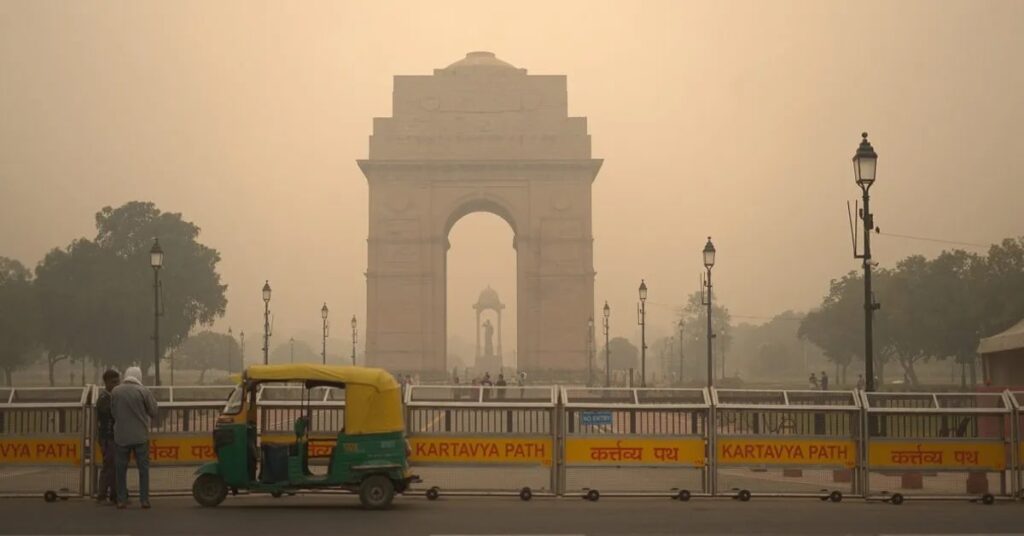
Delhi-NCR Suffocates as AQI Soars Beyond 700
On a cold, grey morning, the people of Delhi and its neighbouring regions woke up to an all-too-familiar reality: the Air Quality Index (AQI) soared past 700 in some pockets, plunging the national capital into a toxic haze. Skies turned murky, visibility dropped, and the usual rhythm of life came to a shuddering halt. The focus keyphrase for this article is air pollution Delhi NCR AQI 700 , and it captures not just a number, but the gravity of what millions are facing: urban breathing at a crisis point.
The Scene in the City
From Bawana to Anand Vihar and across stretches of the NCR, the air grew visibly thick. Vendors wrapped their scarves tighter, motorbike riders donned multiple masks, and parents kept children indoors. Reports from several monitoring stations showed AQI readings between 680 and 750 during the early hours, while select spots topped 770 levels at which even healthy individuals feel the impact.
On the roads, sunlight struggled to penetrate the smog. Trees, buildings and traffic lights appeared ghostly, and motorists flicked on headlights despite it being mid-morning. Commuters, used to the city s annual pollution surge, nonetheless started scrambling for surgical masks and air purifiers.
What s Driving the Sky to Grey?
Pollution rarely climbs like this without a blend of factors. First and foremost, emissions from vehicles, industries and construction remain the backbone of Delhi s smog-engine. These are constant. What pushes the crisis into emergency mode are weather conditions and regional sources.
In recent days, the wind has almost stalled. A shallow atmospheric layer has trapped pollutants close to the ground. Temperature inversion where a warm air layer traps the cold air below has prevented vertical mixing. In addition, smoke from fires in nearby states adds a lethal layer of particulates. Researchers point out that such meteorological patterns turn Delhi into a bowl of smog.
One environment analyst said:
The pollutants never go away; they just linger. With weak winds and low mixing, every emission adds up.
Health Impact: Everyone Suffers
When the AQI crosses 700, the air doesn t only hurt your eyes lungs start paying the price. Doctors report rising cases of coughing fits, irritated throats, wheezing and breathlessness. Elderly people and children are especially vulnerable, but even fit young adults are feeling the difference. Some described the air as dense, heavy, hard to inhale .
Schools announced indoor-only playtime; some hospitals reported spikes in asthma and COPD (Chronic Obstructive Pulmonary Disease) cases. The message from healthcare professionals was urgent: minimise outdoor exposure, wear proper masks (N95 or equivalent), and keep air-purifiers running at home.
Government Response and Warnings
Officials reacted swiftly, though the challenge remains daunting. The Commission for Air Quality Management in NCR & Adjoining Areas (CAQM) declared that the situation has moved into the severe plus category, triggering the next stage of the Graded Response Action Plan (GRAP). Construction and demolition activity was restricted, sprinklers were activated in major roads, and higher tag vehicles were asked to stay off the roads.
Still, critics say enforcement remains patchy. Many construction sites continue work, and stubble-burning across neighbouring agricultural belts remains rampant. One senior official remarked, We cannot turn off emissions overnight, but we can control what happens in the city.
The Social and Psychological Impact
Beyond the physical health toll, Delhi s residents feel the emotional weight of the pollution crisis. A mother explained how she kept her toddler home for two days, even though it meant missing school. A café owner said business had dropped dramatically as people avoided outdoor seating.
Children struggled during playtime, park visits were interrupted, and many adults reported a heavy throat or foggy feeling in the mind. Long-term city dwellers lament how this has become routine. One grandfather sighed, We used to run in the morning breeze; now we worry whether we should open the window.
What Hasn t Changed Enough
Despite years of visibility and policy talk, many root problems remain:
Vehicular emissions: Millions of cars and two-wheelers still operate with older engines.
Construction dust: Without strict enforcement, dusty earth rises every day.
Crop stubble fires: Seasonal but vicious, they send black plumes into Delhi s skies.
Weather traps: These happen naturally and create the pressure-cooker for pollution.
The current crisis is not a fluke it s the predictable result of systems failing to keep up.
What Can People Do Now?
In moments like these, collective action helps, but personal protection matters. Here s what citizens are advised:
- Avoid outdoor exercise, especially early morning and late evening.
- Use high-quality masks (N95/KN95) when leaving home.
- Keep windows and doors shut and run air-purifiers if you have them.
- Avoid burning anything at home dry leaves, wood, waste.
- Stay informed about AQI updates and heed advisories.
Schools and offices should consider shifting hours or virtual sessions when AQI stays over 500. Employers have a role too: allow work-from-home, provide masks, ensure indoor air quality.
Looking Ahead: Will Relief Come?
Meteorologists forecast that the next few days may bring slight improvement as winds may pick up. But that isn t guaranteed. Until the weather changes or emissions reduce significantly, the city remains in danger of recurring episodes.
Long term, experts say, Delhi needs a fundamental shift. Improved public transport, stricter vehicle norms, enforcement of dust rules, and support to farmers to stop stubble burning these must be sustained beyond crisis moments. AQI above 700 is a warning signal, not a one-day anomaly.
Conclusion
The moment Delhi s air dips into the 700s, it forces a reckoning. This isn t just about pollution it s about the quality of life, the health of children, the functionality of a city, and the future of a region.
With skies that choke and days that begin with a cough and a mask, the capital stands at a crossroads. Will it respond with long-term commitment or remain locked in cyclical episodes of smog and crisis?
For now, Delhi breathes through its worst air but also at its most urgent hour. Because when the AQI crosses 700, the message is clear: clean air can t wait.