18+ Killed as Nepal Youths Clash with Police over Social Media Ban, Army Deployed
UPDATE dated September 20, 2025 | At least 72 people were killed in the protests, with at least 2,113 injured. Search teams were dispatched to recover bodies from all structures set on fire, according to the MoHP. A day of national mourning for the victims was held on 17 September 2025.
Violent Protests Erupt Across Kathmandu
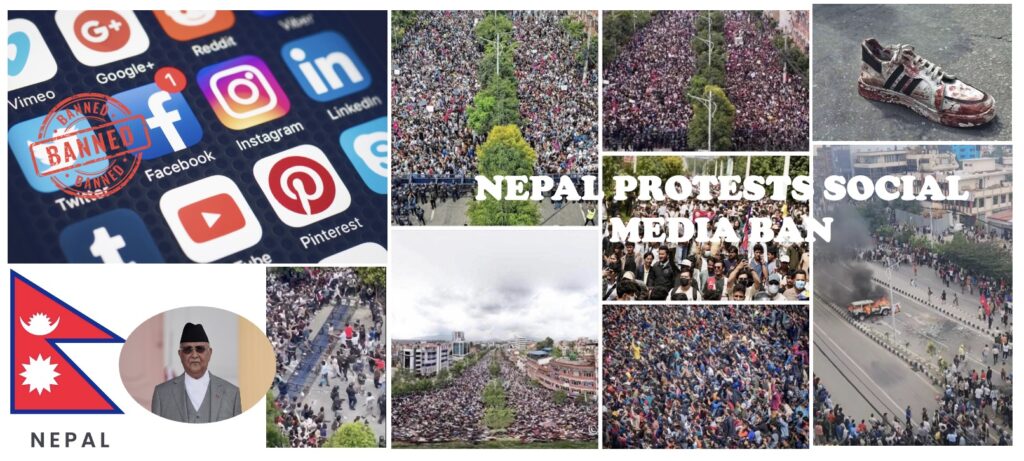
On September 8, 2025, violent clashes broke out between police forces and protesting youths in Kathmandu and several other regions of Nepal. The unrest followed the government’s abrupt ban on 26 major social media platforms, including Facebook, Instagram, WhatsApp, YouTube, and Twitter, which sparked widespread anger, particularly among Gen Z students and young adults. Eyewitness accounts describe thousands of protesters gathering near the Federal Parliament building, chanting slogans and demanding an immediate reversal of the ban. The protests escalated as some demonstrators hurled stones, prompting police to use baton charges, tear gas, and water cannons in response. Hospitals reported dozens of serious injuries, including gunshot wounds. Local media initially reported at least 14 deaths, while some sources cite up to 18 fatalities; the government has yet to confirm an official toll.
Government’s Rationale Behind the Ban
The Nepalese government defended the ban as a temporary, necessary step to curb misinformation, hate speech, and preserve social harmony. Officials argue that the platforms had failed to comply with mandatory registration directives issued weeks earlier under the “Operation, Use, and Regulation of Social Media in Nepal” bill. Authorities stress that the ban is about ensuring national sovereignty and regulation rather than censorship. Prime Minister KP Sharma Oli emphasized Nepal’s national dignity and the need for companies to respect local laws. However, the decision has fueled fierce criticism from opposition parties, digital rights activists, and civil society, who argue it amounts to a direct attack on freedom of expression and press freedom.
Inconsistent Enforcement Fuels Public Anger
Despite the ban, access to social media platforms remains inconsistent. Verified sources indicate many users could continue using Facebook with limited functionality, while WhatsApp access was mostly blocked. This uneven enforcement deepened public frustration, as many perceived the government’s move as hasty and ill-prepared. Critics say the technical capacity to enforce the ban effectively does not exist, which exacerbates confusion and undermines public trust in state institutions. This technical gap combined with perceived authoritarianism has amplified the resistance, particularly among digitally savvy young people who rely on these platforms for communication, education, entertainment, and activism.
Gen Z: The Driving Force Behind Protests
School and college students, representing Nepal’s Generation Z, have led the demonstrations at the core. For this generation, social media is not just recreational but a critical space for social engagement, political discourse, and livelihood opportunities. Protesters highlight the ban as symptomatic of wider issues such as systemic corruption, lack of transparency, and authoritarian governance. Many young Nepalis view the ban as an effort to silence dissent and restrict political participation online. Placards at rallies read “End Corruption, Not Social Media” and “Youth Against Corruption,” spotlighting the dual grievances fueling unrest.
Escalation to Security Clampdown
In response to escalating violence, the Nepalese government deployed the army to assist police in restoring order. Authorities imposed a night curfew in key parts of Kathmandu, including areas surrounding the parliament, presidential residence, and government secretariat. Police spokesperson Shekhar Khanal reported that demonstrators had breached security barriers, forcing officers to retreat and resort to live ammunition. The curfew aimed to prevent further bloodshed, but protests and anti-ban chants continued well into the night. Hospitals worked under pressure, with medical staff describing unprecedented numbers of gunshot and tear gas injuries. The National Trauma Center admitted at least seven critically injured patients, some with head and chest wounds.
Broader Context: Beyond Social Media
Though the ban acted as a trigger, protesters stress their collective discontent runs far deeper. They demand the government address widespread corruption, limited job opportunities, and failure to fulfill promises made under Nepal’s 2015 constitution. Youth frustrations stem from years of political instability marked by frequent changes in leadership and persistent governance challenges. Analysts contend that the protests reflect a generational desire for transparent, inclusive governance and a break from entrenched elite dominance. International observers also warn that ongoing repression risks destabilizing the region further.
International and Human Rights Concerns
Human rights groups have condemned the government’s use of force, labeling it a violation of fundamental freedoms. Critics argue that the Social Media Regulation bill and the sweeping ban lack proper parliamentary approval and legal clarity, enhancing fears that the law could be weaponized to stifle opposition voices. The United Nations offered to facilitate dialogue and assist Nepal following the deadly clashes. The international community continues to moni
Impact on Nepal’s Digital and Social Landscape
The ban interrupts social media usage for millions of Nepalis, severely impacting communication channels vital to personal, educational, commercial, and journalistic activities. Small businesses, influencers, and news organizations relying on platforms like Facebook and Instagram face significant setbacks. While some platforms compliant with government registration rules remain accessible (including TikTok and Viber), the overall disruption to Nepal’s digital ecosystem is profound. This situation heightens economic anxiety and fuels skepticism of government intentions, further complicating efforts to regain public trust.
Government’s Next Steps and Public Outlook
Facing growing domestic and international pressure, the Nepalese government appears poised to review its policies but remains firm in enforcing legal compliance. Officials highlight national sovereignty and the need for social media companies to cooperate with local laws governing content and data. Meanwhile, civil society groups and opposition leaders call for dialogue and restoration of open internet access. Protests show no signs of abating as young people demand tangible solutions to corruption and governance reform alongside a repeal or modification of the ban.
Conclusion
Nepal’s social media ban and the ensuing deadly protests expose the fragile intersection of technology, governance, and youth activism in the digital age. The government’s move to regulate online space without sufficient preparation ignited widespread fury among Gen Z, who see social media as their platform for voice and change. Heavy-handed security responses have escalated tensions, leading to tragic loss of life and deepening societal fissures. Moving forward, Nepal faces a crucial test: balancing national security and social harmony with fundamental freedoms and the demands of an empowered, digitally connected youth generation. Sustainable peace requires transparent dialogue, respect for human rights, and inclusive governance reforms that address both online and offline grievances.