Trump Seeks to Reclaim Bagram Air Base from Taliban: Full Coverage and Reactions
US President Donald Trump announced that he has been quietly pushing to reclaim Bagram Air Base in Afghanistan from the Taliban, reigniting discussions on America’s strategic military presence in the region. This announcement, made during a joint press conference with UK Prime Minister Keir Starmer on September 18, 2025, marks a significant development in the post-US withdrawal era of Afghan geopolitics.
Trump’s Statements on Bagram Air Base
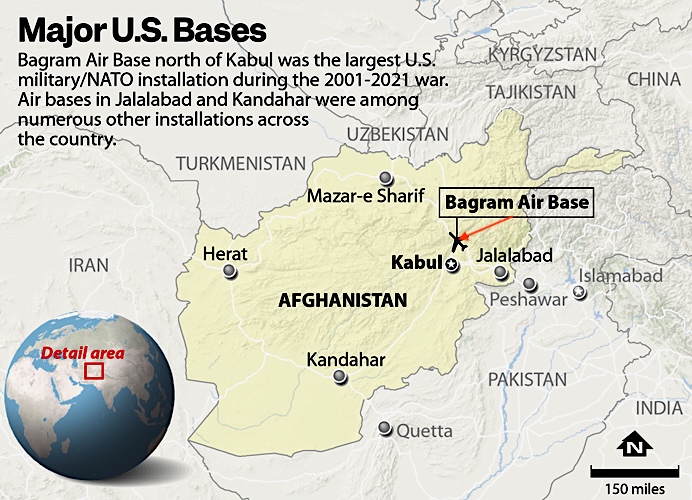
Trump revealed that his administration has been urging national security officials for months to find ways to regain control of the air base, located about an hour north of Kabul. “We handed it over to [the Taliban] without anything in return,” Trump said. “We are attempting to reclaim it, by the way.” He emphasized that these discussions started as early as March 2025.
Trump highlighted several reasons why Bagram is crucial:
The base’s proximity to China, which he said is “exactly one hour away from where China produces its nuclear missiles.”
The base’s strategic value for monitoring China, accessing Afghanistan’s rare earth elements and mining potential.
Serving as a counterterrorism hub commanding operations against ISIS.
The possibility of reopening a diplomatic facility.
He stated, “We were going to exit Afghanistan, but we intended to keep Bagram—not for Afghanistan, but because of China.” Trump claimed that maintaining a small US force at Bagram was part of his original withdrawal plan, contrasting it with the current administration’s full pullout.
Regarding dealings with the Taliban, Trump suggested, “We’re working to get it back because [the Taliban] require certain things from us” and that this leverage might be used to regain the base. While formal details of any negotiations have not been disclosed, Trump’s comments imply ongoing, albeit discreet, diplomatic engagement.
President Trump criticised the Biden administration’s withdrawal approach, calling it “so foolish” and said the US gave up one of its largest airbases for “nothing.” He recounted visiting Bagram during his earlier term alongside Presidents George W. Bush and Barack Obama, underscoring its long-standing military significance.
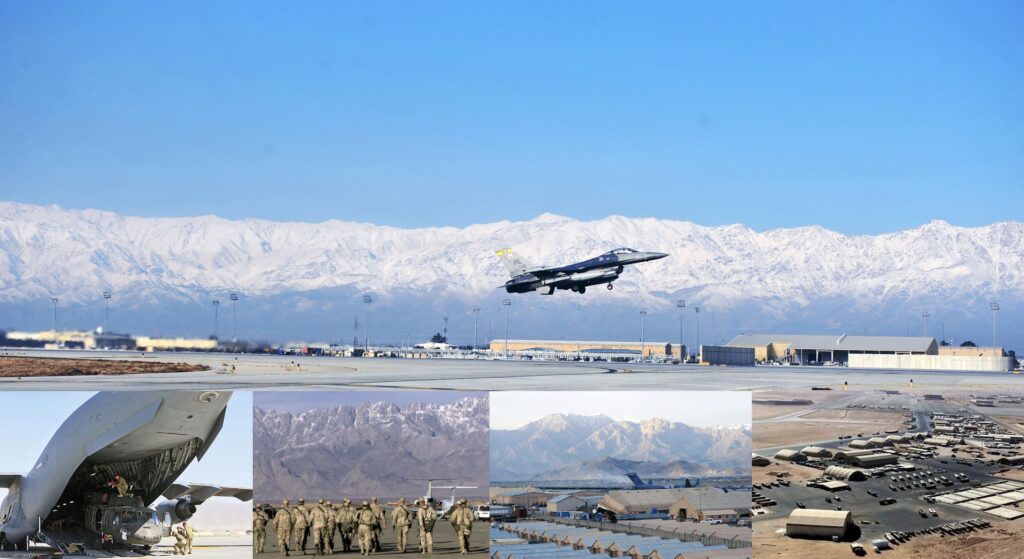
The last US troops left Bagram in July 2021, ending almost 20 years of military presence. The base was a critical hub featuring extensive facilities including a long runway, hospital, prison, amenities like Burger King and Pizza Hut, and once housed over 100,000 troops during peak operations.
US Media Analysis on Retaking Bagram
US media outlets approach Trump’s intent with caution and analysis:
CNN and NPR highlight that reclaiming Bagram could resemble an Afghan re-invasion. Military and former government officials estimate more than 10,000 troops along with advanced air defence systems might be necessary.
Experts question the military feasibility and political costs in a post-2021 scenario where the Taliban wield significant control.
The withdrawal was previously negotiated by the Trump administration in 2020, without mention of holding onto Bagram during the eventual troop pullout.
Media coverage also ties Trump’s efforts to broader counter-China strategic calculations.
Biden administration has not publicly commented on current planning regarding Bagram, reflecting possible diplomatic sensitivities.
Reactions and Perspectives from Afghanistan
The reaction in Afghanistan is varied and complex:
Many Afghans view Bagram as a symbol of foreign military occupation and prolonged conflict.
The Taliban maintain their stance against foreign troops on Afghan soil and have not officially responded to Trump’s claims.
Analysts in Afghan media warn that the attempt to retake Bagram might destabilize the fragile peace and lead to renewed armed conflict.
Some Afghan civilians express wariness about renewed US military presence, associating it with past instability and civilian casualties.
Regional media in Pakistan and Afghanistan provide in-depth coverage, highlighting concerns about the geopolitical implications, especially concerning China’s regional influence.
International and Regional Media Perspectives
Iranian, Russian, and Chinese media have provided limited direct coverage. Their focus mainly lies on broad regional geopolitics, with caution towards direct confrontation scenarios.
Pakistani and Afghan media remain most active in reporting, reflecting their proximate interest and involvement.
Analysts suggest that if the US regains control of Bagram, it could alter security dynamics across Central and South Asia, impacting Taliban governance and Sino-US strategic competition.