Joe Kent’s Exit Sparks MAGA Civil War Over Iran War Policy
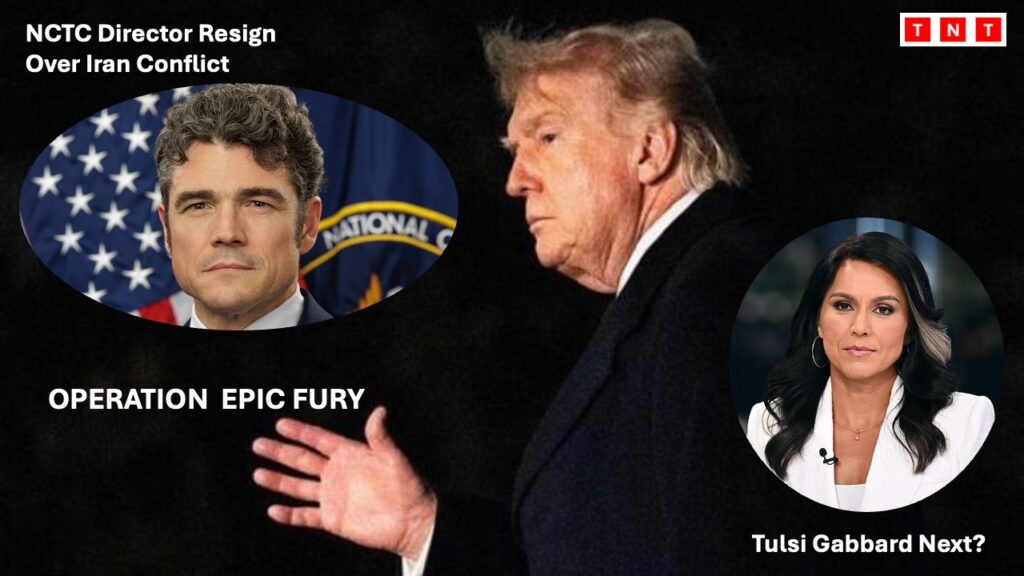
March 17, 2026 | Trump administration turmoil intensified after Joe Kent, Director of the National Counterterrorism Center (NCTC), announced his immediate resignation. He issued a public statement on X and directly blamed pressure linked to Israel and its lobbying influence for pushing the United States into the Iran war.
This development is not just an isolated resignation. Instead, it reveals a deeper power struggle within the Trump administration. The divide runs between “America First” isolationists and pro-Israel strategic hawks. Furthermore, the timing has triggered speculation about further exits, particularly that of Director of National Intelligence Tulsi Gabbard.
Joe Kent Resignation and Its Strategic Significance
Kent’s resignation statement was unusually direct and politically charged. He argued that the United States faced no imminent threat from Iran. Therefore, he said he could not support continued involvement in the conflict.
He also acknowledged his tenure under President Trump and DNI Tulsi Gabbard. However, his central claim has drawn sharp reactions across the political spectrum. Supporters see his move as principled dissent. In contrast, critics argue that such claims risk reinforcing controversial narratives about foreign influence.
Importantly, Kent is not a routine bureaucrat. He is a decorated Special Forces veteran and previously served as a key aide within the intelligence establishment. The NCTC, which he led, plays a critical role in coordinating intelligence across agencies like the CIA, FBI and NSA. As a result, his resignation during an active conflict raises serious institutional concerns.
Iran War Context Behind Trump Administration Turmoil
The current crisis traces back to February 28, 2026. On that date, the United States and Israel launched coordinated strikes on Iranian nuclear and military facilities under “Operation Epic Fury.”
These strikes reportedly eliminated key leadership figures and triggered immediate retaliation from Iran. Missile attacks, proxy operations and threats to disrupt shipping routes followed. Consequently, global energy markets have remained volatile.
The Trump administration justified the strikes as preventive action. It argued that Iran’s nuclear ambitions posed an imminent danger. However, Kent’s resignation directly challenges this narrative. He insists that no such immediate threat existed.
This contradiction now lies at the heart of the Trump administration turmoil.
Laura Loomer Reaction and Escalating Political Narrative
Laura Loomer, a controversial far-right American activist and self-styled investigative journalist, quickly entered the debate following Kent’s resignation. Known for her strong pro-Trump positioning and combative presence in political discourse, she has often acted as a vocal defender of the MAGA agenda.
Shortly after the announcement, Loomer posted a detailed and highly critical thread. She described Kent as a long-standing internal risk and accused him of leaking sensitive information. Her remarks framed the resignation not as an isolated act, but as part of a deeper internal problem.
In addition, she linked Kent to a broader network of individuals critical of Israel. She cited past allegations, professional associations and the timing of recent developments to argue that the resignation was not coincidental. According to her, these elements point towards a coordinated effort rather than a spontaneous decision.
Loomer further claimed that the sequence of events aligns with upcoming congressional hearings involving Tulsi Gabbard. She also highlighted recent personnel movements within the intelligence structure to support her argument of a deliberate pattern.
Most notably, Loomer predicted that Gabbard could resign next. This assertion has significantly heightened attention around the situation and added a new layer of political speculation to the unfolding Trump administration turmoil.
MAGA Divide: Isolationists vs Pro-Israel Hawks
At its core, the Trump administration turmoil reflects a deeper ideological split within the MAGA movement.
Isolationist Wing Perspective
This faction includes figures such as Tucker Carlson, Tulsi Gabbard and Joe Kent. They argue that US foreign policy must prioritise domestic interests. Moreover, they oppose prolonged involvement in Middle East conflicts. In their view, the Iran war represents a strategic overreach.
Pro-Israel Strategic Wing
On the other hand, leaders such as Laura Loomer and Mark Levin emphasise security threats from Iran. They view Iran’s nuclear programme and regional proxies as direct dangers. Therefore, they support strong military alignment with Israel.
They also argue that criticism of Israeli influence weakens national security. Consequently, they interpret Kent’s statements as both politically and strategically problematic.
Timing, Intelligence Stability and Policy Risks
The timing of Kent’s resignation has intensified its impact. It comes just before key congressional hearings involving intelligence leadership. As a result, these hearings will likely focus on internal dissent rather than routine security assessments.
Furthermore, such high-level exits during an active conflict can affect institutional morale. Intelligence agencies rely heavily on cohesion and trust. Any perception of ideological bias can weaken operational effectiveness.
In addition, recent reports of terror-related incidents within the United States raise further concerns. A divided intelligence structure could undermine response capabilities at a critical moment.
Global and Indian Implications of Trump Administration Turmoil
The effects of this crisis extend beyond Washington.
For the United States, it raises questions about policy consistency and leadership stability. For Israel, public criticism from within the US establishment may create strategic discomfort. Meanwhile, Iran gains a narrative advantage by portraying the US as internally divided.
From India’s perspective, the situation carries tangible consequences. India maintains strategic ties with both the United States and Israel. At the same time, it manages pragmatic engagement with Iran, especially through the Chabahar port.
Rising oil prices remain a major concern. Any escalation in the conflict could directly impact India’s energy imports and inflation. Therefore, internal instability within US policy circles adds another layer of uncertainty.
What Comes Next in This Escalating Crisis
Attention now shifts to the upcoming Senate and House hearings. These sessions will likely determine whether Kent’s resignation triggers further institutional fallout.
If Tulsi Gabbard steps down, as predicted, it would mark a significant escalation in Trump administration turmoil. Such a move could reshape the internal balance of power and influence policy direction.
At present, this episode appears to be more than a single resignation. It signals a broader contest over America’s global role. The outcome will influence not only the Iran conflict but also long-term strategic alignments.