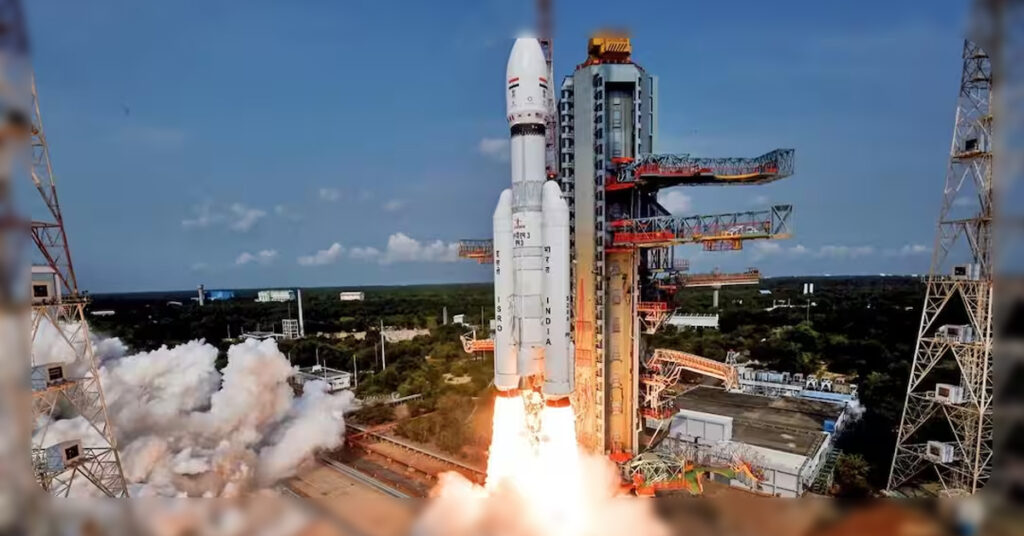
ISRO reviews mission data after PSLV-C62 encounters technical uncertainty
India’s space community watched closely as the Indian Space Research Organisation (ISRO) launched its PSLV-C62 mission, only for the mission to enter an unexpected phase of technical assessment soon after liftoff. While the launch vehicle performed several stages as planned, mission controllers detected anomalies that prevented the mission from being declared fully successful. ISRO Chairman confirmed that the team is carefully analysing flight data to understand what went wrong and what lessons can be drawn for future missions.
The development has sparked widespread discussion, curiosity, and concern, but ISRO has maintained a measured and transparent approach, emphasizing that data-driven analysis will guide the next steps.
What Was the PSLV-C62 Mission About
PSLV-C62 was designed as another step in ISRO’s long-standing Polar Satellite Launch Vehicle programme, which has earned global respect for reliability and precision. The mission aimed to place its payload into a predefined orbit, continuing India’s efforts to strengthen satellite-based applications such as Earth observation, navigation support, and scientific research.
PSLV has often been called ISRO’s workhorse due to its consistent performance across decades. Each mission also serves as a learning platform, helping engineers fine-tune systems and test upgraded components.
How the Launch Unfolded
The launch began on schedule, and initial phases appeared normal. The rocket lifted off smoothly, and early-stage separation events reportedly occurred within expected parameters. However, as the mission progressed, telemetry data began to show deviations from the planned trajectory or performance benchmarks.
Mission control teams noticed these irregularities in real time and immediately shifted focus from routine tracking to diagnostic assessment. Instead of confirming payload injection, ISRO paused any success declaration and initiated a deeper technical review.
Also Read: Centre Plans Copyright Overhaul for Generative AI in India
ISRO Chief’s Statement Brings Clarity
Addressing the situation, the ISRO Chairman stated clearly that the organisation is analysing all available flight data. He emphasized that it is too early to label the mission as a failure without completing a thorough review of telemetry, propulsion behaviour, guidance systems, and stage performance.
This response reflects ISRO’s established culture of caution and precision. Rather than speculation, the agency relies on factual analysis to determine the root cause and its impact on mission objectives.
What Could Have Gone Wrong
While ISRO has not released detailed technical findings yet, experts point to several possibilities that typically require investigation in such scenarios:
Minor deviations in propulsion performance
Guidance or navigation system irregularities
Stage separation timing mismatches
Communication or telemetry inconsistencies
Even small deviations can affect orbital insertion accuracy. In many cases, the satellite may still reach orbit but not in the exact configuration planned, which requires assessment of whether mission goals remain achievable.
Why Data Analysis Matters in Space Missions
Every ISRO launch generates massive volumes of data, covering propulsion, structural integrity, thermal behaviour, avionics, and guidance systems. Analysing this data allows engineers to reconstruct the mission second by second.
This process does more than explain what happened. It strengthens future missions by identifying design improvements, software corrections, or procedural updates. ISRO has historically turned such learning moments into long-term success, making its launch systems stronger over time.
Past Experiences Show ISRO’s Resilience
ISRO’s journey includes moments of both triumph and setback. Missions such as Chandrayaan-2 faced partial challenges, yet the lessons learned contributed directly to the success of Chandrayaan-3. Similarly, early Gaganyaan tests encountered technical hurdles that helped refine India’s human spaceflight programme.
PSLV itself has evolved through decades of incremental learning. Occasional anomalies have led to system upgrades, improved quality checks, and stronger redundancy planning.
Impact on India’s Space Programme
At this stage, the PSLV-C62 situation does not signal a broader setback for India’s space ambitions. ISRO continues to operate multiple missions across communication, navigation, science, and planetary exploration.
Upcoming missions will benefit from the insights gained through this analysis. The organisation’s transparent handling of the situation reinforces confidence among international partners, private industry collaborators, and the scientific community.
Also Read: ISRO LVM3-M6 Launch Signals India’s Rise in Global Direct-to-Phone Space Broadband
Public Interest and Social Media Speculation
As news of the technical issue spread, social media platforms filled with speculation and unverified claims. ISRO has urged patience, reminding the public that space missions involve complex systems and that conclusions must come from validated data, not assumptions.
The agency’s calm and factual communication style reflects its commitment to scientific integrity and public trust.
What Happens Next
ISRO engineers will complete a detailed mission review, which may include simulation replays, component-level diagnostics, and cross-team evaluations. Once the analysis concludes, ISRO will release an official statement explaining the findings and outlining corrective actions if required.
If the payload remains functional, engineers may explore alternative operational strategies. If not, the lessons learned will directly inform upcoming PSLV missions.
Why This Moment Still Matters Positively
Even when a mission does not proceed exactly as planned, it contributes valuable knowledge. Space exploration advances through iterative improvement, and every dataset strengthens system understanding.
ISRO’s ability to openly assess challenges and respond with engineering rigor continues to set it apart as a respected global space agency.
Conclusion
The PSLV-C62 mission has entered a phase of careful evaluation rather than immediate celebration. ISRO’s leadership has chosen clarity over haste, focusing on data analysis and technical understanding. While questions remain, this approach reflects the organisation’s maturity and long-term vision.
As India continues to expand its presence in space, moments like these remind us that progress often comes through persistence, learning, and unwavering commitment to scientific excellence.
FAQs
1. Has ISRO officially declared the PSLV-C62 mission a failure?
No. ISRO has stated that it is analysing flight data and has not made a final declaration yet.
2. What issue occurred during the PSLV-C62 mission?
Telemetry data showed deviations during the mission, prompting ISRO to initiate a detailed technical review.
3. Does this affect future PSLV launches?
Future missions will benefit from the findings of this analysis, but there is no indication of major programme disruption.
4. Has ISRO faced similar situations before?
Yes. ISRO has encountered technical challenges in the past and successfully used them to improve later missions.
5. When will ISRO release more information?
ISRO is expected to share detailed findings after completing a full data analysis and internal review.