Operation Epic Fury Incidents Raise Questions Over US Military Loss Narratives
March 13, 2026 | Washington
A series of aircraft losses, drone crashes, and operational mishaps during the first two weeks of Operation Epic Fury has raised questions about how military losses are classified and explained during active wartime operations.
The US-led campaign, which began on February 28, targets Iranian missile facilities, naval installations, command centres, and support infrastructure. Defence officials estimate that more than 5,500 strike missions and support sortieshave been flown across Iraq, the Persian Gulf, and Iranian airspace.
Pentagon and US Central Command officials say that none of the reported incidents has been confirmed as the result of hostile enemy action. However, several investigations remain underway.
Aviation safety experts note that the extremely high operational tempo of the campaign could increase the likelihood of accidents.
Timeline: Key Operation Epic Fury Incidents So Far
Feb 28 – Opening strikes begin; controversy emerges over missile strike near a school in Minab, Iran
Mar 1 – Three US F-15E Strike Eagles lost in a friendly-fire incident over Kuwait
March – Multiple MQ-9 Reaper drone losses reported in contested airspace
Mar 12 – KC-135 Stratotanker lost after mid-air refueling collision over Iraq
Mar 12 – Fire breaks out aboard aircraft carrier USS Gerald R. Ford
KC-135 Stratotanker Collision Over Iraq
The most recent event occurred on March 12, when a US Air Force KC-135 Stratotanker was lost following a mid-air collision during aerial refuelling operations over western Iraq.
Preliminary assessments suggest that two tanker aircraft made unintended contact while conducting refueling operations at altitude.
The lead aircraft crashed in a remote area of Al-Anbar province. Search-and-recovery operations continue for the six crew members who were aboard the tanker. US special operations forces have joined the recovery mission.
The second KC-135 sustained severe damage. Reports indicate that a large portion of the vertical stabiliser was destroyed during the collision. Despite the damage, the aircraft diverted and successfully landed at Ben Gurion International Airport in Tel Aviv, one of the nearest long-runway facilities capable of accommodating a heavily damaged tanker aircraft.
US officials have ruled out hostile fire or militia involvement.
However, Iranian state media and affiliated militia groups, including the Islamic Resistance in Iraq, have claimed that resistance forces shot down the aircraft with a missile. According to these claims, the incident occurred over western Iraq during Operation Epic Fury.
These claims have not been independently verified.
Fighter Aircraft Incidents and Friendly Fire
Earlier in the campaign, several aviation incidents were reported involving combat aircraft.
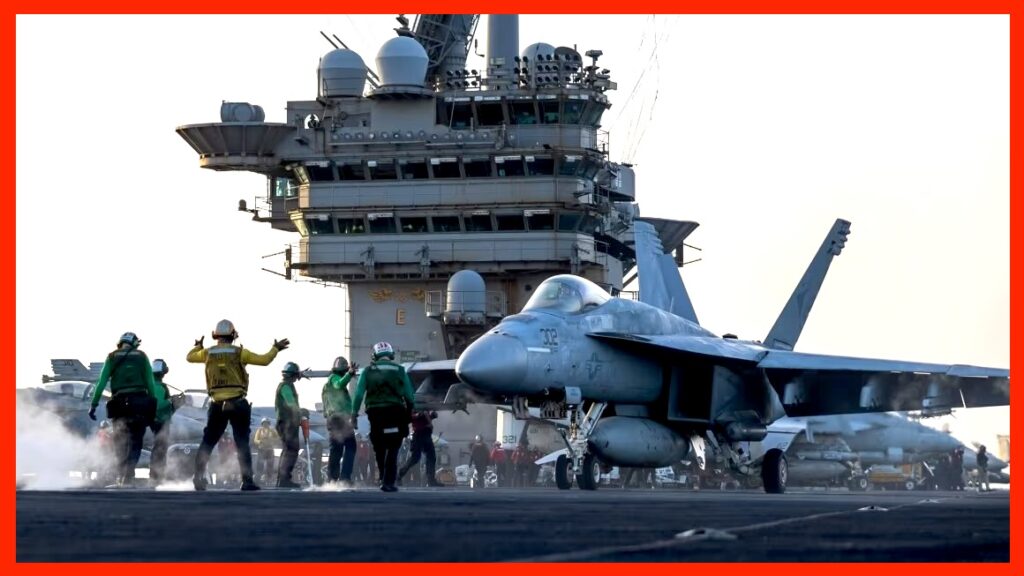
Military sources confirm that at least one F/A-18 Super Hornet was lost during operations. Preliminary assessments indicate that the loss resulted from mechanical or operational factors rather than combat damage.
No verified Iranian claim has been directly linked to this particular F/A-18 incident.
More serious were the three successive losses of US F-15E Strike Eagle aircraft, all linked to a single friendly-fire incident on March 1, 2026, over Kuwait.
US Central Command confirmed that the jets were mistakenly engaged and shot down by Kuwaiti air defences during active combat operations against Iranian threats, including aircraft, ballistic missiles, and drones.
The incidents occurred amid complex coalition air operations, with aircraft from multiple allied nations—including Kuwait—operating simultaneously in shared airspace.
Investigators have pointed to misidentification during heightened alert conditions and targeting procedures as key contributing factors.
All six crew members—three pilots and three weapons systems officers—successfully ejected and were recovered in stable condition.
Kuwait has acknowledged the incident, and CENTCOM expressed gratitude for ongoing coalition cooperation.
However, Iranian military sources and the Islamic Revolutionary Guard Corps (IRGC) have rejected the US explanation, claiming that Iranian air defences shot down one or more US F-15E aircraft during combat operations. These claims remain unverified.
Drone Losses in Contested Airspace
Unmanned aircraft operations have also experienced significant attrition.
Reports indicate that at least 11 MQ-9 Reaper drones have been lost since the beginning of the campaign.
The MQ-9 Reaper is a high-end unmanned platform capable of conducting intelligence, surveillance, reconnaissance, and precision strike missions.
Some regional reports claim that Iranian air defence systems shot down several drones. US officials have not confirmed these claims.
Preliminary assessments suggest that certain drone losses may have resulted from technical malfunctions, communication link failures, or software issues.
Operating drones deep inside contested airspace can also expose them to electronic warfare interference and GPS disruption.
Unlike high-speed fighter aircraft, MQ-9 drones operate at relatively slow speeds and predictable flight patterns, which can make them more vulnerable to modern surface-to-air missile systems in heavily defended airspace.
Fire Aboard USS Gerald R. Ford
Naval operations in the region also recorded a non-combat incident.
On March 12, a fire broke out aboard the aircraft carrier USS Gerald R. Ford while the vessel supported air operations in the region.
Investigators traced the blaze to an electrical short circuit inside a laundry facility.
The ship’s damage control teams quickly contained the fire. Two sailors sustained minor injuries, and flight operations resumed shortly afterward.
Civilian Casualty Allegations From Early Strike
One of the most controversial events linked to the opening phase of the campaign occurred on February 28 in Minab, Hormozgan province in southern Iran.
A cruise missile strike reportedly impacted near the Shajareh Tayyebeh Elementary School, a girls’ primary school.
Iranian authorities and several international reports claim that approximately 170 to 175 people were killed, including children and teachers.
Preliminary findings from a US military investigation suggest the possibility of a targeting error involving outdated intelligence data.
According to early assessments, the building may have been misidentified as part of a nearby Islamic Revolutionary Guard Corps naval facility.
Initial public statements from US officials suggested uncertainty regarding the origin of the strike. However, open-source analysts reviewing video footage, geolocation data, and missile fragments have suggested that the damage pattern appears consistent with a Tomahawk cruise missile strike.
Investigations remain ongoing.
Operational Tempo and Aging Aircraft
Defence analysts note that the pace of operations during Operation Epic Fury places heavy strain on aircraft and crews.
The KC-135 Stratotanker fleet, first introduced in the late 1950s, now averages more than 60 years in service.
Despite numerous upgrades, the aircraft still carries design limitations typical of its era.
Notably, the tanker does not use ejection seats or routine crew parachutes due to structural and weight considerations.
High sortie rates, extended deployments, and complex aerial refueling operations significantly increase the probability of accidents.
One retired US Air Force safety officer summarised the challenge clearly:
“When you compress decades of flying hours into weeks of intense combat operations, the statistical probability of mishaps naturally rises.”
Historical Precedents From Earlier US Wars
Past conflicts show that the classification of aircraft losses often evolves over time as investigations proceed.
During the 1991 Gulf War, coalition forces lost 75 aircraft, including helicopters, during the six-week campaign. The United States accounted for about 63 of those losses. Historical breakdowns indicate that losses were roughly divided between combat damage and non-combat incidents such as accidents and mechanical failures.
The pattern repeated during the Iraq War beginning in 2003. Over the course of the conflict, coalition forces lost dozens of fixed-wing aircraft and more than 100 helicopters.
Earlier conflicts show even larger numbers. During the Vietnam War, the United States lost thousands of aircraft and helicopters, with estimates ranging from roughly 9,000 to more than 10,000 across all services.
Military historians note that initial wartime reporting rarely provides the full picture. Accident investigation boards often require months or even years to complete technical analysis, examine radar data, and reconstruct flight conditions.
As a result, early explanations sometimes change once formal reports are published.
When Early Explanations Changed: Three Notable Examples
Several well-documented cases illustrate how initial explanations for aircraft losses have evolved after investigations.
F-117 Stealth Fighter Shot Down – Kosovo, 1999
During the NATO air campaign over Yugoslavia in 1999, a US F-117 Nighthawk stealth fighter crashed near the village of Budanovci.
Within days, NATO confirmed that the aircraft had been shot down by a Serbian S-125 surface-to-air missile system.
The incident was notable because the F-117 had previously been considered highly survivable against radar-guided air defences.
MH-60 Black Hawk Loss – Iraq, 2003
During the early stages of the Iraq War, a US MH-60 Black Hawk helicopter crashed near Karbala. Initial reports suggested mechanical problems.
Later investigations concluded that the helicopter had likely been damaged by Iraqi ground fire, contributing to loss of control before impact.
AH-64 Apache Shootdowns – Iraq Insurgency, 2004
During the Iraq insurgency, several AH-64 Apache attack helicopters were lost in combat zones. Early reports sometimes described the incidents as crashes pending investigation.
Subsequent reviews confirmed that several aircraft had been brought down by concentrated small-arms fire and rocket-propelled grenades during urban combat operations.
These cases illustrate how battlefield conditions and incomplete information can shape early explanations.
Information Warfare and Loss Narratives
Modern conflicts are increasingly shaped by information warfare as well as battlefield events.
Governments often release cautious early statements about military incidents while technical investigations are underway.
At the same time, opposing sides frequently publicise claims of successful shoot-downs or battlefield victories, sometimes without independent verification.
This dynamic can produce competing narratives in the early stages of a conflict, particularly in an era where satellite imagery, social media videos, and open-source intelligence communities rapidly analyse military events.
The Broader Question in Operation Epic Fury
Against this historical backdrop, the pattern emerging from recent Operation Epic Fury incidents has drawn increasing attention.
So far, official statements have attributed aircraft losses, drone crashes, and other mishaps primarily to mechanical issues, operational factors, or friendly-fire incidents rather than enemy action.
Such explanations are certainly plausible. High-intensity air campaigns involve thousands of sorties, aging aircraft fleets, complex coalition coordination, and demanding aerial refueling operations.
However, history shows that initial wartime explanations sometimes evolve as investigations progress.
Whether the current incidents ultimately remain classified as operational mishaps—or whether future investigations reveal additional factors—will likely become clearer only after formal accident reports are completed.
For now, the debate reflects a broader reality of modern warfare: the battlefield is fought not only in the air and at sea, but also in the narratives that emerge from it.
And in modern conflicts, the first explanation of a military loss is rarely the final one.