Calling Russia European, Merz Hints at a Post-Ukraine Reset
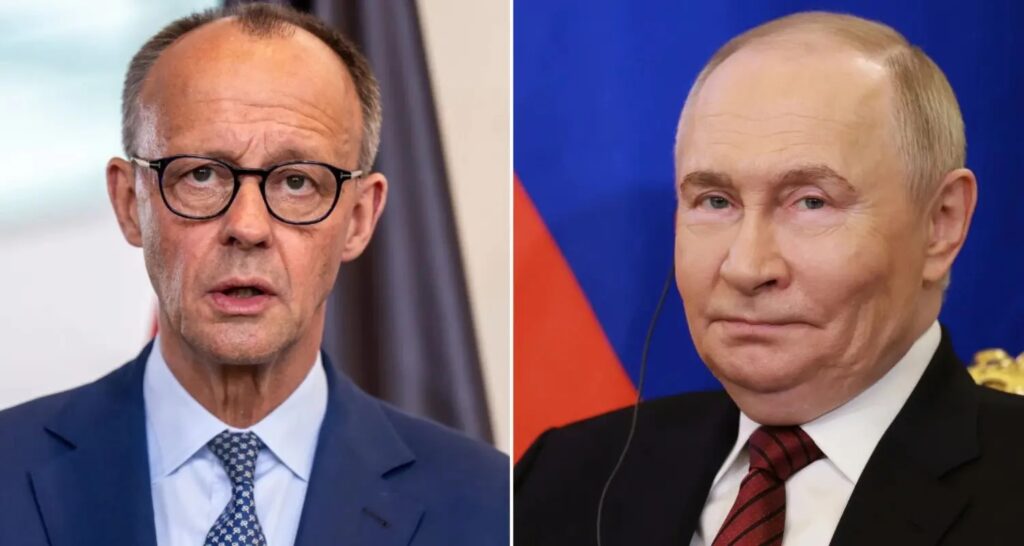
German Chancellor Friedrich Merz described Russia as a European country and expressed hope for restoring balance in relations between the European Union and Moscow. He made the remarks during a New Year reception in Halle on 15 January 2026. Merz clarified that his statement was not influenced by his presence in eastern Germany and reflected a nationwide perspective. The comments, reported by Russian news agency TASS, indicate a possible rhetorical recalibration by Berlin amid continuing tensions over the Ukraine war. The phrase Merz Russia European Country has since drawn wide diplomatic and political attention.
Context of Merz’s Remarks
Addressing business leaders and regional representatives, Merz spoke about his vision for a peaceful Europe after 2026. He said that achieving peace would allow Europe to restore freedom and pursue balanced relations with “our largest European neighbour, Russia.” According to the Chancellor, such balance would enable Germany and the European Union to approach the future with greater confidence and stability.
Merz assumed office in May 2025 and has, until now, maintained a firm stance on Russia’s invasion of Ukraine. His government has strongly supported Kyiv through military aid, sanctions, and diplomatic backing. At the same time, Merz has repeatedly argued for greater European strategic autonomy, particularly in defence and foreign policy, amid uncertainties surrounding long-term US commitments.
He has also warned that Russia poses a continental security threat. In previous statements, Merz cited alleged sabotage, espionage, and cyberattacks targeting German infrastructure on an almost daily basis. However, his Halle speech adopted a more calibrated tone. By describing Russia as European in geographical and historical terms, Merz framed the prospect of equilibrium as conditional on peace rather than concession.
Merz’s Broader European Vision
Since taking office, Merz has pursued an assertive European agenda. He has advocated higher defence spending, voluntary military service, and constitutional reforms to secure long-term funding for Germany’s armed forces. These proposals gained urgency following shifts in US foreign policy after President Donald Trump’s return to office in 2025.
In his New Year address, Merz characterised 2026 as a potential “year of new beginnings” for Europe. He urged European states to reconnect with peace, freedom, and prosperity while asserting their interests independently. According to Merz, Europe should neither see itself as a victim of global power struggles nor outsource its security choices.
While he continues to describe Russia’s actions as part of a broader anti-European strategy, Merz insists that Europe must respond proactively. This includes sustained sanctions, long-term support for Ukraine, and credible security guarantees. At the same time, his acknowledgment of Russia’s European status suggests an openness to future engagement once conditions allow.
Germany–Russia Relations: A Historical Perspective
Germany’s relationship with Russia has long oscillated between confrontation and cooperation. During the Cold War, West Germany pursued Ostpolitik, a policy of engagement aimed at reducing tensions with the Soviet Union through dialogue and economic ties. This approach laid the groundwork for détente and later facilitated German reunification.
After the collapse of the Soviet Union, Germany emerged as one of Russia’s key economic partners in Europe. Energy cooperation became central, particularly through projects such as Nord Stream, which tied German industry to Russian gas supplies. Berlin viewed economic interdependence as a stabilising force, even as concerns over governance and human rights persisted.
This strategic approach began to unravel after Russia’s annexation of Crimea in 2014 and collapsed decisively following the full-scale invasion of Ukraine in 2022. Germany’s policy shifted from engagement to containment, culminating in sanctions, arms deliveries to Ukraine, and the suspension of energy dependence. Merz’s remarks therefore resonate against a backdrop of decades of fluctuating policy, making his reference to Russia as a European country historically loaded rather than accidental.
Reactions and Political Implications
The Chancellor’s statement generated immediate and contrasting interpretations. Pro-Kremlin outlets highlighted the “European country” characterisation as a conciliatory signal. In contrast, critics within Europe questioned whether such language risked diluting Germany’s firm stance against Russian aggression.
Merz’s CDU-led coalition has reaffirmed its commitment to military and financial aid for Ukraine. However, his emphasis on future balance aligns with emerging debates across Europe about diplomatic off-ramps once active hostilities subside. Domestically, the remarks reinforce Merz’s image as a realist leader attempting to balance economic pressures with security imperatives.
Opposition parties, particularly the Greens and sections of the SPD, accused Merz of sending ambiguous signals that could weaken NATO unity. Russian officials, meanwhile, welcomed the geographical framing, noting that it echoes historical ties between Germany and Russia. Many analysts interpret the remarks as tactical, aimed at preparing public opinion for eventual negotiations without signalling any policy retreat.
Geopolitical Backdrop
Merz’s evolving rhetoric comes amid stalled diplomatic efforts over Ukraine, Europe’s ongoing energy vulnerabilities, and shifting transatlantic dynamics. Germany is projected to see only modest economic growth in 2026 following recent contractions. Rising defence expenditure and trade frictions have further strained public finances.
By calling Russia “profoundly European,” Merz invoked shared geography to justify the logic of future engagement. This contrasts with the more isolationist tone adopted by some European leaders in recent years. Within this framework, Berlin appears to be positioning itself as a potential bridge-builder, prioritising EU cohesion while maintaining pressure on Moscow.
Future Outlook for EU–Russia Ties
Merz’s vision places 2026 at the centre of Europe’s post-Ukraine recalibration. Defence reforms, economic renewal, and diplomatic credibility will shape the feasibility of any balanced relationship with Russia. While improved ties could stabilise trade and energy markets, they remain contingent on de-escalation and verifiable changes in Russian conduct.
The Halle remarks, though carefully qualified, mark a nuanced shift in tone. They challenge hard-line positions without undermining Germany’s commitments to Ukraine and NATO. Whether this balance can be sustained will depend on developments on the battlefield and Europe’s capacity to translate unity into strategic outcomes.