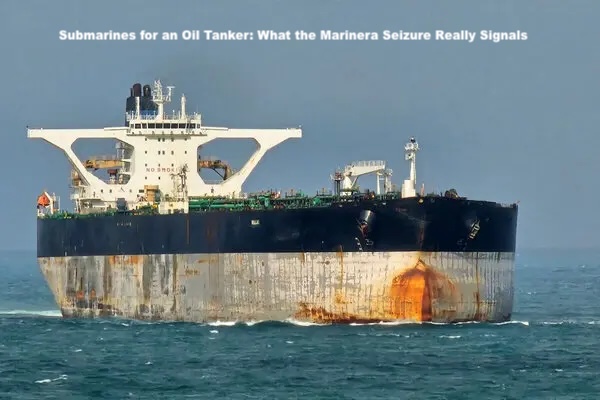
Submarines for an Oil Tanker: What the Marinera Seizure Really Signals
The seizure of the tanker Marinera, formerly Bella 1, has triggered debate well beyond routine sanctions enforcement. The scale of military involvement raises questions that go unanswered by official statements. Deploying high-value naval and air assets to intercept a single shadow fleet tanker is not standard practice. This incident therefore invites closer scrutiny of what may truly have been at stake.
An Unusual Level of Military Force
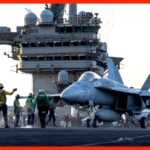
Sanctions enforcement operations against shadow fleet tankers usually rely on surveillance, legal pressure, or limited Coast Guard action. In this case, the response was markedly different. The operation involved US Coast Guard boarding teams supported by Navy P-8A Poseidon aircraft, AC-130 gunships, and intelligence platforms operating from the United Kingdom. UK and Irish assets also provided operational support.
Such coordination reflects a level of urgency rarely seen in oil interdictions. Shadow fleet vessels routinely evade sanctions using flag changes, false registries, and AIS transponder blackouts. Authorities track dozens of such ships every year. They do not normally mobilise this breadth of military capability to stop one ageing tanker.
Why Russia’s Submarine Matters
The debate sharpened further after reports that Russia deployed naval forces, including a submarine, to shadow the Marinera after it claimed Russian registry. Submarines serve specific strategic roles. They provide stealth, deterrence, and deniable protection. States do not assign them casually, especially not for symbolic gestures.
Although the submarine reportedly failed to reach the tanker before US forces took control, its deployment suggests heightened Russian concern. Commercially expendable oil cargo rarely justifies such protection. The decision implies that Moscow viewed the vessel, its mission, or its cargo as strategically sensitive.
Iran Links Add to the Suspicion
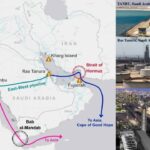
Vessel tracking data shows that the tanker loaded crude at Iran’s Kharg Island in late August or early September 2025. Kharg Island remains Iran’s primary oil export terminal. After loading, the ship disabled its transponder near the Strait of Hormuz. Commodity intelligence firm Kpler links the vessel to at least three Iranian oil voyages in 2025.
Following its reflagging and renaming under Russian jurisdiction, the tanker shifted routes toward the Atlantic. By November and December 2025, it appeared aligned with Venezuela-bound trade corridors known for sanctions evasion. While no later Iranian port calls are documented, the earlier pattern firmly places the vessel within Iran’s sanctions-busting network.
Oil Alone May Not Explain the Response
US officials have stated that the Marinera was empty at the time of its seizure on January 7, 2026. Russia has protested the boarding and accused Washington of piracy, while demanding humane treatment for the crew. Despite these claims, the imbalance between the tanker’s apparent value and the resources committed to intercept it remains difficult to ignore.
In modern great-power competition, submarines and intelligence aircraft do not deploy without cause. If the issue were purely commercial oil, the response appears disproportionate. This fuels speculation that the concern involved dual-use materials, sensitive technology, or assets linked to Iran or Venezuela’s strategic networks.
When an oil tanker draws submarines, spy planes, and gunships, the signal is clear. The real stakes likely extend far beyond oil.