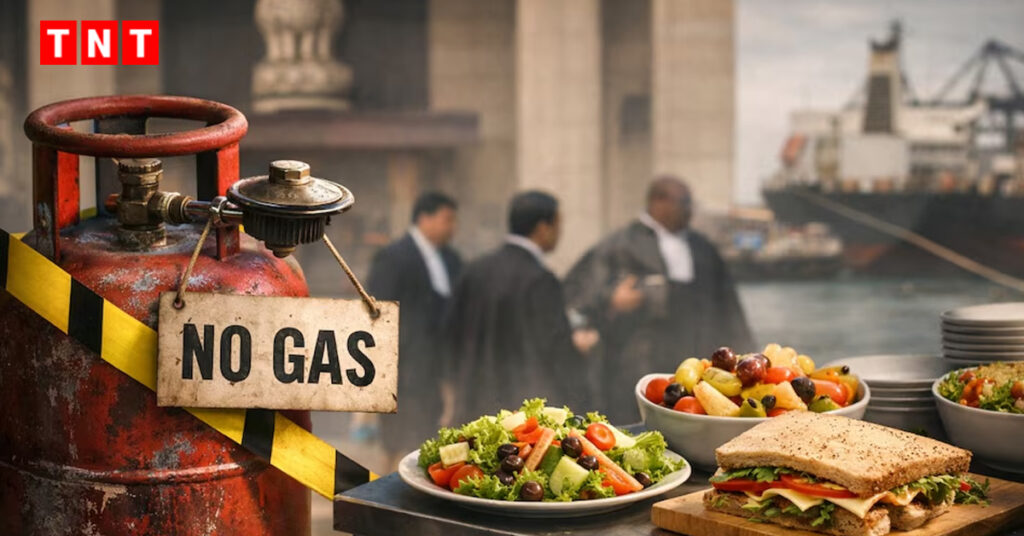
LPG Shortage Halts Hot Meals at Delhi HC Canteen
An unexpected shortage of cooking gas has disrupted daily operations at the lawyers’ canteen inside the Delhi High Court, forcing authorities to temporarily suspend the preparation of main-course meals. The issue arose after the canteen ran out of essential LPG cylinders, leaving kitchen staff unable to cook regular food items that lawyers, court staff, and visitors rely on during long working hours.
The situation highlights a lesser-discussed but significant challenge in urban service operations: the dependence on uninterrupted fuel supply for large institutional kitchens. When something as basic as cooking gas becomes unavailable, it can immediately disrupt routines in places that serve hundreds of people every day.
A Daily Lifeline for Legal Professionals
The lawyers’ canteen at the Delhi High Court plays an important role in supporting the court’s busy environment. Every day, hundreds of lawyers, litigants, clerks, and staff members pass through its counters to grab meals or quick refreshments between hearings.
Court proceedings often stretch for hours, leaving limited time for professionals to step out for food. The canteen has therefore become a convenient and affordable dining option within the court premises.
Typically, the kitchen prepares a variety of hot meals such as rice, lentils, vegetables, roti, and other basic dishes that provide a filling lunch. However, with LPG cylinders unavailable, the kitchen staff can no longer cook these main-course items.
As a result, the canteen has temporarily limited its menu to ready-to-serve snacks and packaged food items.
What Caused the LPG Cylinder Shortage?
The shortage reportedly occurred due to a disruption in the supply of LPG cylinders required for large-scale cooking. Institutional kitchens like the one inside the Delhi High Court consume multiple cylinders daily to meet the demand of hundreds of customers.
When deliveries are delayed or unavailable, the kitchen’s ability to prepare meals is immediately affected. Unlike small households that may have a backup cylinder, commercial kitchens often depend on continuous supply cycles.
Even a short delay can lead to operational challenges.
Several factors can contribute to LPG supply disruptions, including logistical issues, delivery delays, administrative bottlenecks, or increased regional demand.
In high-density urban centers such as New Delhi, where thousands of commercial establishments depend on cooking gas, supply chains must function smoothly to prevent such disruptions.
Impact on Lawyers and Court Staff
The suspension of cooked meals has created inconvenience for the legal community working inside the court complex. Many lawyers rely on the canteen for quick and affordable lunch breaks between case hearings.
Without hot meals available, they must either rely on snacks or step outside the premises to find food elsewhere. This can be challenging during busy schedules, particularly when hearings are scheduled back-to-back.
Court clerks and support staff also depend heavily on the canteen, as they typically have limited time during the workday.
For visiting litigants, especially those traveling from outside the city, the canteen is often the most accessible food option within the court campus.
The absence of regular meals therefore affects not just convenience but also the efficiency of daily routines.
Read Also: Court Discharge Kejriwal and Sisodia, Rebukes CBI
Institutional Kitchens and Fuel Dependence
The situation at the Delhi High Court highlights how critical LPG supply is for institutional kitchens. From hospitals and schools to office cafeterias and court canteens, many large kitchens rely on LPG as their primary cooking fuel.
LPG remains one of the most widely used fuels in India because it is efficient, relatively clean, and easy to store. However, its centralized supply system means disruptions can affect multiple establishments simultaneously.
Institutional kitchens generally require commercial LPG cylinders, which are larger and consumed faster than household cylinders. Managing stock and ensuring timely deliveries becomes essential for uninterrupted operations.
When these supply chains face delays, service disruptions quickly follow.
The Importance of Reliable Supply Chains
Urban infrastructure relies heavily on invisible systems that people rarely notice until something goes wrong. Fuel supply chains are one such system.
From transportation logistics to distributor networks, multiple steps ensure LPG reaches commercial kitchens across the city.
If any link in this chain experiences disruption—whether due to transport delays, regulatory issues, or demand spikes—the impact can ripple through the entire system.
In places like court complexes, where food services are essential to daily functioning, such disruptions become particularly noticeable.
The situation underscores the importance of contingency planning for institutional kitchens that serve large populations.
Possible Solutions to Prevent Future Disruptions
While the current LPG shortage is likely temporary, it raises questions about how similar disruptions can be avoided in the future.
One possible solution is maintaining backup cylinders or emergency fuel reserves to cover short-term supply gaps.
Some large institutions are also exploring alternative cooking systems such as electric induction setups or piped gas connections to reduce dependence on cylinder deliveries.
Hybrid systems that combine LPG with electric or piped fuel options may offer greater operational flexibility.
Better coordination with suppliers and improved delivery scheduling can also help ensure kitchens maintain adequate stock levels.
The Broader Context of LPG Usage in India
India is one of the largest consumers of LPG in the world, with millions of households and businesses relying on it daily. Government initiatives have expanded LPG access across urban and rural areas, increasing overall demand.
While the supply network is generally reliable, occasional disruptions can occur due to logistical challenges or regional demand fluctuations.
For institutional kitchens in cities, maintaining stable supply remains essential to keeping daily services running smoothly.
The incident at the Delhi High Court serves as a reminder that even minor disruptions in supply systems can have noticeable effects on daily life.
Also Read: India-Brazil Partnership Boosts Trade and Mineral Ties
Temporary Adjustments in the Canteen
Until the LPG supply is restored, the lawyers’ canteen continues to serve limited food options. Snacks, packaged items, tea, and beverages remain available for visitors.
Staff members are working to manage the situation while awaiting fresh cylinder deliveries.
Once the supply resumes, kitchen operations are expected to return to normal, and regular meals will likely be restored quickly.
Conclusion
The temporary suspension of hot meals at the Delhi High Court lawyers’ canteen due to an LPG cylinder shortage may seem like a small incident, but it highlights the critical role of supply chains in everyday institutional operations.
For lawyers, court staff, and visitors, the canteen is more than just a place to eat—it is an essential part of the daily rhythm inside one of the country’s busiest judicial centers.
Ensuring reliable fuel supply for institutional kitchens will remain important in preventing similar disruptions in the future. As urban systems grow more complex, even basic resources like cooking gas must be managed with careful planning and coordination.
FAQs
- Why were main-course meals suspended at the Delhi High Court lawyers’ canteen?
Main-course meals were suspended because the canteen ran out of LPG cylinders needed for cooking. - What food options are currently available in the canteen?
The canteen is temporarily serving snacks, packaged foods, and beverages until LPG supply resumes. - Why is LPG important for institutional kitchens?
LPG provides efficient and reliable heat for large-scale cooking, making it widely used in commercial kitchens. - Who is affected by the canteen disruption?
Lawyers, court staff, clerks, and visiting litigants who depend on the canteen for meals are affected. - When will normal food service resume?
Regular meal preparation is expected to resume once new LPG cylinders are delivered to the canteen.