Iranian Counterattack Surge Challenges US-Israel Claims of Military Success
The Widening Gap – US/Israeli Claims vs Ground Reality
US and Israeli officials continue to assert that Iran’s missile and drone capabilities have been “functionally defeated.” However, the Iran missile surge observed on Day 19–20 of the conflict presents a sharply contrasting picture. The latest launch data indicates not only recovery but a measurable escalation in both intensity and geographic reach. This divergence between official claims and battlefield realities is now too significant to ignore.
Official US/Israeli Claims of Degradation
Reported Reduction in Capabilities
According to briefings from CENTCOM and the Israel Defense Forces (IDF), Iran’s operational launch capacity has declined by 80–90 %. Officials highlight a sharp drop in ballistic missile attacks, from over 350 on day one i.e., 28 February to approximately 25 by 14 March. Similarly, drone sorties reportedly fell from more than 800 to around 75 during the same period.
Destruction of Strategic Assets
US and Israeli forces claim to have destroyed between 260 and 300 launchers out of an estimated pre-war inventory of 410–440. In addition, they report successful strikes on underground “missile cities,” production facilities at Khojir and Semnan, storage bunkers, and air defence systems.
Leadership Decapitation
The assassination of Iran’s Intelligence Minister Esmail Khatib, along with several senior IRGC commanders, has been described as a decisive blow to Iran’s command-and-control structure. Officials argue that this has severely disrupted coordination and operational efficiency.
Assessment Language
The language used in official briefings remains unequivocal. Terms such as “functionally defeated,” “severely degraded,” and “86–90% reduction” dominate the narrative. These statements aim to project strategic dominance and operational success.
Iranian Counter-Reality: The Missile Surge Data
Peak Activity Returns
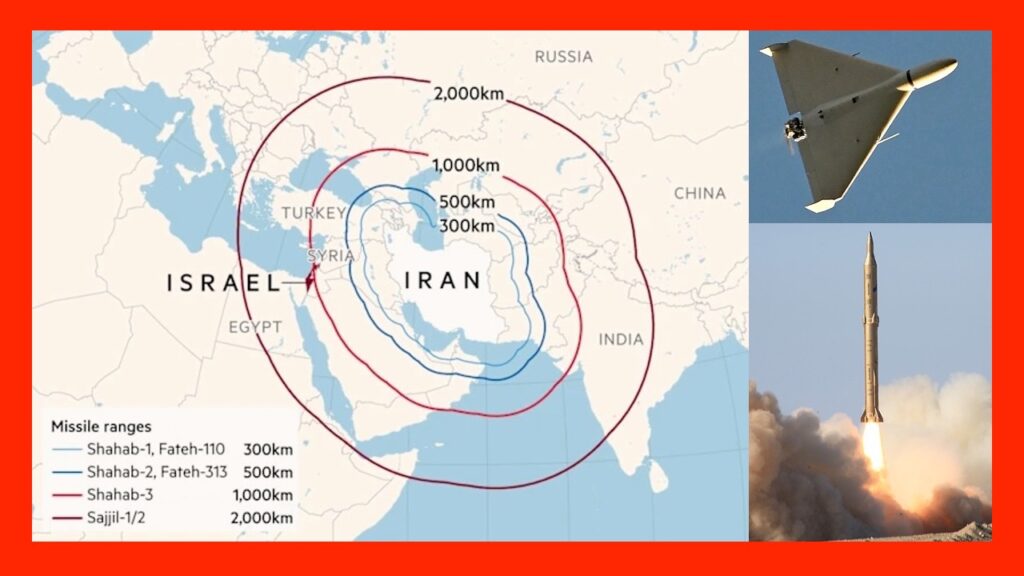
Despite these claims, the Iran missile surge recorded on 17–18 March tells a different story. Iran launched 65 ballistic missiles and 240 drones in coordinated waves within a single day. This marks the highest daily figure since the initial 48 hours of the conflict.
Cumulative Launch Numbers
Since late February, Iran has launched over 950 ballistic missiles and more than 2,800 drones. These figures suggest sustained operational capability rather than collapse.
Multi-Theatre Execution
Iran has expanded its operational scope. It now targets central and northern Israel, including Tel Aviv and Ramat Gan, while simultaneously striking Gulf assets. This multi-front execution indicates a deliberate escalation strategy.
Use of Advanced Munitions
Cluster-warhead munitions have been deployed in Israeli civilian areas. Reports confirm fatalities and infrastructure damage, highlighting both the scale and sophistication of the attacks.
Damage Assessment: Expanding Impact Across Regions
Strikes on Israel
Iran’s attacks have caused significant damage in the Tel Aviv metropolitan region. Civilian casualties have been reported, particularly due to the use of cluster munitions. Moreover, repeated and coordinated barrages have partially saturated Israel’s layered air defence systems, including Iron Dome and Arrow. This indicates that even advanced interception systems face strain under sustained, high-volume attacks.
Targeting Gulf Energy Infrastructure
Iran has widened the conflict by directly targeting critical energy infrastructure across the Gulf:
Qatar’s Ras Laffan LNG complex, the largest in the world, has suffered multiple hits. Fires have been reported at Pearl GTL and key export terminals, raising concerns over global LNG supply stability.
Saudi Arabia has faced strikes on the SAMREF refinery, the Jubail petrochemical complex, and facilities near Ras Tanura and Riyadh, all of which are central to its oil processing and export network.
The UAE has reported damage at the Al Hosn gas field, along with repeated air defence alerts across Dubai and Abu Dhabi. In addition, the Fujairah oil storage tank farms—one of the region’s most critical strategic reserves outside the Strait—have been severely damaged.
Hormuz Disruption and Maritime Pressure
In parallel with these strikes, Iran has intensified pressure around the Strait of Hormuz, a critical chokepoint for nearly a fifth of global oil trade. While a full-scale blockade has not been formally declared, there are increasing indications of selective disruption.
Reports point to naval posturing, increased deployment of fast-attack craft, and possible mining threats in key shipping lanes. Commercial vessels have begun rerouting or slowing transit, while insurance premiums for tankers operating in the region have surged. This evolving “shadow blockade” strategy allows Iran to exert pressure without triggering an immediate full-scale naval confrontation.
Strategic Implications
This combined expansion—across Israeli urban centres, Gulf energy infrastructure, and maritime chokepoints—has significantly altered the conflict’s dynamics. It forces the United States, Israel, and their regional partners to defend multiple high-value targets simultaneously, both on land and at sea.
As a result, the cost and complexity of defence operations have increased sharply. More importantly, the emerging Hormuz disruption introduces a global economic dimension, linking battlefield developments directly to energy markets and international trade flows.
Why the Mismatch? Understanding Iran’s Tactical Resilience
Decoy and Redundancy Strategy
Iran appears to have anticipated large-scale strikes. It deployed mock launchers and constructed redundant underground facilities. These decoys absorbed initial attacks, allowing mobile transporter-erector-launchers (TELs) to survive and remain operational.
Attrition-Based Warfare Doctrine
Iran’s early waves relied on older and cheaper systems such as Fateh-110 missiles and Shahed-136 drones. This approach aimed to exhaust interceptor stockpiles. Meanwhile, more advanced systems like Sejjil and Khorramshahr missiles were held in reserve for later stages.
Depth of Pre-War Stockpiles
Independent estimates placed Iran’s missile inventory at 2,000 to over 3,000 units before the conflict. Even if 50–60 percent of this arsenal has been destroyed, a substantial number of missiles remain available. When combined with dispersal tactics, this ensures continued operational capability.
Decentralised Command Structure
Following targeted assassinations, Iran has shifted towards decentralised command. Autonomous regional cells now operate with greater independence. This reduces vulnerability to leadership decapitation and ensures continuity of operations.
Strategic Reading: Attrition vs Perception
The Iran missile surge reveals a deeper strategic contest. On one hand, US and Israeli narratives emphasise degradation and control. On the other, Iran demonstrates endurance through sustained and adaptive operations.
This mismatch is not merely statistical. It reflects two different frameworks of warfare. The US-Israel axis appears focused on measurable destruction of assets. In contrast, Iran prioritises survivability, redundancy, and long-term attrition.
The Emerging Reality of a Prolonged Conflict
The gap between claims and reality is no longer marginal. It has widened into a defining feature of the conflict. What Washington and Jerusalem describe as “functional defeat” increasingly resembles a prolonged, multi-theatre campaign.
Moreover, the Iran missile surge has imposed a costly defensive burden on Israel and its allies. It has also drawn Gulf nations deeper into the conflict, particularly by targeting energy infrastructure.
As the war enters its third week, the central question is no longer about initial success. Instead, it concerns sustainability. Can the US and Israel maintain interception rates and operational pressure over time? Or will Iran’s attrition strategy gradually erode their advantage?
The answer to this question will shape not only the trajectory of the conflict but also the broader balance of power in the region.