India’s Missile Engine Breakthrough Signals a New Strategic Era
The Rise of Indigenous Missile Propulsion Technology
India’s rise in advanced propulsion technology has entered a decisive phase. A new generation of indigenous 2.7–4.7 kilonewton (kN) engines, designed for cruise missiles, drones and precision-strike platforms, marks a steady and significant transformation within the country’s defence ecosystem. Developed through the combined effort of DRDO, GTRE and emerging private-sector start-ups, these compact and efficient engines demonstrate a level of self-reliance that would have been unthinkable a decade ago.
For India, propulsion capability is not merely about thrust numbers. It is about owning the architecture, controlling the supply chain and designing systems tailored to Indian military needs. With this new engine class now entering trials and integration phases, India has closed a major technological gap that traditionally separated Western missile powers from new entrants.
A Propulsion Milestone Shaped by DRDO, GTRE and Private Start-Ups
The 2.7–4.7 kN class engines represent a subtle but powerful shift. These engines are small, manageable and versatile, designed to power loitering munitions, air-launched cruise missiles and next-generation unmanned strike vehicles. What once required constant foreign imports is now being built in Bengaluru, Hyderabad and Pune by teams that combine DRDO’s scientific history with the agility of private Indian start-ups.
These engines also reflect a broader strategic objective: to strengthen India’s stand in joint development programmes and reduce external dependencies. American defence circles have increasingly acknowledged this momentum, with senior analysts and officials observing India’s propulsion growth with interest. Their comments, often voiced across think-tank interactions and defence forums, remain somewhat ambiguous but point to a noticeable respect for India’s growing capacity to build effective small-engine systems.
Across recent US defence discussions, the tone has been unmistakable: India’s propulsion capabilities are now being taken seriously.
Why BrahMos Stands Apart: Power, Architecture and Secrecy
Any discussion of Indian missile engines must confront the unavoidable point that the BrahMos missile’s exact ramjet thrust remains classified. Neither Indian nor Russian sources publish a definitive thrust figure for the ramjet stage. What is publicly known, however, is powerful enough to illustrate its technological edge.
BrahMos operates through a two-stage propulsion system. The first stage is a solid-fuel rocket booster, responsible for bringing the missile to supersonic speed (current version) immediately after launch. Once that threshold is crossed, a liquid-fuel ramjet takes over and propels the missile at Mach 2.8 to Mach 3.5, depending on mission profile and altitude. This speed alone sets BrahMos in a league distinct from subsonic US and European cruise missiles.
Because thrust figures are not disclosed, engineers use performance envelopes—speed, mass, drag characteristics and mission profile—to estimate relative power. When comparing BrahMos at roughly Mach 3.5 to a subsonic Tomahawk at around Mach 0.74, the kinetic-energy advantage becomes striking. Since kinetic energy scales with the square of velocity, the energy carried by a Mach 3.5 cruise missile is about twenty times greater than that of a Mach 0.74 vehicle of comparable mass. That does not reveal the actual thrust output, but it offers a meaningful approximation of the staggering performance difference.
This simplified engineering comparison, based on velocity and kinetic energy, shows why BrahMos (current version) is globally recognised as among the world’s most formidable cruise missiles. It is fast, hard to intercept and capable of delivering devastating impact energy.
What Can Actually Be Said on BrahMos Engine?
Public debate often quotes that BrahMos delivers “12 times the power” of US subsonic Tomahawk engines. This is not an official thrust figure and should not be interpreted as one. Instead, it arises from comparisons of overall destructive capability, terminal energy and time-to-target advantages—areas where the supersonic profile vastly outperforms subsonic systems.
Because BrahMos’ thrust remains classified, the most accurate and responsible way to phrase this is:
“Based on speed, energy and mission characteristics, BrahMos exhibits several times the performance effect of subsonic cruise missiles, though exact thrust figures remain undisclosed.”
This keeps the assessment honest without diluting the missile’s clear supremacy.
Future BrahMos Enhancements: Buzz, Tests and Unverified Reports
Industry chatter—largely from defence exhibitions, aerospace forums and unofficial reporting—suggests that next-generation BrahMos-NG, a lighter variant may explore upgraded ramjets capable of pushing speeds beyond Mach 4+. Some speculative reports mention Mach 4.5+, but these remain unverified by official channels.
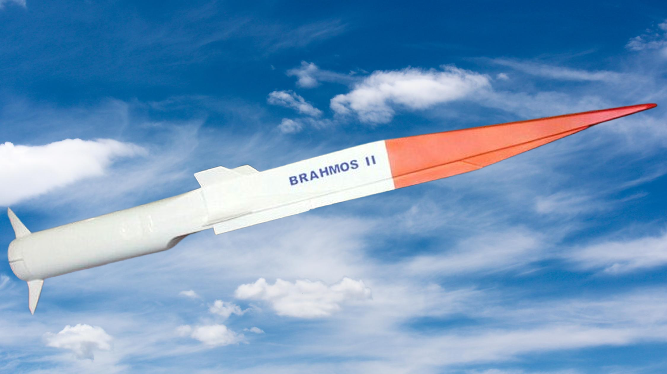
Further, BrahMos-II (also called BrahMos-IIK / K-II) is officially stated to be a hypersonic cruise missile, with a target speed in the Mach 6–7 range. What can be confirmed is that BrahMos Corporation continues to test improvements in fuel efficiency, materials and air-intake design, all of which could lead to higher cruise speeds in future iterations.
These upgrades are part of a broader effort to maintain BrahMos’ technological advantage as adversaries develop better interception systems.
The Strategic Meaning of India’s Propulsion Breakthrough
India has now reached a rare position in global defence capabilities. It fields a complete propulsion spectrum—from compact 2.7–4.7 kN engines for drones and cruise missiles to the high-energy BrahMos ramjet whose exact thrust remains classified. The combination of these developments has strengthened India’s bargaining position in defence partnerships and amplified its credibility as a design-and-manufacture nation.
The road to propulsion mastery is long, but India has moved decisively into a space once dominated by far older defence powers. This shift carries strategic weight, especially in a geopolitical climate where missile technology defines deterrence capability as much as troop numbers or naval tonnage.
A New Era of Confidence
India’s rise in propulsion technology represents more than technical achievement. It signals a cultural shift within Indian defence research—one defined by confidence, speed, private-sector participation and a focus on long-term self-reliance.
The engines may be small, but the message they send is anything but. Combined with the BrahMos programme’s proven superiority and the promise of future upgrades, India now stands firmly among nations shaping the future of missile technology, not merely consuming it.