India–Taliban Diplomatic Relations: A New Geopolitical Chapter in South Asia
Introduction: India’s Strategic Leap in Kabul
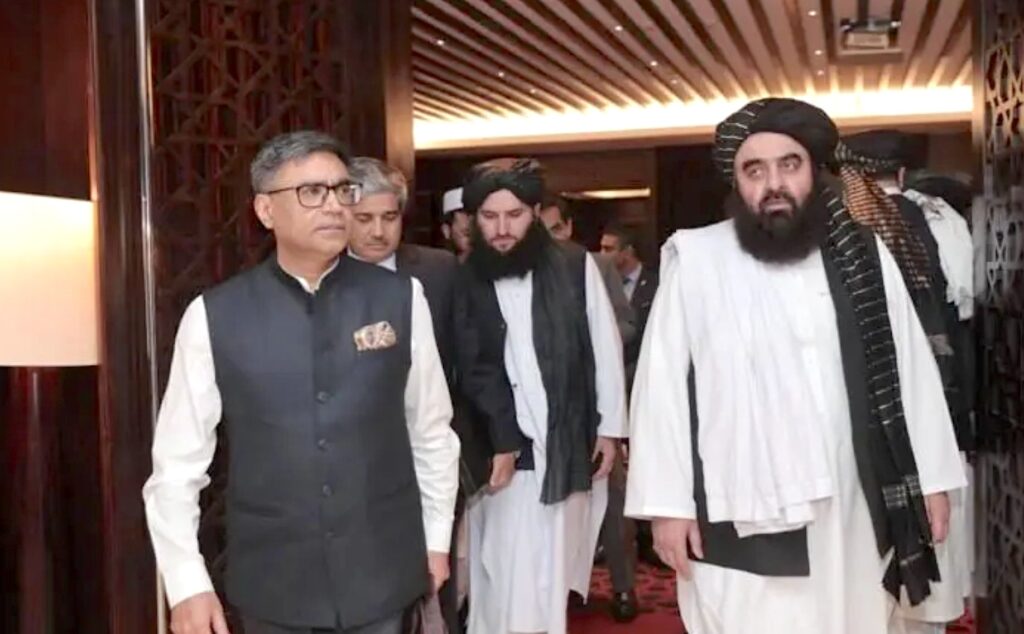
New Delhi | India’s decision to open a full-fledged embassy in Kabul and expand engagement with the Taliban government marks a major transformation in South Asian geopolitics. The announcement, made on October 10, 2025, came during the official week-long visit of Taliban Foreign Minister Amir Khan Muttaqi, who arrived in New Delhi on October 9, 2025 for a series of high-level discussions.
Muttaqi’s visit, permitted under a United Nations Security Council (UNSC) travel-ban exemption, underscores the shifting international approach toward the Taliban and the growing acceptance of pragmatic engagement. For India, the move signals a decisive step from humanitarian outreach to structured diplomatic relations, trade collaboration, and regional strategic partnerships.
Background: From Taliban 1.0 to Taliban 2.0
The first Taliban regime (1996–2001) was characterised by international isolation, severe social restrictions, and support for transnational terror groups like al-Qaeda, which led to the U.S.-led invasion of Afghanistan in 2001 following the September 11 attacks.
In contrast, Taliban 2.0, which regained power on 15 August 2021 after the U.S. troop withdrawal, has sought to project a more diplomatically engaged image. Under Supreme Leader Hibatullah Akhundzada and Prime Minister Mullah Mohammad Hassan Akhund, the Taliban have re-established embassies in neighbouring countries, engaged in talks with China, Russia, Iran, and India, and expressed a willingness to participate in international humanitarian programmes.
However, women’s education bans and human rights concerns continue to limit their legitimacy. Unlike their earlier rule, today’s Taliban government focuses on regional diplomacy to gain recognition and attract investment, marking a notable departure from the insular policies of the late 1990s.
Recognition: Shifting Diplomatic Boundaries
While Russia officially recognised the Taliban government on July 18, 2025, most other nations, including India, have adopted a cautious approach of engagement without formal recognition. India’s elevation of its Technical Mission (set up in June 2022) to a full-fledged embassy marks a turning point, signalling deeper political and economic cooperation.
A Taliban envoy’s presence in Delhi during Muttaqi’s visit further underscores this diplomatic shift. India’s position remains consistent with its long-standing principles of supporting a sovereign, peaceful, and inclusive Afghanistan that does not serve as a base for terrorism and safeguards the rights of all communities, including women and minorities.
Formal recognition, which would include flag acceptance and standard diplomatic protocols, is expected to follow only after broader international consensus and tangible improvements in human rights.
Trade and Development Cooperation
India’s relationship with Afghanistan has long been rooted in development cooperation. It remains one of the largest regional donors, having invested over US $3 billion in projects that include the Salma Dam (Afghan–India Friendship Dam), the Zaranj–Delaram Highway, and the Afghan Parliament Building in Kabul.
Following the June 2025 Paktika earthquake, India was among the first countries to deliver emergency assistance worth ₹250 crore (approximately US $30 million), reinforcing its commitment to humanitarian support.
India currently supports more than 500 ongoing community projects in Afghanistan in education, healthcare, infrastructure, and rural development. During his current visit, Amir Khan Muttaqi has proposed expanding bilateral trade and technical partnerships, particularly in energy, agriculture, and connectivity through the Chabahar Port, which would enable Afghanistan to access the Indian Ocean directly.
Taliban Deputy Foreign Minister Sher Mohammad Abbas Stanekzai noted that India’s role “is crucial in helping Afghanistan achieve stability and economic recovery through investment and regional trade integration.”
UN Sanctions and Travel Exemptions
Muttaqi’s ongoing visit to India has been made possible through a UNSC 1988 Sanctions Committee waiver. These sanctions, initially imposed in October 1999, include asset freezes, arms embargoes, and travel bans on Taliban leaders.
Exemptions are granted only with unanimous approval by all 15 members of the Security Council for official government or diplomatic purposes. India’s successful request for the waiver reflects the growing recognition of Kabul’s importance in regional diplomacy and the gradual shift from isolation toward conditional engagement.
Strategic Alliances and Regional Realignment
The regional power structure is undergoing a significant transformation. Following Russia’s recognition, the Moscow Declaration of September 2025 — signed by Russia, India, China, Iran, and the Central Asian Republics — emphasised collective opposition to any foreign military presence in Afghanistan, specifically rejecting reports of the United States seeking to re-establish a base at Bagram Airfield.
The declaration also laid the foundation for cooperation on counter-terrorism, energy transit, and trade connectivity. The Taliban were invited as observers, marking a diplomatic milestone.
Meanwhile, Pakistan’s influence over the Taliban appears to be declining. Relations between Islamabad and Kabul have deteriorated amid accusations that the Afghan Taliban support the Tehrik-i-Taliban Pakistan (TTP), responsible for attacks inside Pakistan. India’s growing presence in Kabul gives the Taliban new diplomatic and economic options, potentially diminishing Pakistan’s leverage and rebalancing South Asia’s traditional security calculus.
Timeline of Key 2025 Developments
July 18, 2025: Russia formally recognises the Taliban government in Kabul.
September 2025: Moscow Declaration signed, opposing any foreign military presence in Afghanistan.
October 9, 2025: Taliban Foreign Minister Amir Khan Muttaqi arrives in New Delhi for a week-long official visit.
October 10, 2025: India announces the upgrade of its Kabul Technical Mission to a full-fledged embassy.
October 2025 onward: Expanded discussions continue on trade, energy, and counter-terrorism cooperation.
Continuing Challenges
Despite notable diplomatic progress, key challenges persist.
International recognition of the Taliban government remains limited to Russia and a few regional partners. Severe restrictions on women’s rights and education continue to draw international criticism. Relations with Pakistan are increasingly strained due to cross-border militancy.
Moreover, UN sanctions and the continued freeze of Afghanistan’s foreign assets — estimated at US $7 billion — hinder the Taliban’s ability to stabilise the economy. Humanitarian agencies report that over 23 million Afghans remain dependent on external aid (UN OCHA, 2025).
Nevertheless, the Taliban’s efforts to engage with India, China, and Russia show a deliberate strategy of diplomatic diversification, aimed at achieving recognition and economic relief through regional cooperation.
Conclusion: India’s Balancing Act in a Changing Region
India’s cautious yet decisive diplomatic outreach — reopening its Kabul embassy, sustaining humanitarian aid, participating in regional forums, and hosting Taliban leaders — underscores its intent to shape Afghanistan’s future from a position of influence.
By balancing principles of democracy and inclusivity with regional security imperatives, India is positioning itself as a stabilising power amid a shifting geopolitical landscape. If current trends continue, this evolving engagement could redefine South Asian security architecture, trade corridors, and strategic alliances, marking the beginning of a new chapter in India–Afghanistan relations.