US Section 301 Probe Forces India to Pause Interim Trade Deal
New Delhi | March 13, 2026
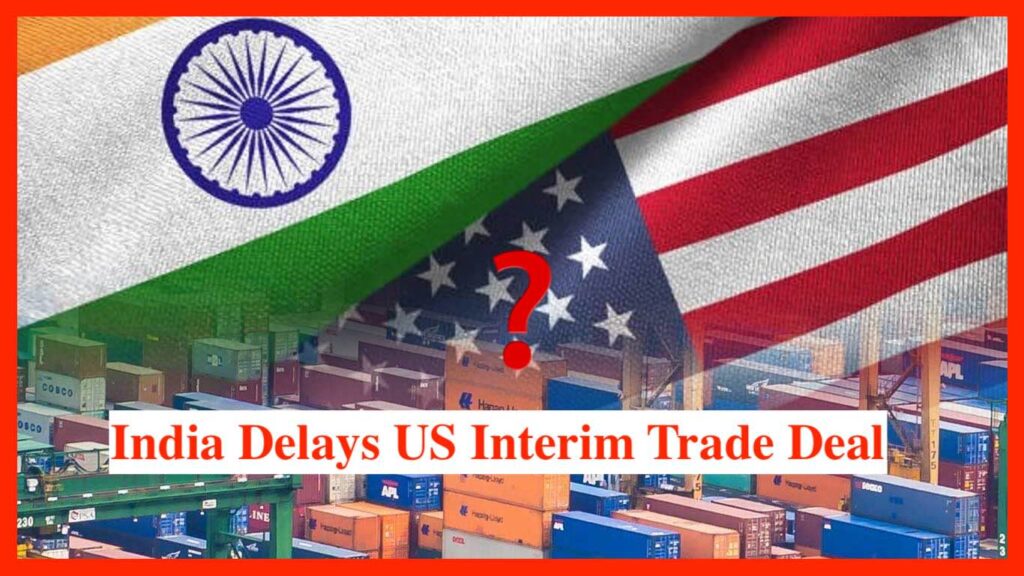
India has decided to delay the signing of an interim trade agreement with the United States for several months, according to government sources, after Washington launched a new Section 301 investigation into “structural excess capacity”across several manufacturing sectors.
The move introduces uncertainty into the evolving trade negotiations between New Delhi and Washington. It also slows momentum created by the early framework reached in February between Prime Minister Narendra Modi and US President Donald Trump.
Indian officials indicate that the India US trade deal delay reflects a cautious approach. The government wants clarity on potential tariffs and policy outcomes before committing to a formal interim arrangement.
February Framework That Set the Stage
The two governments announced an initial understanding in a joint statement on February 6, 2026. The agreement aimed to reduce trade tensions and lay the foundation for a broader Bilateral Trade Agreement (BTA).
Under the proposed framework, India agreed to reduce tariffs on several American products. These included industrial goods, agricultural commodities, and certain technology products.
Key agricultural imports discussed included dried distillers’ grains, sorghum, tree nuts, fruits, soybean oil, wine, and spirits. In addition, New Delhi signalled willingness to address market barriers related to medical devices and information technology equipment.
India also indicated that it intended to purchase about $500 billion worth of US products over five years. These purchases could include energy supplies, aircraft, precious metals, advanced technology goods, and coking coal.
In return, Washington proposed reducing tariffs on Indian goods. The proposed reciprocal tariff rate stood at 18 percent, significantly lower than the earlier punitive rates of up to 50 percent.
Officials in both countries described the understanding as an interim framework designed to lead toward a comprehensive bilateral trade agreement.
Section 301 Probe Introduces New Uncertainty
However, the trade environment changed on March 11. The Office of the United States Trade Representative launched investigations under Section 301 of the Trade Act of 1974 into sixteen trading partners.
The probe targets what the US describes as structural excess capacity and persistent over-production in manufacturing sectors.
Countries under scrutiny include China, the European Union, Vietnam, Mexico, Japan, and India.
For India specifically, the US highlighted a $58 billion trade surplus in 2025. Washington also identified several sectors where it believes production capacity exceeds domestic demand.
These sectors include:
Textiles and apparel
Health and pharmaceutical goods
Construction materials
Automotive components
Solar modules
Petrochemicals
Steel products
According to US officials, excess production supported by government policies can distort global markets. They argue that it creates supply surpluses and undercuts American manufacturing competitiveness.
Written submissions for the probe will open on March 17. Public hearings are scheduled for May 5. After that, the US government could impose new tariffs or other trade measures.
Indian Officials View Probe as Negotiating Pressure
Several Indian government sources told Reuters that policymakers see the probe as a potential negotiating tactic.
The investigation followed a ruling by the Supreme Court of the United States in late February. The court struck down certain tariffs imposed earlier by the Trump administration under the International Emergency Economic Powers Act.
As a result, Washington has explored alternative legal tools to retain tariff leverage in trade negotiations.
One Indian official familiar with the talks said the government prefers to wait for the outcome of the investigation before committing to the interim agreement.
“We are not in a hurry to sign any deal,” the official reportedly said.
India may also present its arguments directly before the USTR. If needed, New Delhi could take the dispute to the World Trade Organisation.
India’s Official Position on Trade Negotiations
Despite reports of a pause, India’s Commerce Ministry has rejected suggestions that talks have stalled.
A ministry spokesperson stated that both countries remain engaged in discussions aimed at achieving a mutually beneficial agreement.
Earlier, Commerce and Industry Minister Piyush Goyal emphasised that India would proceed cautiously. He noted that New Delhi does not sign trade deals under pressure or artificial deadlines.
Officials also want clarity regarding tariff levels before finalising any commitments.
Washington Expects Commitments to Be Honoured
US officials, however, maintain that the February framework remains valid.
The US ambassador to India stated during an event organised by India Today that Washington expects partner countries to honour agreements already reached.
According to American officials, the interim framework would benefit both economies. They argue that lower tariffs and greater market access could expand bilateral trade significantly.
A White House official also confirmed that discussions with India are continuing despite the investigation.
Strategic Calculations Behind India’s Wait-and-Watch Approach
Analysts say the India US trade deal delay may reflect prudent strategy.
Economist Priyanka Kishore from Asia Decoded noted that the United States has imposed a temporary 10 percent blanket tariff rate until July 24 after the court ruling.
Under these circumstances, India may prefer to wait for the final tariff structure emerging from the Section 301 investigation.
If new tariffs appear likely, New Delhi may seek to renegotiate elements of the interim deal.
This cautious approach allows India to avoid committing to terms that could soon change.
Wider Geopolitical Context
The trade discussions also occur amid broader geopolitical developments.
The ongoing conflict involving Iran has affected global energy markets. The original trade framework envisaged India reducing purchases of Russian crude oil.
However, New Delhi only slowed those imports rather than stopping them entirely.
Recent reports suggest that Washington may now encourage India to increase Russian crude purchases temporarily. The goal would be to stabilise global energy supplies during the conflict.
These shifting geopolitical calculations have added another layer of complexity to the negotiations.
Exporters Await Clarity on Tariffs
For Indian exporters, uncertainty remains the main concern.
Industries such as textiles, pharmaceuticals, gems and jewellery, and auto components depend heavily on access to the American market.
Companies in these sectors are closely watching the outcome of the USTR investigation and the future of the interim trade framework.
Until tariff clarity emerges, the timeline for a full India-US Bilateral Trade Agreement may remain uncertain.
For now, policymakers in New Delhi appear determined to move cautiously while the Section 301 probe continues.