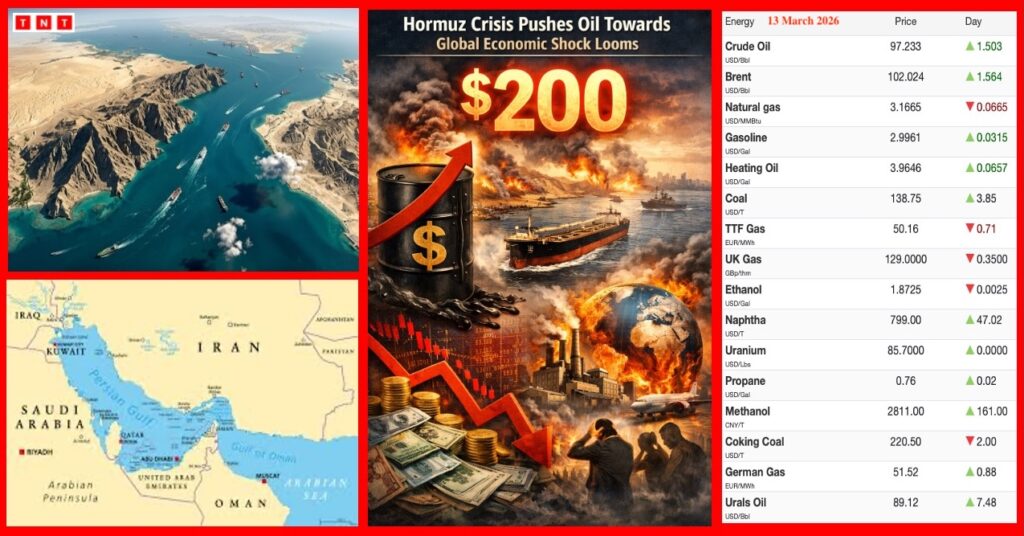
Hormuz Crisis Could Trigger $200 Prices and Global Recession
March 13, 2026
The escalating conflict in the Middle East has pushed the Hormuz crisis into the centre of global economic concerns. Analysts warn that a prolonged closure of the Strait of Hormuz could push crude prices towards $200 per barrel, triggering severe economic disruptions worldwide.
Energy markets have already reacted sharply. Oil prices initially surged before stabilising around $100–115 per barrel as traders assessed the possibility of sustained supply disruptions.
Many analysts believe the situation could deteriorate rapidly if the strait remains closed for weeks.
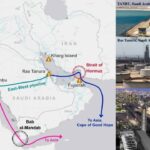
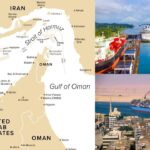
Why the Strait of Hormuz Matters to Global Energy
The strategic waterway remains the most critical oil transit chokepoint in the world.
Roughly 20 million barrels of oil per day pass through the strait. This accounts for nearly 20% of global oil supply. In addition, the route carries about 19% of global liquefied natural gas (LNG) shipments.
If the strait closes completely due to mines, missile attacks, or tanker disruptions, that supply disappears almost instantly from global markets.
Several economists and energy analysts warn that such a shock could push oil prices into unprecedented territory.
Economist Olivier Blanchard recently noted that oil prices could easily reach $150–200 per barrel if the disruption persists.
Consultancy Wood Mackenzie also warned that a $200 oil scenario in 2026 remains plausible under sustained supply disruption.
Financial institutions such as JPMorgan Chase estimate that prices could rise to $150 within four to eight weeks if shipping through the strait remains blocked.
Iranian leadership has also signalled its willingness to use energy leverage. Officials have publicly suggested that global powers must decide whether they can tolerate $200 oil prices.
Economic Impact: Who Gets Hit the Hardest
If oil prices surge dramatically, every major economy will suffer. However, the scale of the damage will vary significantly.
United States: The Most Resilient
The United States stands in a relatively strong position.
Thanks to its shale revolution, the country has become a net exporter of oil and petroleum products. Domestic production and pipeline imports from Canada and Mexico provide additional buffers.
The US also maintains a substantial Strategic Petroleum Reserve (SPR). The reserve currently holds about 415 million barrels and can release roughly 4.4 million barrels per day for several months.
Washington has already announced plans to release around 172 million barrels to stabilise markets.
Nevertheless, Americans would still feel the impact. Fuel prices could exceed $5 per gallon, inflation would rise, and financial markets could suffer sharp volatility.
Economists estimate a 50–60% chance of a mild recession if the crisis persists for several months.
Europe Faces Severe Energy Pressure
Europe remains heavily dependent on imported energy.
The region still struggles with the aftershocks of the 2022 energy crisis, which followed disruptions linked to the Ukraine war. A prolonged oil shock could trigger an even deeper economic strain.
Strategic reserves across Europe and coordinated releases organised by the International Energy Agency provide only limited relief.
Current estimates suggest that collective reserves could offset supply disruptions for two to four months.
However, analysts expect significant economic damage if the disruption continues.
Europe could face:
Inflation increases of 2–4%
GDP contraction of 1.5–3%
A high risk of stagflation
Recession probability could exceed 70% if the crisis lasts beyond one month.
Japan and South Korea: The Most Vulnerable
Among major industrial economies, Japan and South Korea appear most exposed to the Hormuz oil crisis.
Japan imports about 95% of its oil, and nearly 70% of those shipments pass through the Strait of Hormuz.
South Korea faces a similar vulnerability, with around 65–70% of crude imports relying on the same route.
Both countries maintain strategic reserves that could last around 200 days. However, these reserves only delay the economic shock.
Higher energy costs would rapidly increase import bills. Currency pressures would weaken both the yen and the Korean won, while export industries could suffer from rising production and shipping costs.
Stock markets have already reacted sharply. The South Korean KOSPI index has fallen significantly since the conflict escalated.
Analysts warn that both economies face recession probabilities above 70% if disruptions continue.
Asian Economies Adjust Supply Chains
Major Asian importers such as India and China also depend heavily on energy shipments from the Gulf.
Nearly 69% of oil passing through the strait ultimately flows to Asian markets.
However, both countries have greater flexibility compared with Japan or South Korea.
China continues to access large volumes of Russian crude and relies heavily on domestic coal for electricity generation.
India has also expanded purchases of Russian oil and increased refining capacity. This allows Indian refiners to process discounted crude and export petroleum products globally.
As a result, both economies may cushion some of the immediate supply shock.
Will $200 Oil Force a Ceasefire?
Despite the severe economic consequences, analysts believe that high oil prices alone are unlikely to force the United States or Israel into a ceasefire.
Iran’s strategy appears to focus on maximising economic pressure on Western economies by threatening energy supply disruptions.
However, Washington has historically responded to similar crises with military intervention rather than concessions.
During the Tanker War, the United States deployed naval escorts to protect oil tankers and maintain shipping routes.
Current statements from the United States Navy suggest a similar approach remains under consideration today.
The United States retains overwhelming naval and air superiority in the region. Military planners believe reopening the strait could take days or weeks rather than months if force becomes necessary.
Russia’s Unexpected Windfall
The crisis could also reshape global energy geopolitics.
Higher oil prices generate substantial additional revenue for Vladimir Putin’s Russia, which continues to export large volumes of crude despite Western sanctions.
Every $10–20 increase in oil prices translates into billions of dollars in extra annual income for Moscow.
That revenue could strengthen Russia’s financial position during the ongoing conflict in Ukraine.
Meanwhile, China may gain influence in Iran through deeper economic ties and discounted energy deals (i.e., only when war is over).
Global Markets Brace for Prolonged Uncertainty
For now, most economies can survive the initial phase of the crisis by using strategic reserves, diversifying supply routes, and reducing demand.
However, the longer the Hormuz disruption continues, the greater the risk of a global recession and financial market instability.
Energy traders, governments, and shipping companies are therefore watching the strait closely.
Any further escalation in attacks on oil tankers could send markets rapidly toward the $200 oil scenario that analysts increasingly view as possible.