EU Explores Greenland Compromise with Trump Before US Talks
European diplomats are actively exploring compromise proposals on Greenland to meet US President Donald Trump’s security demands without transferring sovereignty. The issue has gained urgency as Greenland Trump EU talks move into a decisive phase amid rising Arctic competition involving Russia and China. Danish Foreign Minister Lars Løkke Rasmussen and Greenland’s Foreign Minister Vivian Motzfeldt are scheduled to meet US Secretary of State Marco Rubio and Vice President JD Vance at the White House on January 14.
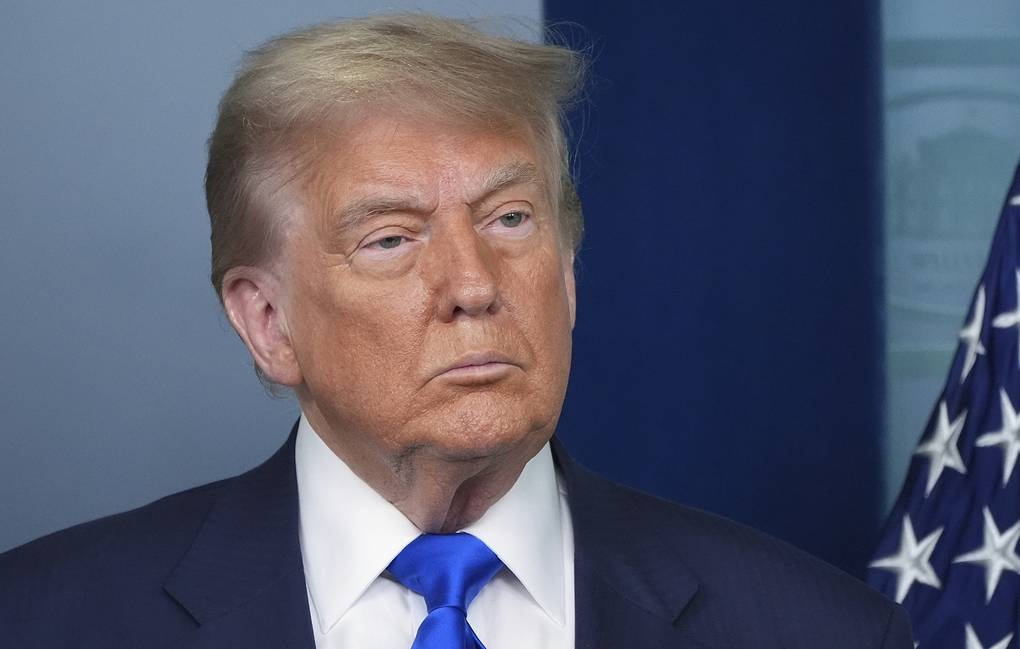
The objective of the talks is to redirect the discussion away from confrontation and towards structured cooperation. Trump has repeatedly stated that the United States “needs” Greenland for national security. He has revived ideas ranging from purchasing the territory to encouraging independence, and has even hinted at the possible use of force. These remarks echo his first-term proposals and follow renewed confidence expressed in March 2025 about potential annexation.
Diplomatic Off-Ramps Emerge in Greenland Trump EU Talks
European Union officials increasingly view Greenland through a NATO-centric security framework rather than a territorial lens. In contrast, Trump frames Greenland as a core component of hemispheric defence. As a result, EU diplomats are weighing security and economic concessions that could satisfy Washington without undermining Danish sovereignty.
Danish officials have signalled openness to expanding the US military footprint beyond the existing Pituffik Space Base, which currently hosts around 200 US personnel. Options under discussion include additional facilities, expanded joint operations, and defence-industrial cooperation. These measures would remain consistent with the 1951 US-Denmark defence agreement, which governs American military presence in Greenland.
According to Politico, internal signals from Washington remain mixed. While Trump continues to emphasise “ownership” as a negotiating tactic, senior aides such as Rubio appear more inclined towards arrangements that enhance security access without formal acquisition. European diplomats see this divergence as a potential opening for de-escalation.
High Stakes as White House Talks Approach
The White House meeting follows recent discussions on Capitol Hill, where Danish Ambassador Jesper Møller Sørensen conveyed Denmark’s willingness to consider enhanced US security cooperation in the Arctic. However, he firmly rejected any challenge to Denmark’s sovereignty over Greenland.
NATO Secretary General Mark Rutte has also weighed in, stressing alliance unity in response to Russian and Chinese Arctic activity. He has cautioned against unilateral moves and instead promoted coordinated NATO initiatives, including proposals for expanded “Arctic Sentry” patrols involving allies such as the United Kingdom and Germany.
Within the EU, some officials have privately discussed the theoretical use of Article 42.7, the bloc’s mutual defence clause. However, Denmark has not sought its activation. This reflects a clear preference for diplomatic engagement rather than escalation, even as rhetoric from Washington remains unpredictable.
Arctic Geopolitics and Strategic Minerals at the Core
Greenland’s vast reserves of rare earth minerals have become central to US strategic interest. These resources are critical for advanced technologies, renewable energy systems, and defence manufacturing. Trump has repeatedly linked mineral security to broader concerns about Russian and Chinese influence in the Arctic.
European responses have therefore combined economic and military elements. Proposals include granting US firms preferential access to mineral extraction projects while strengthening NATO coordination in the High North. Analysts note that such “sweeteners” may no longer be sufficient, as Washington increasingly expects tangible strategic gains.
Some observers have speculated about possible linkages between Greenland negotiations and US positions on Ukraine. However, White House sources cited by American media have dismissed these claims, describing the Greenland issue as a standalone matter viewed through a transactional, business-style lens.