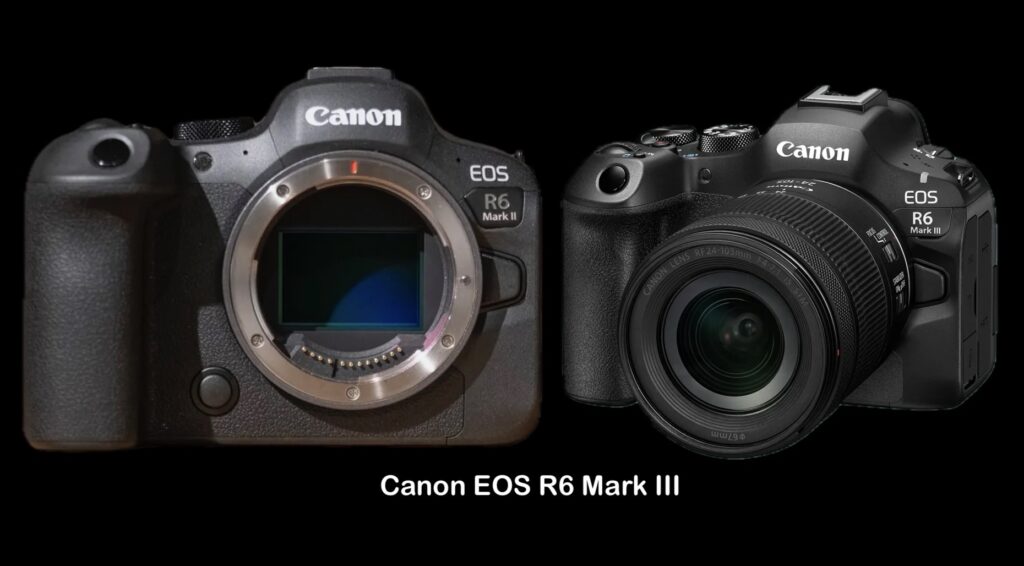
Canon EOS R6 Mark III: A Full-Frame Powerhouse to Redefine Hybrid Photography in 2025
Unveiling Canon’s 2025 Flagship Mirrorless Camera
Canon has officially lifted the curtain on its much-anticipated EOS R6 Mark III, redefining what creators can expect from a mid-range full-frame hybrid camera.
Announced on November 6, 2025, the third-generation R6 blends high-resolution stills performance, incredible shooting speed, and advanced video capability in a single compact body.
Priced just under $3,000 for the body, the camera targets serious enthusiasts and professionals seeking a versatile all-in-one solution. Canon clearly aims to dominate the hybrid mirrorless segment heading into 2026.
Sharper Sensor, Faster Speed, Stronger Autofocus
The biggest change sits at the heart of the system — a new 32.5-megapixel full-frame CMOS sensor. This is a major jump from the 24.2 MP chip in the R6 Mark II, giving photographers more cropping freedom and finer detail in large prints.
The sensor pairs with Canon’s DIGIC X processor, unlocking 40 frames per second of continuous shooting with the electronic shutter. Wildlife, sports, and event photographers can now capture fast-moving subjects with confidence.
Autofocus performance takes a notable step forward. The R6 Mark III introduces next-generation Dual Pixel CMOS AF III tracking that locks onto eyes, animals, or vehicles with uncanny precision.
It performs reliably even in –6.5 EV lighting, making it a solid low-light performer.
ISO sensitivity now reaches 64,000 natively and expands to 102,400, offering clean results in dim conditions where other sensors struggle.
Next-Level Video for Hybrid Shooters
Videographers will find a lot to love in this new Canon release. The EOS R6 Mark III records 7K RAW Light footage internally at 30p and oversampled 4K 60p video with exceptional clarity. It even offers 4K 120p for cinematic slow-motion and Full HD 180fps for creative, ultra-slow clips.
All of this comes without a crop, meaning you can maintain consistent framing across shooting modes. The new Open Gate recording mode gives creators extra flexibility for vertical or social-media formats.
Canon has also removed the old 30-minute recording limit, letting you shoot as long as the battery and storage allow.
Stabilization is another area of improvement. The in-body image stabilization (IBIS) system now delivers up to 8.5 stops of correction with compatible RF lenses. That’s a small but meaningful bump from the Mark II’s 8 stops — perfect for handheld or travel creators who want steady footage without a gimbal.
Refined Design and Build Quality
Canon hasn’t changed what works.
The weather-sealed magnesium-alloy body returns with a comfortable grip and familiar control layout. However, there are new ergonomic touches:
A dedicated photo/video switch for hybrid shooters
A brighter vari-angle touchscreen
A 5.76-million-dot OLED EVF for clearer previews
A full-size HDMI port for external monitoring
Battery life stays consistent at around 580 shots per charge (CIPA), though real-world performance can stretch further with eco settings.
Dual card slots — CFexpress Type B and UHS-II SD — allow for both speed and redundancy.
Connectivity options now include 5 GHz Wi-Fi and Bluetooth 5.1, catering to modern tethered and wireless workflows.
Key Upgrades Over the EOS R6 Mark II
The R6 Mark III directly addresses user feedback from the 2022 R6 Mark II.
The higher-resolution sensor eliminates earlier cropping limitations. Its 40 fps burst shooting remains unmatched in this class, while video gets a complete overhaul — jumping from 6K external ProRes to 7K internal RAW Light and uncropped 4K 120p.
Stabilisation improves slightly, and Canon fine-tunes hybrid usability with faster mode transitions and heat management.
These refinements make the Mark III feel more professional yet remain approachable for creators moving up from APS-C or older DSLRs.
How It Stacks Up Against Sony and Nikon
Sony A7 IV
The Sony A7 IV remains a formidable rival with its 33 MP sensor and deep lens ecosystem. However, its 10 fps burst rate and 5.5-stop IBIS can’t match the Canon’s speed or stability. While Sony still excels in color-grading tools for video, Canon’s internal 7K RAW and uncropped 4K 120p give it a serious edge for hybrid creators.
Nikon Z6 III
The Nikon Z6 III competes fiercely with its 24.5 MP stacked sensor and ultra-fast 120 fps RAW bursts. It’s 8-stop IBIS and 5.76-M EVF rival Canon’s performance, but it relies on external recorders for 6K RAW. Canon wins in internal video flexibility, autofocus consistency, and the more mature RF lens lineup, making it the safer choice for multimedia work.
Final Verdict: Canon’s Most Complete Hybrid Yet
The Canon EOS R6 Mark III isn’t a radical redesign — it’s a refined evolution that understands its audience.
It offers the right mix of resolution, speed, and creative freedom without pricing itself out of reach.
For photographers and videographers who need a reliable hybrid body capable of high-quality stills and cinematic video, this may be Canon’s most balanced full-frame mirrorless release to date.
Shipping begins late November 2025, just in time for the festive season.
If you’ve been waiting for a camera that truly bridges pro performance and everyday usability, the EOS R6 Mark III could be the perfect pick.
Note: While the above reflects validated information from credible sources, some details remain unconfirmed and subject to change at launch—especially in the Indian market.