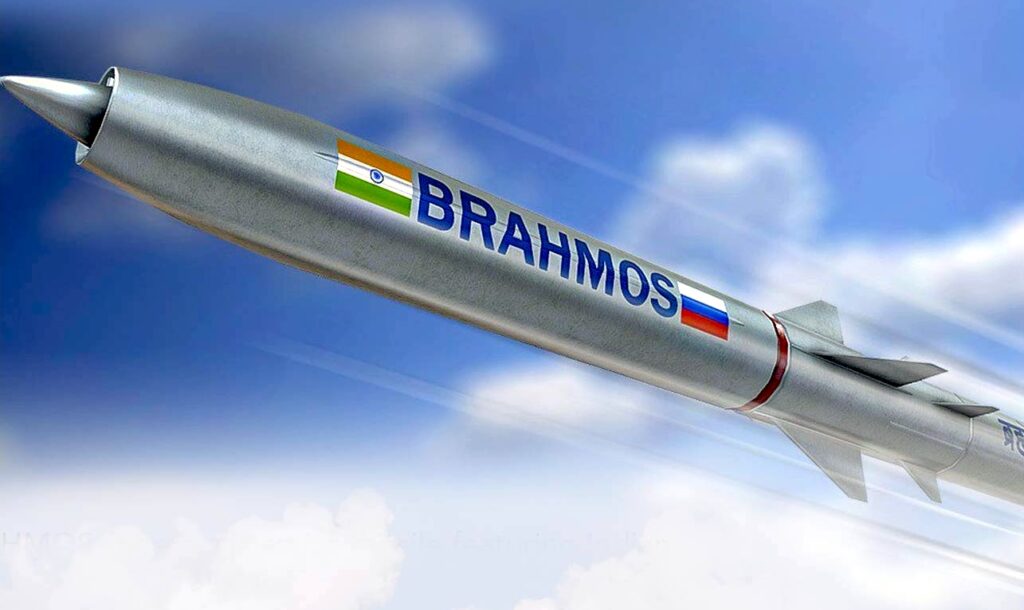
BrahMos ER 800 km Cruise Missile: India’s Strategic Strike Expansion
A Defining Moment in India’s Military Modernisation
BrahMos ER 800 km cruise missile is set to become a cornerstone of India’s next-generation precision strike capability, as the Indian Army prepares for a landmark pre-induction order that could redefine battlefield reach and deterrence. As of March 26, 2026, defence sources confirm that New Delhi is on the verge of clearing a massive procurement of extended-range BrahMos cruise missiles, marking one of the most significant upgrades in India’s conventional arsenal in recent years.
This move builds directly on the Defence Acquisition Council’s March 2025 approval for around 250 missiles in the 800 km class for both the Army and the Indian Air Force. What makes this development particularly notable is that the procurement is advancing even as final validation trials continue—reflecting confidence in the system and the urgency of strengthening long-range strike capabilities.
From Trials to Deployment: A Clear Induction Roadmap
The BrahMos ER 800 km variant is currently in its final stages of development, with trials progressing steadily through 2026. Engineers and defence scientists are focusing on validating full-range performance, precision targeting at extended distances, and resilience against electronic warfare systems.
Core technological upgrades, especially in propulsion and guidance, are largely complete. Only a limited number of final tests remain before certification. The development timeline targets completion by the end of 2027, with initial induction into operational units expected from 2028 onward.
The air-launched variant, often referred to as BrahMos-A in its extended-range form, will follow a slightly staggered path. Flight trials are expected to begin in late 2026, with squadron-level deployment projected for 2028–29.
Crucially, the integration process is designed for speed. Existing mobile launchers and fire-control systems can be upgraded with minimal hardware changes, allowing the Army to deploy the BrahMos ER 800 km variant missile without waiting for entirely new platforms.
Operational Lessons Driving Urgency
The urgency behind this induction is shaped in part by operational lessons from recent conflicts. During Operation Sindoor in May 2025, precision strikes using BrahMos cruise missiles reportedly caused significant damage to critical military infrastructure across the border, highlighting the system’s effectiveness in real-world conditions.
These lessons have accelerated India’s push toward specialised missile regiments, drone warfare units, and the concept of an Integrated Rocket Force. The BrahMos ER 800 km missile fits squarely into this evolving doctrine, offering deeper strike capability while maintaining high accuracy and survivability.
Beyond Range: What Makes the ER Variant Transformational
The BrahMos ER 800 km variant is not simply an extended-range version of its predecessor—it represents a qualitative leap in capability.
At its core is an upgraded liquid-fuel ramjet propulsion system that delivers enhanced thrust and fuel efficiency. This allows the missile to maintain its signature supersonic speed of over Mach 2.8 while doubling its operational reach.
Equally critical is the advancement in guidance systems. The missile integrates an upgraded inertial navigation system with satellite-based positioning, ensuring exceptional accuracy even under electronic warfare conditions. Reports indicate a circular error probable of under one metre, even at maximum range.
Despite these upgrades, the missile retains its low-altitude flight profile, including sea-skimming and terrain-hugging capabilities. This makes interception extremely difficult, preserving its effectiveness against advanced air defence systems.
With a payload capacity of 200–300 kg and compatibility across land, sea, and future air platforms, the BrahMos ER 800 km missile significantly expands India’s strike envelope without compromising flexibility.
Strategic Reach: Redefining Deterrence
One of the most important implications of the BrahMos ER 800 km variant missile is its ability to strike deep into adversary territory while launch platforms remain safely within Indian borders.
This extended reach enhances deterrence by increasing the range of high-value targets that can be engaged without forward deployment. From critical infrastructure to military bases, the missile’s coverage fundamentally alters the strategic calculus in the region.
At the same time, it strengthens India’s defensive posture along both western and northern fronts, offering a credible response capability in complex, multi-domain scenarios.
Atmanirbhar Momentum: Made in India, Built for Scale
The production backbone of the BrahMos programme is firmly rooted in India. The integration and testing facility in Lucknow has already been delivering missiles from earlier orders, with indigenisation levels exceeding 85% for key components.
The upcoming order for the BrahMos ER 800 km missile will further boost domestic manufacturing, reinforcing the Atmanirbhar Bharat initiative while sustaining the technological collaboration that underpins the programme.
This blend of indigenous capability and strategic partnership ensures both scalability and resilience in supply chains—an increasingly important factor in modern defence planning.
BrahMos-NG: Expanding the Battlefield Footprint
Running parallel to the extended-range programme is the development of BrahMos-NG, a lighter and more compact variant designed for greater deployment flexibility.
Weighing nearly half as much as the current system, BrahMos-NG can be carried in greater numbers on aircraft such as the LCA Tejas and Su-30MKI. Its reduced radar signature and advanced seeker technology enhance survivability in contested environments.
While its range is shorter—between 290 and 500 km—it compensates with speed, agility, and platform versatility. Flight testing is scheduled for 2026, with induction expected from 2027–28.
BrahMos-II: India’s Hypersonic Future
Looking further ahead, the BrahMos programme is preparing for its most ambitious leap yet with BrahMos-II.
This hypersonic variant, powered by a scramjet engine, is designed to achieve speeds between Mach 6 and Mach 8. Ground testing of critical components has already demonstrated sustained high-speed performance, including extended-duration trials conducted in 2025.
Flight testing is targeted for 2027–28, with operational deployment likely in the early 2030s. Once inducted, BrahMos-II will represent a new class of weapon capable of penetrating even the most advanced defence systems through sheer speed and manoeuvrability.
A Continuous Evolution, Not a Single Milestone
The BrahMos programme reflects a philosophy of continuous evolution. From its initial 290 km range to the current 450 km operational systems, and now to the BrahMos ER 800 km missile, each phase has expanded India’s capabilities in meaningful ways.
Future variants like BrahMos-NG and BrahMos-II demonstrate that this trajectory is far from complete. Together, they form a layered strike ecosystem that balances range, speed, stealth, and flexibility.
A Strategic Statement in Motion
The BrahMos ER 800 km missile is more than a technological upgrade—it is a strategic signal.
It reflects India’s intent to stay ahead in precision warfare, to invest in indigenous capability, and to build a credible deterrent in an increasingly uncertain security environment. As induction moves closer and next-generation variants take shape, India is not just expanding its arsenal—it is redefining the boundaries of modern military power.
From deserts to mountains, and across domains of land, sea, and air, the BrahMos ER 800 km missile stands poised to become a defining element of India’s defence architecture in the years ahead.
ALSO READ:
Why India Chose BrahMos Over ASBMs: The Doctrine Behind New Delhi’s Missile Logic
BrahMos: India’s Supersonic Edge Leaps Ahead into Hypersonic Superiority