Bangladesh Gen Z Revolution: From Quota Rage to Political Disillusion
From Street Power to Stalled Promise
Dhaka, October 20 — Like their counterparts in Nepal and Madagascar, Bangladesh’s Gen Z discovered that toppling power is easier than shaping it. The Bangladesh Gen Z revolution, born of job-quota anger, began with laptops and placards but now languishes in technocratic fatigue.
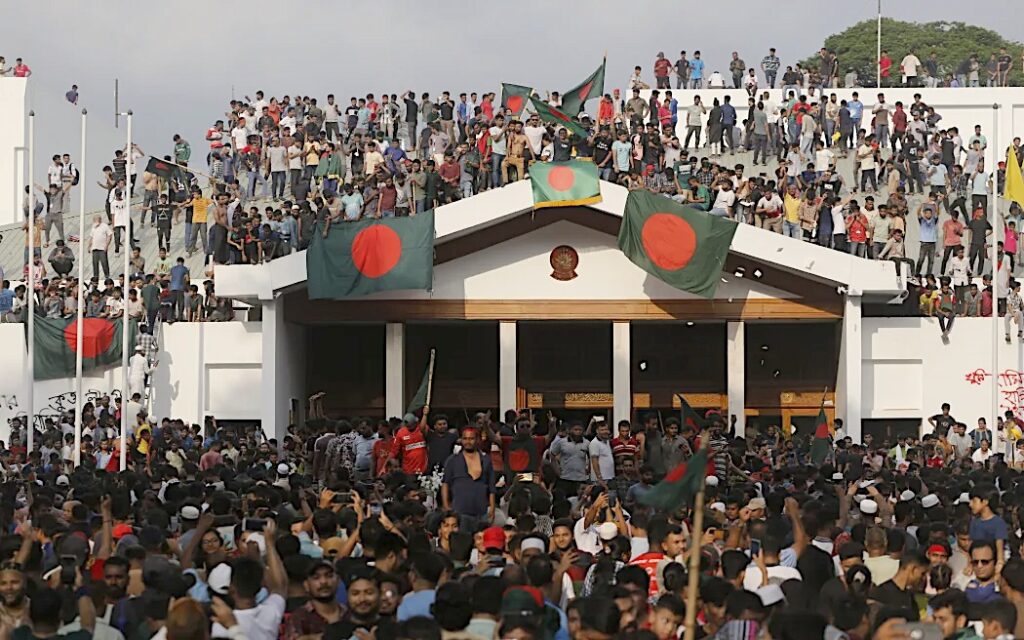
In mid-2024, students demanding fairness ignited protests that forced Sheikh Hasina from office. A year later, the same generation watches an interim government led by Nobel laureate Dr Muhammad Yunus debate reforms largely without them. The street’s thunder has faded to murmurs on Telegram.
The Spark: Quota Protests That Shook a Nation
The revolution’s spark was bureaucratic, not ideological. In June 2024, Bangladesh’s Supreme Court reinstated a 30 per cent civil-service reservation for descendants of 1971 war veterans. For millions of graduates facing unemployment, the verdict felt like a betrayal of merit.
Campus rallies at Dhaka University rapidly morphed into nationwide marches under the Anti-Discrimination Students’ Movement. Within days, chants of “Cancel the quota” widened to “End corruption and nepotism.”
By July, violence between demonstrators and police turned deadly. Social media amplified outrage; hashtags outpaced newspapers. The state teetered.
Hasina’s Flight and the Military’s Balancing Act
On 5 August 2024, amid collapsing administration, Prime Minister Sheikh Hasina fled, reportedly to India. Yet this was not a coup.
The Bangladesh Army stepped in as referee, not ruler — brokering ceasefires, protecting key sites, and pressing for a civilian caretaker. Its officers promised “constitutional continuity” and explicitly rejected political office. That restraint distinguished Dhaka from Antananarivo or Colombo, where armies became governments.
“The army provided the runway but refused to fly the plane,” a Western diplomat observed.
Communal Flashpoints amid Transition
As order crumbled in the days after Sheikh Hasina’s flight to Delhi, Bangladesh witnessed a spate of attacks on Hindu homes, temples and businesses across several districts. Reports from local media and rights monitors described arson, looting and intimidation that forced the army and Border Guards to deploy for minority protection.
After New Delhi expressed serious concern, with Prime Minister Narendra Modi and the Ministry of External Affairs urging Dhaka to ensure the safety of Hindus and uphold secular values, the interim authorities pledged swift action and investigations. However, as of yesterday, no official report has been released more than a year after the incidents.
While some analysts describe the violence against Hindus as an opportunistic eruption exploiting the security vacuum rather than a coordinated campaign, the pattern and eyewitness accounts suggest a more complex, organised undertone.
Still, the episode exposed how quickly Bangladesh’s fragile communal fabric can fray when political authority collapses—a warning that generational revolts, however civic in intent, can unleash darker undercurrents once the state falters.
Enter Muhammad Yunus: The Technocrat Caretaker
By consensus among student leaders, bureaucrats and foreign envoys, Dr Muhammad Yunus accepted the role of interim head of government on 7 August 2024. Le Monde(In French – “The World”, is one of Europe’s most respected and widely read international newspapers) noted that “the army and student protesters agreed on Yunus to head an interim government.”
Initially, optimism soared. Yunus promised electoral reform, anti-corruption drives and justice for slain protesters. To a generation raised on stories of dynastic rule, the symbolism of a civic elder was reassuring.
But within months, disappointment set in. Youth delegates found themselves locked out of the commissions shaping reform. Ministries filled with economists and retired administrators. The revolutionary network fragmented.
By mid-2025, a Dhaka meme summed up the mood: “We made history; now history lectures us.”
Disillusion by Numbers
Research by SANEM and ActionAid confirms the slide from engagement to apathy:
- 80 % of young respondents described themselves as politically inactive.
- Only 22 % believed the interim cabinet reflected youth interests.
Rising inflation and job scarcity deepened fatigue. The Bangladesh Gen Z revolution had won the day but lost momentum (or hijacked by Yunus & Co.)
Comparative Currents: How Bangladesh Differs
Across South Asia and Africa, Gen Z revolts share digital DNA but diverge in cause.
- Sri Lanka’s anger sprang from poverty and economic collapse.
- Nepal’s from corruption and a digital-speech ban.
- Madagascar’s from hunger and joblessness.
- Bangladesh’s from quotas and blocked mobility.
Yet in each, the military mediated transitions. Only Bangladesh’s stayed deliberately outside the palace gates, ensuring stability without uniforms in power — a quasi-revolution that halted short of coup.
Yunus and the Narrative of Neutrality
Rumours swirl that foreign powers favoured Yunus, citing his Western reputation. No credible evidence, however, confirms U.S. orchestration or base-leasing deals.
Yunus insists his mandate arose from domestic consensus. Western capitals endorsed his appointment as a stabilising measure. Still, suspicion lingers, amplified by Sheikh Hasina’s earlier claim that she lost office for refusing U.S. access to St Martin’s Island. The interim government denies such negotiations, but transparency remains vital to rebuild trust.
A Generation Left Out
For many organisers, exclusion hurts more than repression. “We asked for fairness, not hierarchy,” says Rafiq Khan, 24. “Now policy is written by people who never joined the marches.”
University groups that once set agendas now manage webinars. Street leaders drift into NGOs or leave politics altogether. TNT’s July 2025 poll found fewer than a third of respondents under 30 expected elections before 2026.
Bangladesh’s youth have learned the hardest lesson of this regional saga: revolutions are easier to ignite than to administer.
Military’s Quiet Influence
While publicly apolitical, the army remains the transition’s guarantor. Senior officers mediate between ministries, supervise security, and ensure order. Analysts call it “guardian civilianism” — authority without office.
The contrast with Madagascar’s junta could not be sharper: in Dhaka, soldiers stood behind civilians, not in their place. Whether this restraint endures once electoral politics resumes is the question shaping 2026.
Reclaiming the Revolution
For the Bangladesh Gen Z revolution to reclaim purpose, three reforms are urgent:
- Youth representation in every reform commission and party list.
- Economic linkage — tie political reform to job creation and digital entrepreneurship.
- Transparent timelines for free elections.
If achieved, Bangladesh could convert revolt into renewal. If not, it risks joining movements that changed rulers but not systems.
Conclusion: A Lesson for the Series
One year on, Bangladesh mirrors the central theme of Tattvam News Today’s Gen Z Revolutions 2025 Series — that youthful idealism can overthrow regimes but struggles to outlast inertia.
The army’s restraint prevented collapse; the technocracy’s caution bred drift. For now, the Bangladesh Gen Z revolution stands between promise and pause — its streets quiet, its dreams waiting for policy.