Bangladesh 1975 Coup: Blood, Betrayal, and the Birth of a Nation’s Ghosts
The Night that Shattered a Nation
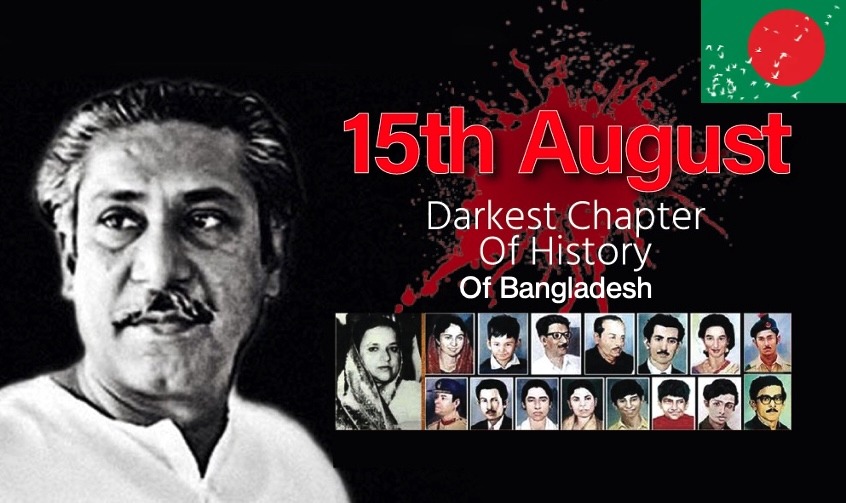
In the still darkness before dawn on August 15, 1975, Bangladesh awoke to its most harrowing tragedy — a bloody coup that ended the life of its founding father, Sheikh Mujibur Rahman, and almost his entire family. Mujib was more than a leader; he was a living symbol of Bengali identity, the architect of independence, and the man millions called “Bangabandhu.” Yet, that morning, his home at Road 32, Dhanmondi, Dhaka, turned into a slaughterhouse.
A group of ‘disillusioned’ military officers stormed the house, killing Mujib, his wife, his sons — including his ten-year-old son Sheikh Russel — and many of his close relatives. Only his daughters, Sheikh Hasina and Sheikh Rehana, survived because they were abroad.
This was not a spontaneous rebellion. It was a calculated conspiracy, born from political betrayal and amplified by foreign unease over Mujib’s socialist, secular vision for Bangladesh, well planned and executed.
The Betrayal and the Rise of Mostaq
As the blood dried in Dhanmondi, the nation was seized by confusion. Khondaker Mostaq Ahmad, once Mujib’s trusted confidant, declared himself president within hours of the assassination. Backed by the mutinous military faction, he promised “stability” but delivered turmoil. His short-lived regime sowed fear and distrust across the country. The dream of 1971 — a free, united Bangladesh — seemed shattered.
But the chaos was far from over. Within months, the coup that began with betrayal spiralled into a cycle of power grabs that would haunt the nation for decades.
November 1975: The Month of Blood and Revolt
Barely three months after Mujib’s assassination, the political storm deepened. On November 3, Brigadier Khaled Mosharraf, a respected war hero, led a coup to remove the assassins who had seized power. For a brief moment, it seemed justice might return.
Instead, the day became infamous for the “Jail Killing” — the brutal murder of four key leaders of the 1971 independence struggle inside Dhaka Central Jail. These men — Syed Nazrul Islam, Tajuddin Ahmad, Mansur Ali, and A.H.M. Qamaruzzaman — were the brains behind the wartime Mujibnagar Government. Their deaths silenced the very voices that once guided the nation through liberation.
The betrayal cut deep. Bangladesh wept again, this time not just for Mujib but for the destruction of its moral compass.
Only four days later, on November 7, Dhaka erupted once more. This time it was the Sipahi-Janata Biplob, the Soldiers and People’s Revolution — a leftist uprising that killed Brigadier Mosharraf and freed Major General Ziaur Rahman, who had been placed under house arrest.
From that moment, the story of Bangladesh took a new and complex turn.
Ziaur Rahman: The Reluctant Powerbroker
Ziaur Rahman, already a national hero from the Liberation War, found himself thrust into the eye of the storm. Many whispered that Zia had a hand in Mujib’s murder, but history paints a murkier picture. He had been sidelined during the August coup and only emerged as a leader after the November uprisings.
By 1977, Zia formally assumed the presidency, launching his political vehicle — the Bangladesh Nationalist Party (BNP) — and steering the country toward a new ideology. He moved away from Mujib’s secular-socialist framework and injected nationalism, Islam, and rural development into state policy.
Under Zia, Bangladesh began rebuilding from ruins. Yet the shadow of August 1975 loomed large. His assassination in 1981, during yet another military mutiny, once again plunged the nation into shock. The chain of coups seemed endless.
The Cycle of Coups and the Return of Democracy
After Zia’s death, chaos returned. General Hussain Muhammad Ershad seized power in a bloodless coup in 1982, ruling under martial law for nearly a decade. His regime saw both progress and repression, but by 1990, the tide turned. Mass protests and student uprisings forced Ershad to step down, restoring democracy.
From the ashes of those coups rose two political dynasties — Sheikh Hasina, Mujib’s daughter and leader of the Awami League, and Begum Khaleda Zia, Ziaur Rahman’s widow heading the BNP. Their fierce rivalry became the heartbeat of Bangladeshi politics, a living continuation of the ghosts of 1975.
The Legacy That Refuses to Die
The Bangladesh 1975 Coup wasn’t just a military mutiny — it was the day Bangladesh’s soul was torn in two. The assassination of Mujibur Rahman and the chaos that followed left scars that time has not fully healed.
Even today, the events of that fateful year define the nation’s political DNA — its power struggles, its quest for justice, and its endless tug-of-war between past and future. The truth is not as simple as heroes and villains. It is a saga of ambition, ideology, and betrayal — a story that continues to shape Bangladesh’s destiny.
The ghosts of 1975 still whisper through Dhaka’s corridors of power, reminding the people that the fight for Bangladesh’s soul — like its revolution — never truly ends.
Other Relevant Readings:
Bangladesh’s Political Crisis: Unpacking the Conspiracy Theories and Seeking Reality
Bangladesh Gen Z Revolution: From Quota Rage to Political Disillusion
Bangladesh Prime Minister Sheikh Hasina Resigns Under Pressure From Military and Mass Uprising
Timeline: The rise and fall of Bangladesh PM Sheikh Hasina
Sheikh Mujibur Rahman had ignored RAW alert ahead of bloody 1975 coup
Bangladesh’s Historic Political Crossroads on November 7, 1975
15 August, 3-7 November 1975 Bangladesh coup d’etat