Ultimate Travel Guide to Ladakh 2026: Our Family’s Breathtaking Journey
Part 1: Complete Planning Guide for Families & First-Timers
Updated on May 13, 2026
Ladakh had been calling our family for years. The images of dramatic snow-capped peaks, endless barren plateaus, turquoise lakes that seem to touch the sky, and ancient monasteries clinging to rocky hills kept pulling us in. Yet every time we considered the trip, a quiet anxiety surfaced especially about how the kids and the middle-aged members of our family would handle the high altitude. Stories of Acute Mountain Sickness (AMS) made us hesitate. Still, the dream was too strong to ignore. In June 2024, we finally took the plunge as a family. What unfolded was far more than a simple holiday it became a profound, humbling adventure filled with breathtaking landscapes, rich cultural depth, and invaluable lessons we learned the hard way.
This Travel Guide to Ladakh series shares our complete, honest family journey covering everything from careful planning and the thrilling Srinagar to Leh highway drive to explorations in Leh, Nubra, and Pangong, the real challenges of AMS, and the serene Buddhist heritage that touched us deeply.
This five-part series shares our complete, honest account: from the anxious planning stage to the thrilling Srinagar-Leh highway drive, our explorations in Leh, Nubra, and Pangong, the real challenges of AMS, and the serene Buddhist heritage that touched us deeply. We include every practical detail we researched and experienced costs, routes, timings, and tips woven into our personal family journey.
Series Navigation:
- Part 1: Complete Planning Guide (You are here)
- Part 2: A Breathtaking Journey Via Srinagar to Leh Highway
- Part 3: Exploring Leh, Nubra and Pangong
- Part 4: Comprehensive Guide on Acute Mountain Sickness (AMS)
- Part 5: Understanding Ladakh & Its Buddhist Heritage
The Thought Process: Should We Really Go?
The first serious question we asked ourselves was straightforward: Can the kids and the middle-aged members of our family handle high altitude? Acute Mountain Sickness was always in the back of our minds. After extensive research, we understood that with proper planning and gradual acclimatization, the risks could be managed effectively. Going slow and giving our bodies time to adapt became our mantra.
Next came the big debate on how to reach Ladakh. We ultimately chose the Srinagar Kargil Leh highway. It offered gradual altitude gain, stunning views of the Kashmir Valley, and a chance to reflect on the history of the 1999 Kargil War. Our plan: Fly to Srinagar, spend a few days there, drive to Kargil for an overnight halt (perfect for initial acclimatisation), and then continue to Leh the next day.
Having visited the Swiss Alps multiple times, Chamonix, Zermatt, Lucerne, and Zurich, I can confidently say that Ladakh stands in a league of its own. The Alps offer polished infrastructure and lush greenery, but Ladakh feels raw, untouched, and spiritually alive. For our family, it was love at first sight.
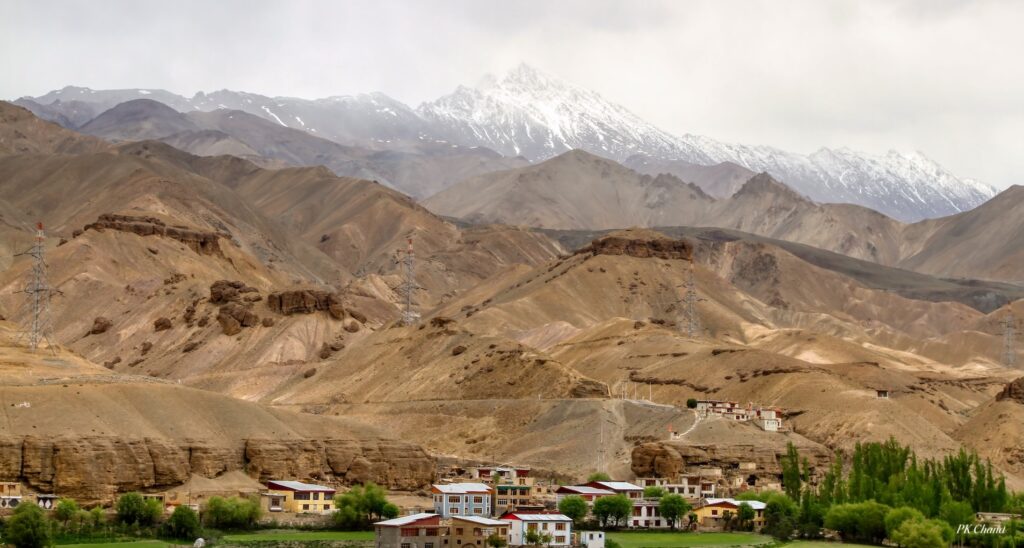
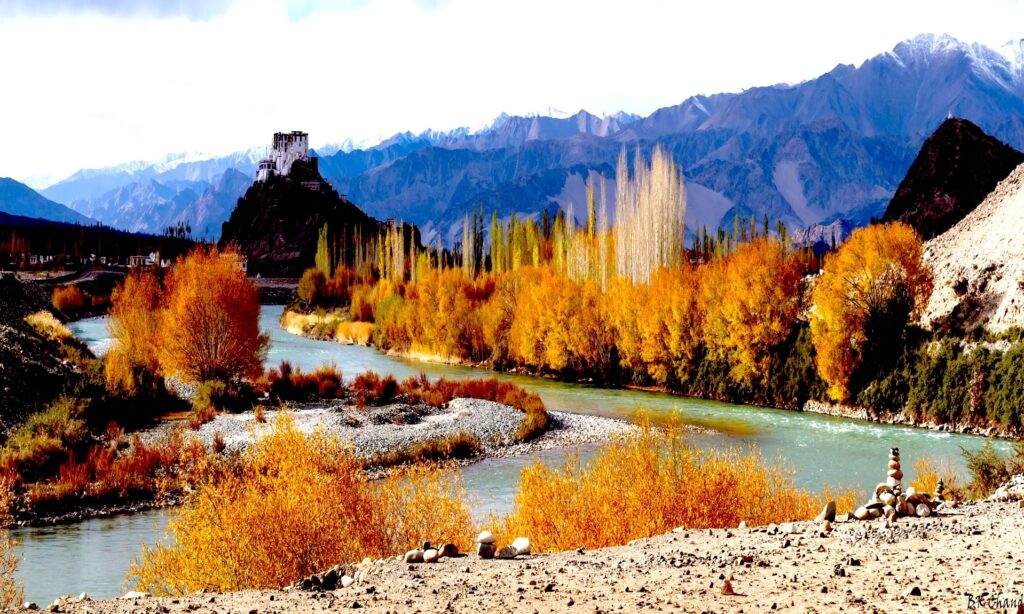
Overview of Ladakh
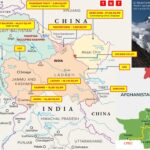
Ladakh became a Union Territory of India in 2019, previously part of Jammu and Kashmir. Situated in India’s northernmost region, it shares borders with Pakistan to the west and China (including Tibet) to the northeast.
Historically, Ladakh and Gilgit – Baltistan formed one cultural unit under the Namgyal dynasty and later the Dogra rulers. After the 1947-48 conflict, Gilgit – Baltistan came under Pakistani control. To the northeast lies Aksai Chin, historically part of Ladakh but administered by China since the 1950s and fully occupied after the 1962 war. India continues to claim it as sovereign territory.
Leh serves as Ladakh’s largest town and cultural heart, while Kargil is the second major centre. Until recently, there were only two districts. In August 2024, the Ministry of Home Affairs announced five new districts: Sham, Nubra, Changthang, Zanskar, and Drass to improve governance in this vast, remote region.
Best Time for Ladakh Travel
The peak tourist season runs from June to August, when days are comfortably warm and nights pleasantly cool (though higher areas like Pangong Tso and Tso Moriri can still get cold at night). Roads are clear, making it the easiest time for exploration, adventure activities, and festivals.
For those preferring fewer crowds, late May and early September work well as shoulder months. By mid-September, temperatures drop noticeably. Winter travel (October to May) is extremely challenging due to harsh cold, limited services, and road closures suitable only for experienced adventurers. Yet it offers unique beauty, such as frozen lakes and the Chadar Trek on the Zanskar River.
2026 Ladakh Travel Update: Our trip took place in June, when the weather was ideal, though the altitude still tested us in the beginning. As of April 2026, road opening patterns are similar to past years. Srinagar Leh Highway is expected to be fully open by now. Always check official BRO and Leh administration updates closer to your dates.
Reaching Leh
Leh is the primary gateway. The fastest option is flying direct Delhi-Leh flights operate year-round, taking about 5 hours. This is especially useful in winter when roads close.
For those seeking the full adventure, road travel from May to October is unforgettable. The two classic routes are the Srinagar Leh Highway and the Manali Leh Highway. Both offer dramatic landscapes but demand careful planning.
Roads Leading to Leh Opening & Closure
The Srinagar Leh Highway typically closes for 4-5 months starting in November and reopens in late March or early April, depending on snow clearance. May is often the safest month to plan travel on this route, though early weeks after reopening can see snow slides and one-way traffic restrictions, especially at Zojila Pass. Waiting a couple of weeks after reopening helps avoid getting stranded.
The Manali Leh Highway generally opens between late May and early June. The Atal Tunnel has made access easier by bypassing Rohtang, but the full route still depends on conditions at higher passes.
Roads within Ladakh Always Open
Most internal roads in Ladakh remain accessible year-round, thanks to the tireless efforts of the Border Roads Organisation (BRO). Even during harsh winters, BRO teams clear snow at high passes, ensuring connectivity to key destinations.
On the Kargil Leh Highway, passes like Namika La (12,139 ft) and Fotu La (13,478 ft) are regularly maintained and cleared. Similarly, Khardung La (18,379 ft), the gateway connecting Leh with Nubra Valley stays motorable with consistent maintenance throughout most of the year. The same holds true for Chang La (17,585 ft) on the Pangong Tso Leh Highway, which is cleared frequently to keep travel smooth.
During our family trip, this reliable internal road network gave us the confidence to explore deeper into Nubra and Pangong without worrying about sudden closures. It allowed us to focus on the stunning landscapes and cultural experiences rather than logistical hurdles, one of the many reasons Ladakh felt so accessible despite its remote and high-altitude setting.
2026 Ladakh Travel Update: As of April 2026, current road status reports from Leh confirm that major internal routes such as Leh-Nubra via Khardung La, Chang La, and Leh-Kargil remain open/green, though travellers should watch for occasional slippery conditions after fresh snow or rain.
Safety and Security in Ladakh
As we prepared for the trip, safety was one of our top concerns, especially traveling with family. We were relieved to discover that Ladakh is among the safest places to travel in India. The crime rate is very low, and the local people are warm, friendly, and incredibly welcoming. Their genuine hospitality makes every visitor feel at ease, turning this remote region into a truly peaceful destination.
Some foreign blogs mention concerns about border tensions with China and Pakistan. However, these fears are greatly exaggerated. The strong and visible presence of the Indian defence forces ensures stability. Security is evident everywhere, allowing travellers to move around without worry.
Wherever you go in Ladakh, you can feel safe both during the day and night. The serene atmosphere and protective environment only add to the adventurous charm of the region. For our family, this sense of security let us fully immerse ourselves in the beauty without constant concern.
Getting Around Ladakh
Once you reach Leh, exploring Ladakh becomes straightforward, with transport options for every budget and style. You can rent a private car with driver, join group tours, take shared taxis, or use public transport.
Budget Travel Options
Budget travellers often combine buses, shared taxis, and even hitchhiking. This works well for solo backpackers. However, families or groups may find it difficult due to limited service frequency.
Private Vehicle Hire
On our trip, we hired a private Toyota Innova with a driver for eight days. It comfortably covered Srinagar, Kargil, Leh, Nubra Valley, Pangong Tso, and finally the airport drop. The entire package cost ₹60,000, which included fuel and driver charges. This gave us the flexibility and comfort our family needed.
Organised Tours and Taxi Rentals
Leh agencies offer packaged tours to Pangong Tso, Nubra Valley, and Turtuk lasting three to four days. A private vehicle with driver usually starts at ₹25,000 for Pangong and Nubra. Adding Turtuk costs extra.
Tour rates and taxi prices are fixed due to the driver union, so bargaining rarely works. Agencies display available departure dates, making it easy to join a group if desired. Note that accommodation is not included in group tours. You will need to book stays separately. At Pangong, Diskit, and Hunder, we recommend booking in advance. Families should avoid tent-style camps if possible, as they often attract noisy biker groups.
Local Sightseeing Around Leh
For short trips around Leh, hiring a taxi is the most convenient option. Rates are fixed and listed in official booklets. Popular day routes (Shey, Thiksey, Hemis, etc.) average around ₹4,000 per day, depending on season.
Important Health Precautions
Those traveling with children, elderly relatives, or anyone with conditions like asthma, hypertension, or heart issues should be especially cautious at high altitudes. We strongly advise hiring vehicles that can carry oxygen cylinders for quick response in case of emergencies.
Motorbike Rentals
Adventure enthusiasts often rent Royal Enfield Himalayans from Leh shops. However, Ladakh’s rugged roads and high altitude demand prior riding experience and a valid motorcycle license.
For our family, the private Innova proved to be the perfect choice it turned long drives into comfortable, memorable journeys.
Accommodation Options in Ladakh
Ladakh offers everything from budget guesthouses to luxury hotels. Most options can be booked online.
Seasonal Accommodation Rates
Summer (June to September):
- Budget guesthouses and home stays in Leh: ₹1,000 – ₹1,500 per night
- Mid-range 3-star hotels: around ₹3,000 per night
- Luxury 4-star hotels: about ₹3,800 per night
Winter (October to May):
Many properties close due to extreme weather. Those that remain open often offer discounted rates. Notable Hotels are:
- The Grand Dragon Ladakh. A luxury option in Leh. Summer packages start at ₹2,50,000 for an 8-night stay.
- Panorama Hotel Located on Changspa Road near Shanti Stupa. Summer rates around ₹1,500 per day; winter around ₹3,000.
Tips for Booking Accommodation
- Confirm whether meals (breakfast and dinner) are included.
- For heating: Prefer central heating or oil-filled radiators (OFR). Avoid coil heaters or blowers as they reduce oxygen levels risky at altitude. Request an OFR if central heating fails.
- Ask about hot water (central system vs. individual geysers) and Wi-Fi/TV availability useful during acclimatisation days.
Choosing the right stay made our rest days in Leh far more comfortable and helped us acclimatise peacefully.
Food and Eating Options in Ladakh
Ladakh’s cuisine is shaped by its harsh climate and remote location, a beautiful blend of Tibetan, Central Asian, and North Indian influences. Meals focus on nourishing, easily stored ingredients.
Must-Try Local Cuisine
- Thukpa: Warming Tibetan noodle soup with vegetables or meat.
- Momos: Steamed or fried dumplings with veg, paneer, or meat fillings.
- Tingmo: Soft steamed Tibetan bread, perfect with curries.
- Skyu and Chhutagi: Hearty Ladakhi stews and pasta dishes.
- Butter Tea (Gur Gur Chai): Salty yak-butter tea that keeps you warm and energized.
- Chang: Mild barley-based local beer.
- Kashmiri specialties like Rogan Josh, Gushtaba, and Kashmiri Pulao are also widely available, along with standard North and South Indian dishes.
What to Avoid
Heavy oily/fried foods, raw salads, uncooked street food, excessive dairy, and untreated water. Stick to boiled, filtered, or bottled water.
Beverages
Try butter tea, Kahwa, herbal teas, and hot soups. Avoid alcohol (especially early in the trip), aerated drinks, and cold beverages.
Refer to our detailed AMS article in Part 4, as food choices directly impact how your body handles altitude.
Ideal Duration for Exploring the Majesty of Ladakh / How Long Should You Stay?
Ladakh’s vast terrain and long distances between attractions mean you cannot see everything in one short visit. Many travellers return multiple times.
For first-time visitors arriving by air in Leh, a 9 – 10 day itinerary is ideal to cover the major highlights comfortably: Leh Market and Shanti Stupa, Leh Palace, Thiksey, Hemis, and Shey Monasteries, Zanskar Indus Sangam, Gurdwara Pathar Sahib and Magnetic Hill, Nubra Valley (Diskit and Hunder), Pangong Lake, and the high passes like Khardung La and Chang La.
Our own 9-10 day plan (with the Srinagar road approach) felt just right it gave us time to acclimatise, explore without rushing, and absorb the spiritual essence of the region.
Tips for Careful Planning of Trip Itinerary
Ladakh is a high-altitude region, so careful planning is essential. Poor planning can significantly increase the risk of Acute Mountain Sickness (AMS). While we cover AMS in comprehensive detail in Part 4 of this series, here are the important points we considered and followed during our family trip.
Rest and Acclimatisation
Whether you travel by air or by road, rest is crucial for your body to adjust to the thin air. After reaching Leh (at approximately 11,500 feet / 3,500 m), we strongly recommend spending at least two full days in town.
On Day 1, avoid all sightseeing or long walks. Complete rest at your hotel helps your body adapt. We followed this strictly and it made a noticeable difference in how we felt by the third day.
On Day 2, you can attempt limited local sightseeing at lower-altitude spots such as Shanti Stupa, Leh Market, or Leh Palace. However, avoid steep climbs or heading to high passes this early.
Travel by Road from Srinagar
The Srinagar Leh route begins at a relatively lower altitude of about 5,200 feet.
Do not attempt to reach Leh in one single day. Stop at Kargil (around 8,800 feet) for an overnight stay. This gradual ascent gave our family a much smoother transition. Leh sits at 11,500 feet, so this overnight halt in Kargil helped our bodies adapt before the final push.
Travel by Road from Manali
The Manali Leh road starts at about 6,400 feet.
Plan to take at least two or three days to complete this route comfortably.
Avoid overnight stays at Sarchu (14,070 feet) or Pang (15,280 feet) due to the very high risk of AMS.
If you are limited to only one overnight stay, choose Jispa (10,500 feet) or Darcha (11,023 feet). From there, the drive to Leh is still a long 10 – 12 hours. The full distance from Manali to Leh is about 475 km.
Smart Route Choice for Round Trips
For a round trip, we highly recommend going to Leh via the Srinagar-Leh Highway and returning via the Leh-Manali Highway.
This sequence works better because, by the time you begin your return journey, your body is already well acclimatised. Additionally, the Leh Manali road is steeper in many sections, making it safer and easier to descend while adapted to the altitude.
Important Travel Tips We Followed
- Do not plan to visit Tso Moriri or Pangong Tso immediately after reaching Leh. Keep these higher-altitude destinations for later days in your itinerary.
- Visit Nubra Valley (around 10,000 feet) first, as it is lower than Leh and easier on the body during the initial acclimatisation phase.
- If you only have 3 4 days in Ladakh, stay overnight only in Leh. This ensures easy access to medical facilities and oxygen in case of any emergency.
- In October, travel only via the Srinagar Leh Highway. The Manali route often becomes unsafe by then due to early snow.
- Between November and April, it is safest to fly directly to Leh. Roads can be unreliable and dangerous during these winter months.
Author’s Note / 2026 Travel Update:
- Our family visited Ladakh in June. The weather was ideal with comfortable days and cool nights, though we still clearly felt the altitude challenge during the first couple of days.
- As of April 2026, seasonal patterns and road opening trends remain largely consistent. The Srinagar Leh Highway typically reopens for civilian traffic between late March and mid-April, while the Manali Leh Highway is expected to open around mid-to-late May. The Zojila Tunnel project continues to progress well, with excavation nearing completion (breakthrough expected by end of May 2026) and full all-weather connectivity targeted for 2028.
- Always check the latest Border Roads Organisation (BRO) updates and Leh district administration advisories closer to your travel dates, as mountain weather can cause short-term changes.
- We followed the rest first rule strictly and it made a huge difference to our family’s experience.
Inner Line Permit and Protected Area Permit
For Indian Tourists
Since 2021, Inner Line Permits (ILP) are no longer required for domestic tourists. You can freely visit all areas of Ladakh, including Nubra Valley, Pangong Tso, Hanle, Umling La, Marsimik La, Demchok, and Chumur. However, you must pay an environment or green fee of about ₹700 per person. Carry the payment receipt at all times.
The process is simple and can be completed online at lahdclehpermit.in/register-as-domestic.
We completed our green fee payment online before the trip. It was quick and hassle-free.
Permits for Foreign Nationals in Ladakh 2026
Foreign tourists still require a Protected Area Permit (PAP) sometimes referred to as Restricted Area Permit (RAP) to visit most of the popular attractions in Ladakh. This permit is mandatory for places such as Pangong Tso, Nubra Valley, Khardung La, Tso Moriri, Turtuk, and the Dah-Hanu villages.
In practice, foreigners are generally required to apply through a registered travel agent in Leh (or use the official online portal). Solo travellers often need to be grouped with others on paper by the agent to meet formal requirements. The permit is usually valid for 7 to 15 days and must be carried in physical printed copies (digital versions on phones are not accepted at checkpoints).
You can apply for the PAP at the DC Office in Leh through a registered travel agent, or use the convenient online option available on the official Leh administration portal (lahdclehpermit.in). We recommend completing this process soon after reaching Leh, as the DC Office can get crowded during peak season (June – August).
Special Cases for Certain Nationalities
Citizens of Pakistan, Bangladesh, China, Afghanistan, Myanmar, Sri Lanka, as well as foreign nationals of Pakistani origin, and passport holders from Taiwan, and Hong Kong (SAR of PRC) cannot obtain the permit from the DC Office in Leh. Their applications must be processed directly by the Ministry of Home Affairs (MHA) in New Delhi. Diplomats and government officials require additional clearance from the Ministry of External Affairs (MEA).
Newly Opened Areas for Foreign Tourists
In recent years, the Ladakh administration has gradually opened more areas to international visitors, making the region even more accessible. These include:
- Man and Merak villages near Pangong Tso
- Loma Bend (the route leading toward Hanle)
- Pachathang and Tyakshi villages near Turtuk in Nubra Valley
- Alternate Kargil Leh routes via Khangral Shaker Chiktan and Dah Batalik Slimo
Note: No permit is required to explore Suru Valley and Zanskar Valley south of Kargil. However, some high-border zones (such as certain parts of Hanle or Chusul) may still need additional army clearance depending on the prevailing situation.
Pro Tip from Our Experience
Even though we traveled as Indian citizens (and only needed the Environment/Green Fee), we saw many foreign travellers arranging their PAP smoothly through local agents. Planning this in advance and carrying multiple photocopies saved them time at checkpoints. Always confirm the latest requirements closer to your trip, as rules can evolve.
Also visit ‘the Leh District Tourist Management System‘ web site for the latest alerts, notices and other relevant information.