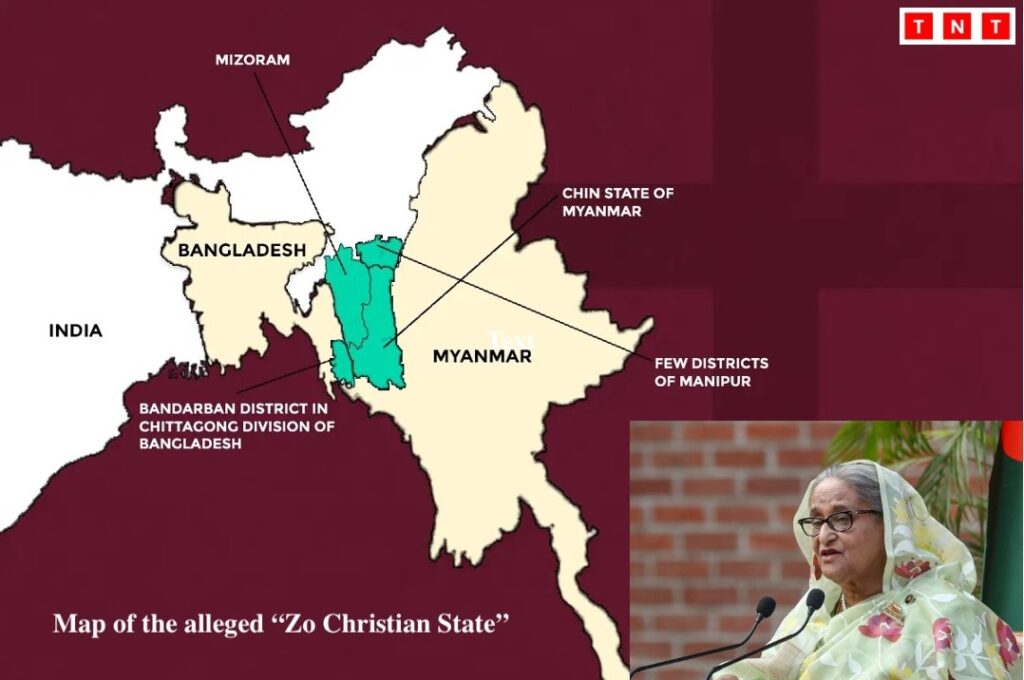
NIA Terror Arrests and Hasina’s Zo Christian State Claim: Expanding Debate
March 18, 2026 | The alleged Zo Christian State conspiracy continues to circulate across Indian media, geopolitical discussions, and social platforms. The narrative remains unverified. However, it has gained renewed attention due to recent developments—namely the NIA terror arrests of one American and six Ukrainians—and earlier warnings issued by Bangladesh’s former Prime Minister Sheikh Hasina.
This theory originated from Sheikh Hasina’s own public statements. It has since been amplified widely, though without substantial evidence. Even so, many observers argue that there is rarely “smoke without fire”. They contend that in such conspiracies, hard proof seldom surfaces. This remains the case whether the alleged plan succeeds or fails, as executors do not publish evidence.
Proponents further maintain that a sitting Prime Minister publicly raising such concerns is, in itself, significant. At the same time, critics continue to classify the entire narrative as speculative and politically motivated.
Origins of the Zo Christian State Conspiracy
The roots of the Zo Christian State conspiracy trace back to Sheikh Hasina’s speech on 23 May 2024. This occurred months before her ouster on 5 August 2024.
Addressing a 14-party alliance meeting in Dhaka, she stated:
“Like East Timor, they will carve out a Christian country taking parts of Bangladesh [Chattogram/Chittagong Hill Tracts] and Myanmar with a base in the Bay of Bengal.”
She further claimed that a “white man”, widely interpreted as a US-linked individual, approached her with an offer. According to her, the proposal involved assistance in winning the January 2024 elections in exchange for permitting a foreign military base on St. Martin’s Island. She refused the offer.
She alleged that a plan existed to carve out a Christian-majority country from parts of Bangladesh and Myanmar. However, she did not explicitly mention the CIA or India’s Northeast in her speech. These elements were added later by political allies and media interpretations.
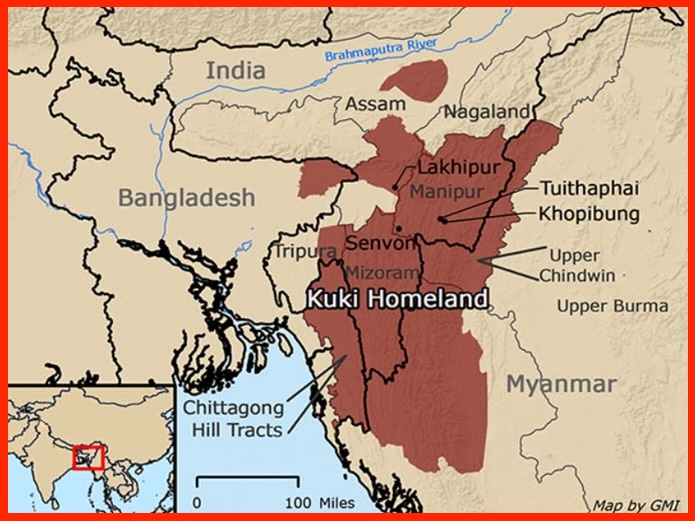
Subsequently, the narrative expanded to include the Kuki-Chin-Mizo (Zo) ethnic groups spread across India, Myanmar, and Bangladesh.
Historical Roots and Narrative Expansion
While the current form of the Zo Christian State conspiracy is recent, earlier strands of similar thinking exist. These do not directly involve the CIA but are often cited to support the broader narrative.
British colonial maps from 1904 showed a conceptual “Kukiland” across the hill regions. Later, Zo nationalism emerged during the 1980s and 1990s among Christian Kuki-Chin-Mizo communities.
In addition, American Baptist missionary presence in the region dates back to the 19th century. This has periodically fuelled suspicions of external influence, particularly during the Naga and Kuki insurgencies since the 1950s.
However, the full version involving a CIA-backed East Timor-style state is a recent development. It gained traction after Hasina’s 2024 speech and intensified following later events, including arrests in 2026.
Sheikh Hasina’s Ouster and Emerging Speculation
Sheikh Hasina, known for her proximity to India, fled to Delhi on 5 August 2024. She continues to reside there under Government of India protection.
Her removal from power followed large-scale student protests. Optically, these protests centred on job quotas, economic distress, and allegations of police brutality that resulted in significant casualties.
The movement rapidly escalated into a broader political upheaval. It drew support from opposition groups, Islamist factions, and sections of the military. The situation reflected a complex mix of domestic unrest and institutional fractures.
However, speculation persists that external forces played a role. The rise of Gen-Z-led protests and the installation of Muhammad Yunus have been linked in some discussions to a US or CIA-backed effort.
These claims are further associated with reports of increased American military presence, joint exercises, and restricted access to St. Martin’s Island.
In 2025, additional allegations surfaced from a former Home Minister. These suggested a broader plan involving Bangladesh’s military leadership. The objective, according to these claims, was to secure St. Martin’s Island and weaken key regional leaders.
The Alleged Structure of the Zo Christian State
According to proponents, the Zo Christian State conspiracy involves a coordinated effort to unify the Kuki-Chin-Mizo (Zo) ethnic population into an independent state. These communities are largely Christian converts.
This proposed state would allegedly include:
- Bangladesh: Chittagong Hill Tracts and Bandarban
- Myanmar: Chin State and parts of Sagaing
- India: Mizoram and Kuki-dominated areas of Manipur
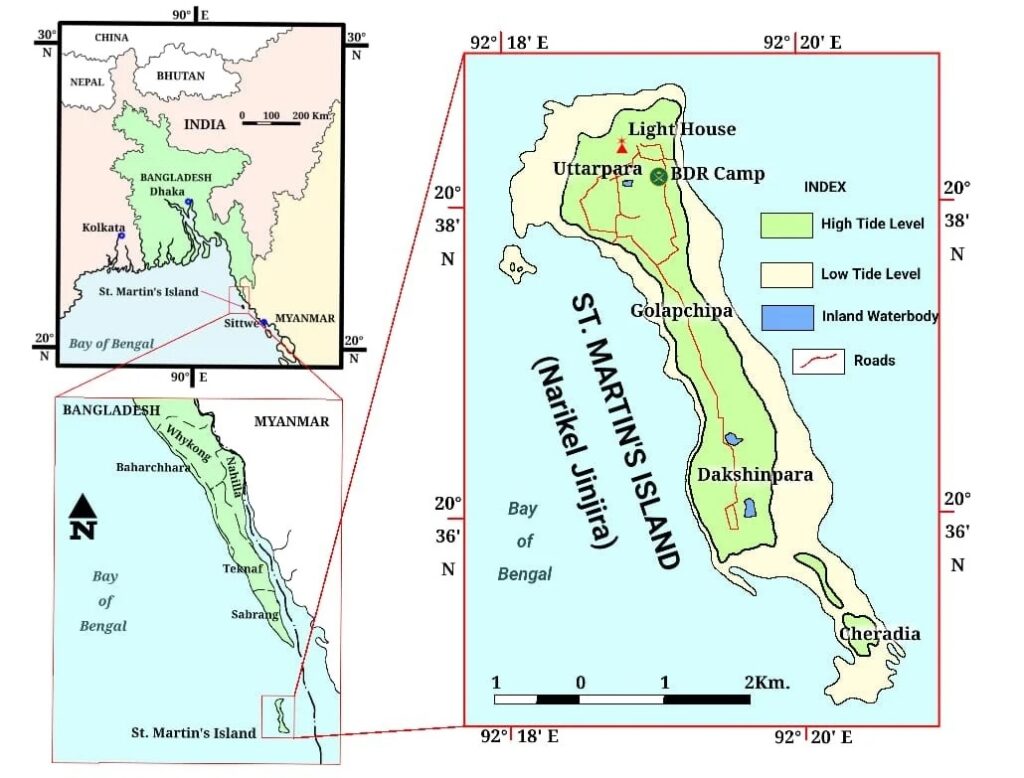
A central element of this theory is St. Martin’s Island. This small coral islet, located in the Bay of Bengal, is viewed as a strategic prize. It is believed to hold value as a potential naval, air, and intelligence base.
The Critical Role of St. Martin’s Island For Americans
Supporters of the Zo Christian State conspiracy argue that such a development would offer significant geo-strategic advantages to the United States in the Indo-Pacific region.
First, it would provide a foothold to monitor Chinese maritime activity. This would allow the US to counter Beijing’s “String of Pearls” strategy and Belt and Road Initiative projects.
Second, it could exploit existing ethnic fault lines. A Christian-majority enclave could potentially weaken India’s Northeast and Myanmar’s ruling junta. At the same time, it could offer leverage over governments perceived to be aligned with China.
Third, it could enhance soft power influence. US Baptist networks already operate in the region. A Christian-majority state could therefore serve as a reliable ally in a largely Muslim-majority regional environment.
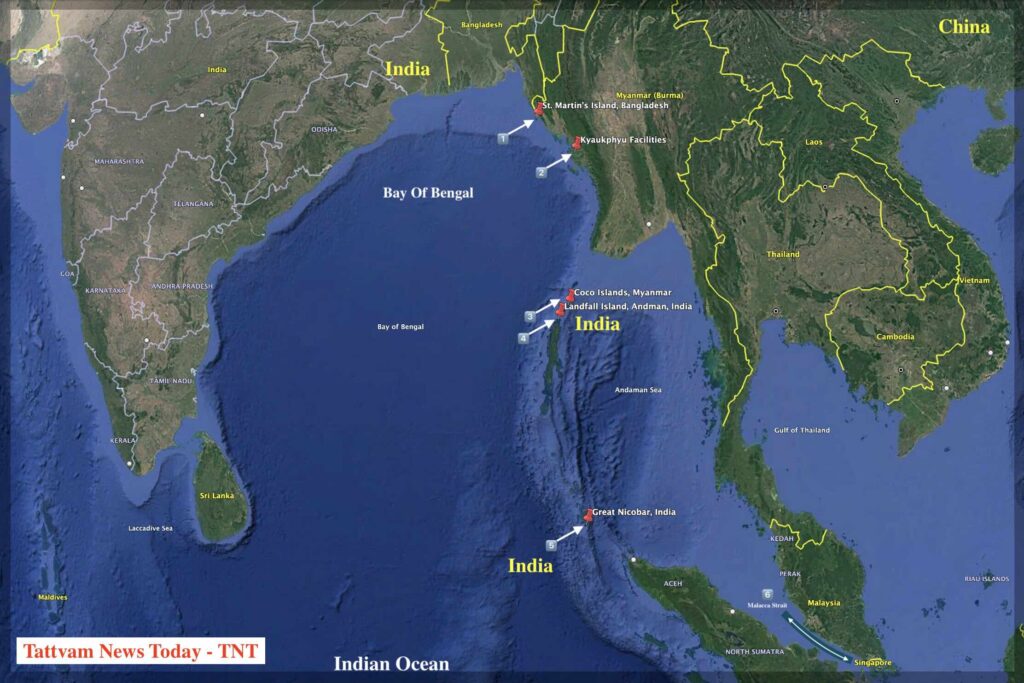
Fourth, the most critical factor, however, is geography. St. Martin’s Island lies approximately 190 km north of China’s Kyaukphyu facilities in Myanmar.
Kyaukphyu Facilities: China’s Crown Jewel
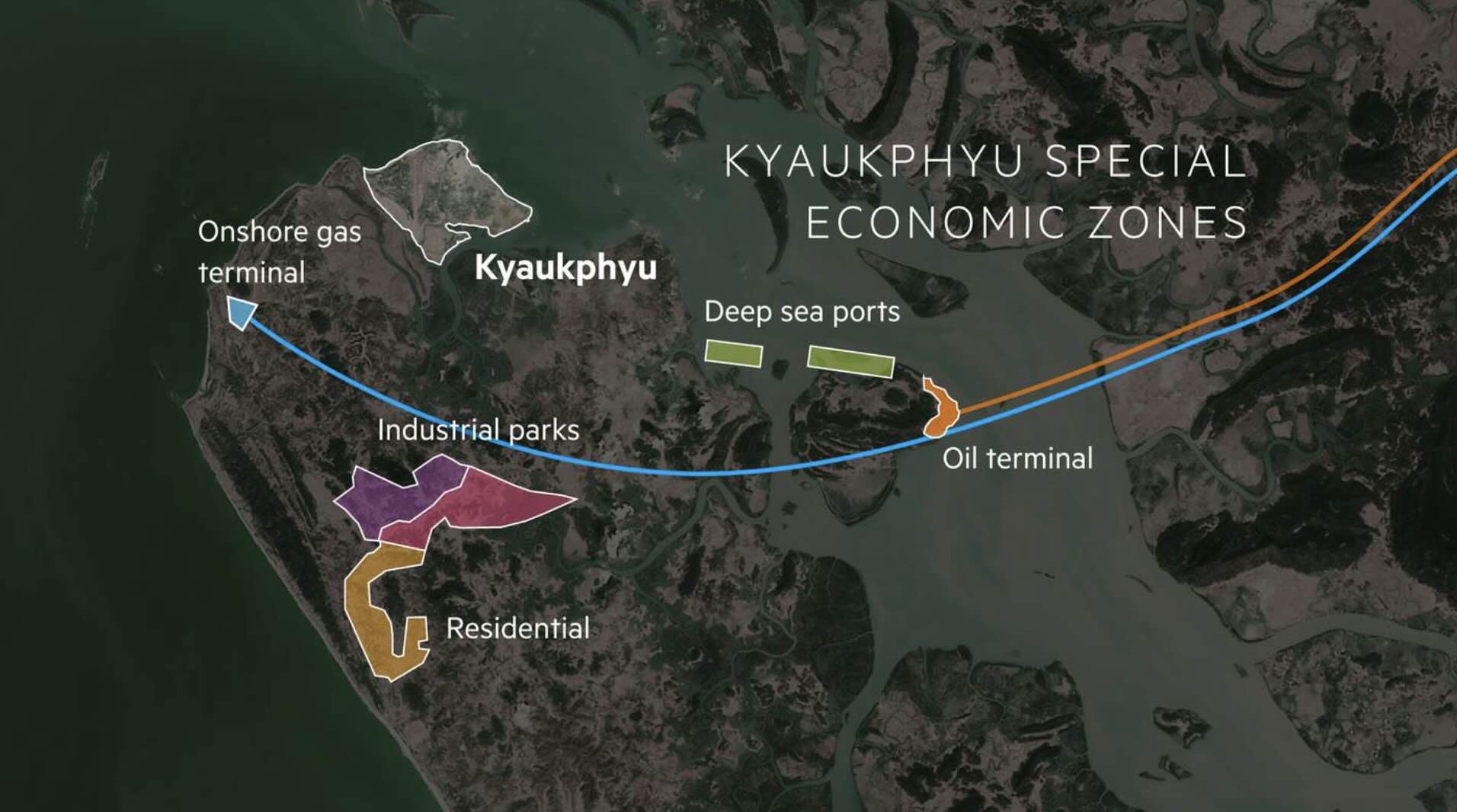
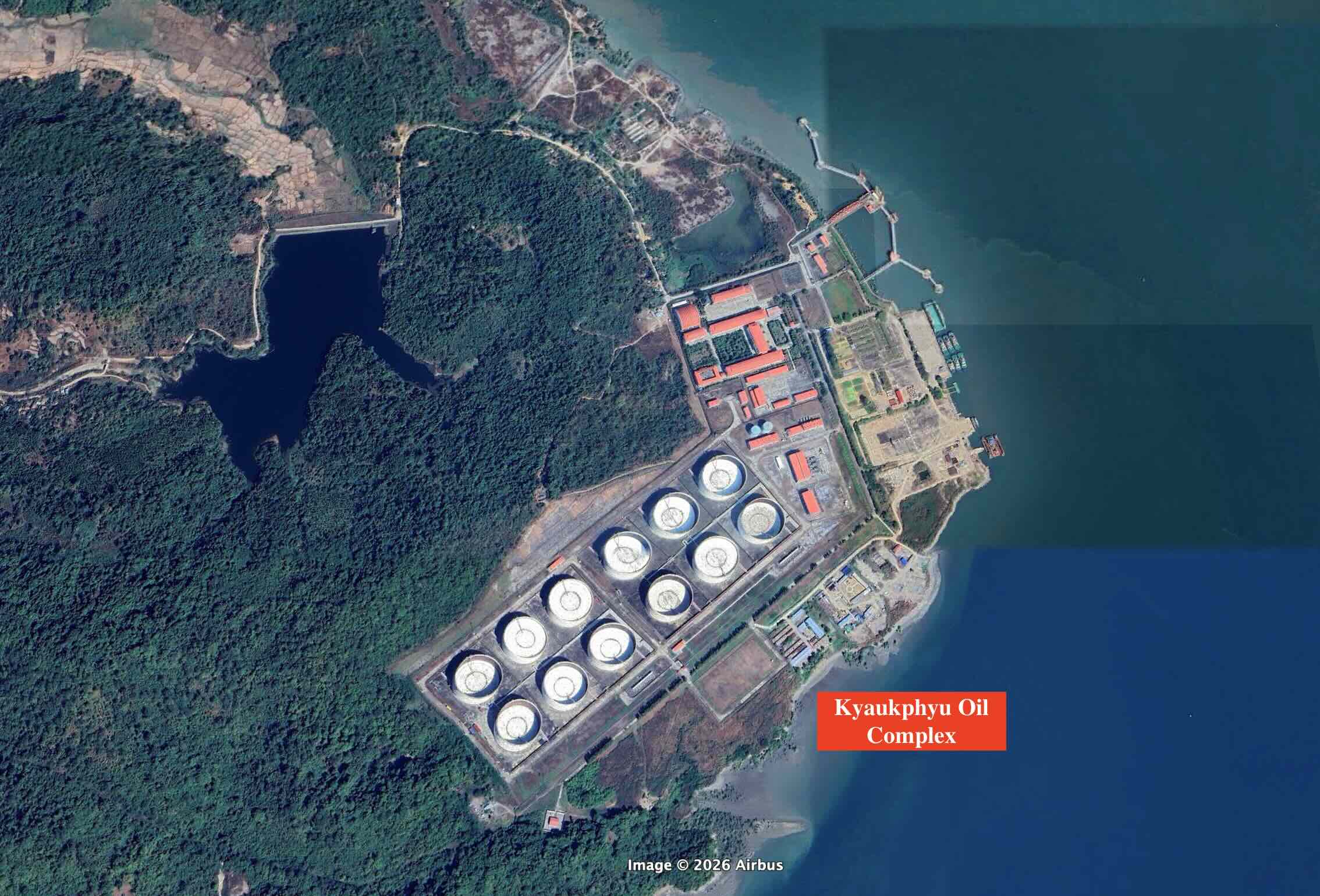
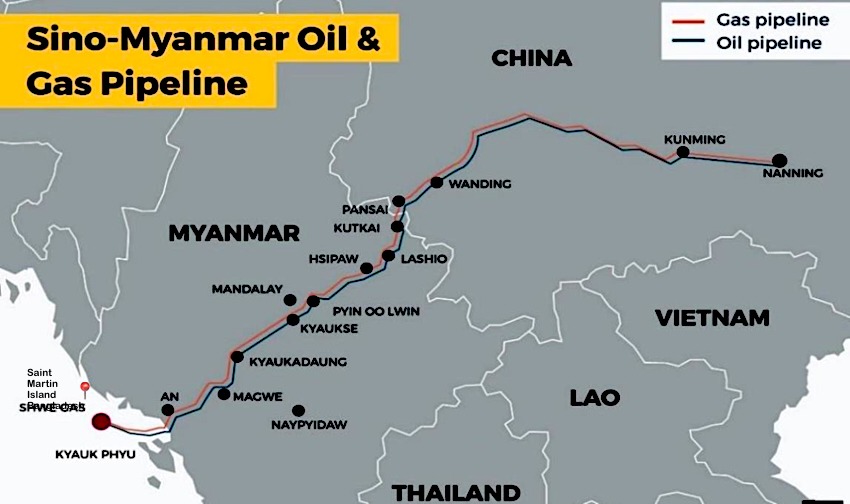
Kyaukphyu represents a major component of China’s Belt and Road Initiative in Myanmar’s Rakhine State. It includes a deep-sea port, a Special Economic Zone, an oil terminal, and twin pipelines transporting oil and gas to Kunming in China.
These pipelines allow China to bypass the Strait of Malacca. This reduces reliance on a narrow and vulnerable maritime chokepoint.
Purpose of the Facility
The project enables China to import oil from the Middle East and Africa, as well as gas from Myanmar, directly into Yunnan province. This significantly shortens the transportation route and enhances energy security.
Pipeline Specifications and Throughput
The crude oil pipeline has a diameter of 813 mm (32 inches) and runs for approximately 771 km within Myanmar. It is designed to handle a capacity of about 22 million tonnes per year, which is roughly equivalent to 442,000 barrels per day.
Similarly, the natural gas pipeline, known as the Shwe Gas pipeline, has a larger diameter of 1,016 mm (40 inches) and extends for around 793 km within Myanmar. It is designed to transport approximately 12 billion cubic metres of gas annually.
These specifications have remained unchanged since commissioning. The gas pipeline became operational in 2013, while the oil pipeline started functioning in 2017.
The pipelines run parallel from Kyaukphyu through multiple regions of Myanmar before entering China at Ruili and terminating at Kunming.
Current Status
As of March 2026, the pipelines remain operational, although at reduced capacity. They continue to deliver energy supplies to China and generate revenue for Myanmar’s ruling junta despite ongoing civil conflict.
However, the broader deep-sea port and Special Economic Zone project, valued at over $7 billion and led by CITIC, has faced significant delays. Fighting in Rakhine State between the junta and the Arakan Army has slowed progress considerably.
Iranian Oil and Media Silence
Some strategic analyses suggest that the pipeline has been used as a route to bypass sanctions, including for Iranian crude oil shipments. Earlier studies highlighted its shorter and relatively secure path compared to the Strait of Malacca.
The project receives limited mainstream media attention. This is partly due to the dominance of Myanmar’s civil war in global coverage. In addition, restricted access to conflict zones makes reporting difficult.
Observers also argue that Western media tends to avoid highlighting successful Chinese infrastructure projects in politically sensitive regions. Conversely, Chinese media often downplays delays or operational challenges.
Why This Matters for the Conspiracy Narrative
The Zo Christian State conspiracy places significant emphasis on geography. St. Martin’s Island lies just 120 km north of Kyaukphyu.
Proponents argue that a US-linked presence on the island would enable direct surveillance. It could also provide the capability to disrupt China’s critical energy corridor connecting the Bay of Bengal to Kunming.
This strategic angle explains why Hasina’s 2024 warning and subsequent developments have revived the narrative.
Current Prospects
At present in March 2026, the likelihood of such a geopolitical restructuring remains low to moderate. Ethnic insurgencies and cross-border cultural ties do exist. However, the creation of a new state spanning three sovereign nations presents significant challenges.
The March 2026 arrests of foreign nationals, including Matthew VanDyke and Ukrainian individuals, have added fresh momentum to the discussion. However, no declassified evidence links these events to official CIA policy.
US officials have denied any interest in establishing a base on St. Martin’s Island or pursuing regime-change strategies in the region.
At the same time, both India and China remain firmly opposed to any fragmentation of territorial boundaries in South and Southeast Asia.
Bottom Line
Sheikh Hasina’s warning continues to shape the Zo Christian State conspiracy narrative. It reflects concerns about foreign influence in a volatile region marked by ethnic complexity and strategic competition.
The proximity of St. Martin’s Island to China’s Kyaukphyu project adds a layer of geopolitical sensitivity. The events of 2026 have further amplified these discussions.
However, transforming the border regions of three sovereign countries into a new state remains a distant possibility. The theory persists largely as a mix of geopolitical suspicion, historical context, and contemporary speculation.
For India, the challenge lies in maintaining vigilance, strengthening development in sensitive regions, and ensuring stability along its borders.
Also Read:
Great Nicobar Island Project: India’s Strategic Development with Tribal Welfare
It relates to India’s strategic and economic importance, especially in the present context where control over energy routes is critical. It highlights how Great Nicobar serves as a gateway to the Strait of Malacca and underscores the need for a strong Indian military presence in the Andaman and Nicobar region to assert strategic supremacy. Great Nicobar Project, in this context, serves that purpose.