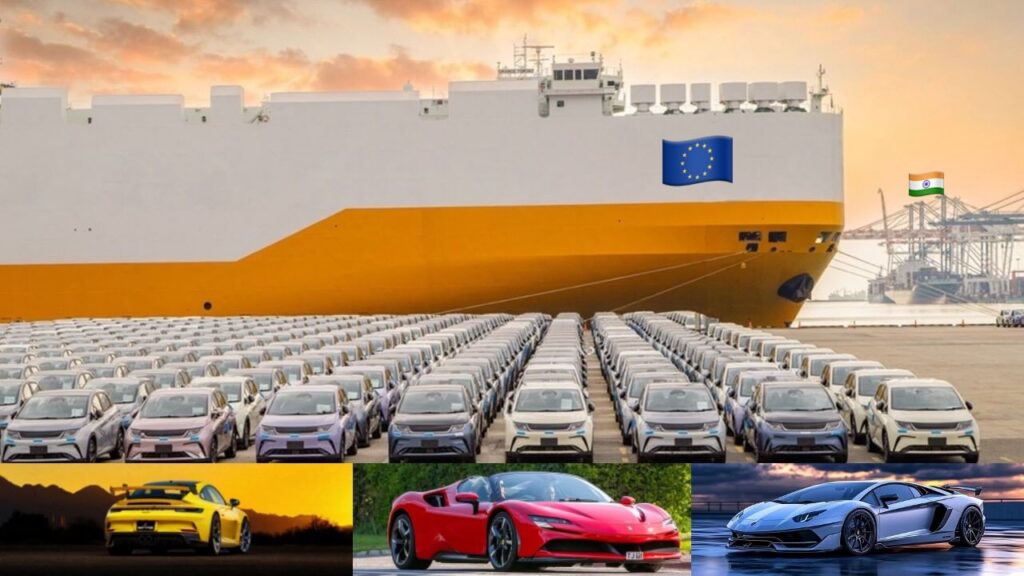
India-EU FTA: Slashing European Car Import Duties and What It Means for India’s Auto Sector
In the evolving landscape of global trade realignments, India’s negotiations with the European Union for a comprehensive Free Trade Agreement (FTA) are entering a decisive phase. Among the most consequential proposals on the table is a substantial reduction in import tariffs on European automobiles—one of the most protected segments of the Indian economy.
This potential concession represents one of the boldest openings of India’s automotive market in recent decades. While it has triggered intense debate across industry, policy, and public discourse, the issue warrants a deeper examination beyond headline anxieties. This Insight report analyses the proposal’s market mechanics, employment implications, techno-commercial effects, and strategic trade logic, offering a structured and evidence-based assessment.
India-EU FTA Talks and the Proposed Car Tariff Reduction
What Is Being Negotiated
According to sources familiar with the negotiations, India is considering lowering import duties on select European internal combustion engine (ICE) vehicles from levels exceeding 100% (including cess and surcharges) to approximately 40%, subject to an annual quota of around 200,000 units.
The proposal is designed as a controlled and conditional concession rather than a blanket liberalisation. The reduction would take effect upon the FTA’s implementation, with the possibility of further phased reductions over time for specific categories. Electric vehicles (EVs) may receive more favourable treatment, aligning with India’s long-term decarbonisation goals.
Why Automobiles Are Central to the FTA
India’s automotive market—one of the world’s largest by volume—has long been shielded to support domestic manufacturing under initiatives such as Make in India and the Production Linked Incentive (PLI) scheme. The EU, home to major global auto brands including BMW, Mercedes-Benz, Audi, and Volkswagen, views India as a critical growth market and has consistently pressed for improved access.
In return, India seeks meaningful concessions in sectors where it holds comparative advantages, including pharmaceuticals, textiles, jewellery, IT services, and skilled labour mobility.
Market and Employment Concerns — Separating Risk from Reality
Will Cheaper European Cars Flood the Indian Market?
Public discourse often suggests that lower tariffs will lead to an influx of European vehicles, undermining domestic manufacturers. However, a closer examination indicates that this risk is overstated.
Even after a reduction to 40%, the landed price of most European vehicles—after factoring in shipping costs, GST, and compliance expenses—would remain firmly within the premium segment. A mid-range European car is still likely to retail between ₹35-40 lakh, well above the ₹5-15 lakh range that accounts for over 70% of India’s passenger vehicle sales.
With an annual quota of 200,000 units—less than 5% of India’s yearly auto sales—the measure is structurally incapable of disrupting the mass market.
Employment Impact — A Limited and Manageable Exposure
India’s automotive ecosystem employs an estimated 35-40 million people, primarily in mass-market manufacturing and component supply. The proposed concession targets a premium niche, making large-scale job losses improbable.
Historical experience with previous FTAs, including ASEAN, suggests that phased liberalisation does not lead to net employment erosion. Instead, it often shifts employment toward higher-skill roles in design, RD, EV technology, and advanced manufacturing. Ancillary job creation in luxury retail, servicing, and logistics may further offset limited displacement.
Competitive Discipline and Consumer Outcomes
Introducing Checks on Price Escalation
India’s protected auto market has witnessed sustained price inflation over recent years, driven by regulatory compliance costs, feature bundling, and limited competitive pressure in certain segments. Controlled import competition could act as a disciplining mechanism, encouraging domestic manufacturers to enhance quality, safety features, and value propositions without dismantling local industry.
Consumer Gains Without Market Distortion
For consumers, the impact is primarily qualitative rather than quantitative. The presence of competitively priced premium European vehicles may accelerate the adoption of advanced safety technologies, efficiency standards, and design benchmarks—benefits that often cascade into the broader market through localisation and adaptation.
Techno-Commercial Implications for India’s Auto Ecosystem
Technology Transfer and Localisation Opportunities
One of the most significant upside risks lies in technology inflows. European automakers may expand local assembly operations or joint ventures to optimise costs under FTA provisions, facilitating the transfer of advanced technologies such as:
- Euro-standard emission controls
- Advanced driver-assistance systems (ADAS)
- Lightweight materials and hybrid powertrains
Local content requirements could further integrate Indian suppliers into global value chains, strengthening export competitiveness.
Electric Vehicles and Green Mobility
Although ICE vehicles dominate current discussions, EV provisions carry long-term strategic weight. Preferential tariffs for electric models could accelerate India’s EV adoption curve, introduce global charging standards, and stimulate investment in battery manufacturing and charging infrastructure.
Rather than crowding out domestic EV players, premium imports may help expand the market itself, where EV penetration remains below 2%.
Auto Components and Supply Chain Efficiency
Reduced tariffs on specialised components—such as electronics, sensors, and precision parts—could lower input costs for Indian manufacturers and boost the competitiveness of the $50+ billion auto-components sector. Integration with European suppliers may also introduce Industry 4.0 practices, improving productivity and quality.
Strategic Trade and Geopolitical Considerations
Diversification Amid Global Trade Fragmentation
Against the backdrop of US-China tensions and European efforts to de-risk supply chains, India’s willingness to open sensitive sectors enhances its appeal as a manufacturing and investment destination. The auto concession strengthens India’s bargaining position across the broader FTA, particularly in services and high-value exports.
Phased Safeguards as Strategic Insurance
The quota-based, phased approach preserves India’s policy flexibility. It allows policymakers to evaluate market responses, protect vulnerable segments, and recalibrate commitments if required—without undermining long-term strategic objectives.
A Calculated Opening, Not a Capitulation
The proposed reduction in European car import duties under the India-EU FTA represents a calibrated shift rather than a surrender of industrial policy. Evidence suggests limited disruption to mass-market manufacturers, manageable employment risks, and substantial techno-commercial and strategic upside.
If implemented with discipline and safeguards, the measure could enhance competition, accelerate innovation, and strengthen India’s integration into global automotive value chains—transforming a contentious concession into a long-term strategic gain.