Why Howard Lutnick’s Davos Speech Signals the End of Globalist Consensus
A Davos Intervention That Broke the Script
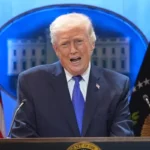
Speaking at the World Economic Forum (WEF) in Davos, US Commerce Secretary Howard Lutnick delivered a blunt rejection of the very ideology the forum has long championed. Representing the Trump administration, Lutnick stated unambiguously that globalisation had failed the West and the United States. He framed the moment not as a policy debate but as a reckoning.
According to Lutnick, the WEF model promoted a race to the cheapest labour, encouraging companies to offshore production endlessly. While this strategy boosted corporate margins and global trade volumes, it hollowed out Western economies and abandoned domestic workers. The viral excerpt from the panel captures the core of his critique, even though the broader WEF session extended beyond this segment.
Lutnick’s Core Claim — Globalisation Failed the West
Offshoring, Labour Arbitrage, and Strategic Loss
Lutnick’s central argument is that globalisation prioritised efficiency over sovereignty. He describes a system that rewarded exporting production “offshore, offshore, far shore,” in search of the lowest labour costs. This approach, he argues, left American workers behind and dismantled domestic manufacturing capacity.
The consequences are visible across former industrial regions in the United States. Since the 1990s, sectors such as steel, textiles, and heavy manufacturing migrated to Asia, contributing to long-term job losses and regional decline. While global supply chains expanded, the social contract within Western economies weakened.
Strategic Dependencies and the Sovereignty Argument
Medicine, Semiconductors, and National Survival
Beyond employment, Lutnick stresses that globalisation created dangerous strategic dependencies. He argues that no country should offshore industries fundamental to sovereignty. Medicine, semiconductors, and critical technologies, in his view, must remain under national or allied control.
He points to reliance on China for essential pharmaceuticals and to Taiwan’s dominance in advanced semiconductor manufacturing as evidence of systemic risk. COVID-19 exposed these vulnerabilities starkly, when supply chains fractured and nations competed for basic medical equipment. Lutnick’s message is direct: dependence equals exposure, and exposure invites coercion.
The WEF as a “Flag in the Wind”
Net Zero, Batteries, and Policy Contradictions
Lutnick reserves particular criticism for the World Economic Forum itself. He portrays it not as a neutral convenor, but as an institution that follows prevailing winds. According to him, WEF advocacy for solar, wind, and rapid Net Zero commitments lacks strategic grounding.
He highlights Europe’s pledge to reach Net Zero targets while lacking domestic battery manufacturing capacity. In his assessment, this choice effectively transfers industrial leverage to China, which controls a dominant share of global battery production. The result, he argues, is economic subservience disguised as climate leadership.
This critique reframes climate policy not as an environmental debate, but as a question of industrial realism and geopolitical power.
Why Globalisation Failed — The Structural Causes
Inequality, Backlash, and Political Consequences
Lutnick’s rejection of globalisation rests on more than nostalgia. While the global economy expanded and developing nations grew rapidly, inequality widened within Western societies. Middle-class wages stagnated, while asset-holding elites prospered.
This imbalance fuelled political backlash, visible in events such as Brexit and Donald Trump’s 2016 election. Globalisation delivered aggregate growth, but distributed pain unevenly. According to Lutnick’s logic, that imbalance made the system politically unsustainable.
Geopolitical Risk and Weaponised Interdependence
From Efficiency to Vulnerability
Events over the past decade reinforced these weaknesses. The pandemic exposed fragile supply chains. The Ukraine war demonstrated how trade and finance could be weaponised. US-China tensions further showed how interdependence could shift from cooperation to leverage.
Cheap labour abroad often came with compromised labour standards, environmental damage, and intellectual property theft. These factors eroded trust in the globalist promise of mutual benefit. Lutnick argues that globalisation assumed uniform outcomes while ignoring national differences in resources, energy security, and strategic priorities.
What Comes Next — A Nations-First Model
Sovereignty Without Isolation
Lutnick proposes a different model, which he frames as national realism rather than isolationism. Countries, he argues, should put their own workers, borders, and industries first. Dependence should be limited to trusted allies, not strategic competitors.
For the United States, this implies reshoring manufacturing, reinforcing tariffs, and incentivising domestic production. Measures such as expanded semiconductor incentives and selective trade barriers align with this thinking. Climate policy, under this model, becomes tailored rather than ideological, favouring energy security over abstract targets.
Global Implications of Lutnick’s Vision
Winners, Losers, and a Fragmented Order
The shift Lutnick outlines affects all actors differently. Western workers may benefit from reshoring, but consumers may face higher prices. Developing economies could lose export markets, while others may gain from supply-chain diversification.
India’s trajectory illustrates this complexity. As an oil-import-dependent economy, electric mobility and manufacturing localisation align with Lutnick’s realism. Simultaneously, India stands to benefit from friend-shoring as companies diversify away from China.
Geopolitically, the world moves toward fragmentation. Growth may slow, but systemic risk could decline. The cost is a less predictable, more competitive global order.
“America First” — Growth Before Generosity?
Invitation or Ultimatum?
Lutnick’s message does imply sequencing. The United States intends to strengthen itself first, then engage selectively. He encourages other nations to adopt the same approach, framing it as mutual realism rather than domination.
Critics, however, view this as pulling up the ladder after climbing it. Aid, trade access, and cooperation may increasingly depend on alignment rather than universality. It is not an offer to “feed the world,” but to trade on stricter terms once strength is secured.
A Davos Moment That Signals a Turning Point
Howard Lutnick’s Davos remarks crystallise a shift already underway. Globalisation is no longer treated as inevitable or benign. Sovereignty, resilience, and strategic autonomy now define policy debates.
Whether this transition leads to balanced realism or escalating protectionism remains uncertain. What is clear is that the WEF’s globalist consensus has fractured in plain view. Lutnick did not merely criticise globalisation. He declared its era over.