Greenland, Trump, and the Arctic Shockwave Threatening NATO
As of 9 January 2026, President Donald Trump’s aggressive pursuit of Greenland, a Danish autonomous territory, has ignited intense debate over US strategic priorities and the long-term viability of the North Atlantic Treaty Organization (NATO). This is not simply territorial ambition. It reflects Trump’s long-standing transactional worldview, where alliances are assessed like business contracts and strategic commitments are measured against perceived returns.
In this framework, the United States appears to be recalculating the value of remaining bound to NATO as it currently exists.
Greenland as an “Absolute Necessity” for US Security
Trump has framed Greenland as an “absolute necessity” for American national security. His argument rests on three core pillars. First, control over Arctic shipping routes opening due to climate change would provide long-term leverage over global trade. Second, Greenland’s vast reserves of rare earth minerals are critical for defence systems, advanced technologies, and future industrial competitiveness. Third, direct control would blunt Russian and Chinese influence in an increasingly contested Arctic region.
The White House has confirmed that discussions are underway on “a range of options” to acquire Greenland. Officials have openly stated that military force remains “always an option” at the commander-in-chief’s discretion. At the same time, figures such as Secretary of State Marco Rubio have publicly emphasised a preference for purchase rather than coercion.
Tools on the Table: Money, Pressure, and Political Leverage
Proposals reportedly under consideration go well beyond conventional diplomacy. These include direct lump-sum payments to Greenlanders, potentially ranging from $10,000 to $100,000 per person, aimed at encouraging secession or political affiliation with the United States. Other measures discussed include economic pressure on Denmark or backing Greenlandic independence movements to weaken Copenhagen’s position indirectly.
This approach mirrors Trump’s broader belief that economic leverage and political disruption are often more effective than traditional alliance management.
Trump’s Businessman’s View of NATO
Greenland cannot be separated from Trump’s assessment of NATO itself. For years, he has portrayed the alliance as an unfair arrangement in which the United States bears a disproportionate share of the burden. He has described NATO as a costly insurance scheme, where the United States pays the highest premiums while seldom drawing tangible returns.
In Trump’s view, the US spends roughly 3.5% of GDP on defence, while many European allies remain closer to, or even below, the 2% guideline. The result, he argues, is that American taxpayers subsidise European security, while allies enjoy protection without matching contributions or strategic reciprocity.
Why NATO Looks Optional in Trump’s Calculus
From this perspective, Trump questions the logic of maintaining costly US bases and long-term commitments across Europe. Why, he asks implicitly, should America remain locked into multilateral constraints when it can act unilaterally, secure critical assets like Greenland directly, and still allow the US arms industry to profit from global instability and demand?
Recent actions reinforce this worldview. The 3 January abduction of Venezuelan President Nicolás Maduro has strengthened perceptions that Trump sees little need for multilateral approval or institutional restraint. He appears to calculate that US power alone is sufficient to neutralise threats from Russia, China, or other challengers through direct action, bilateral deals, or economic dominance, rather than collective defence mechanisms.
Denmark and Greenland Draw a Hard Line
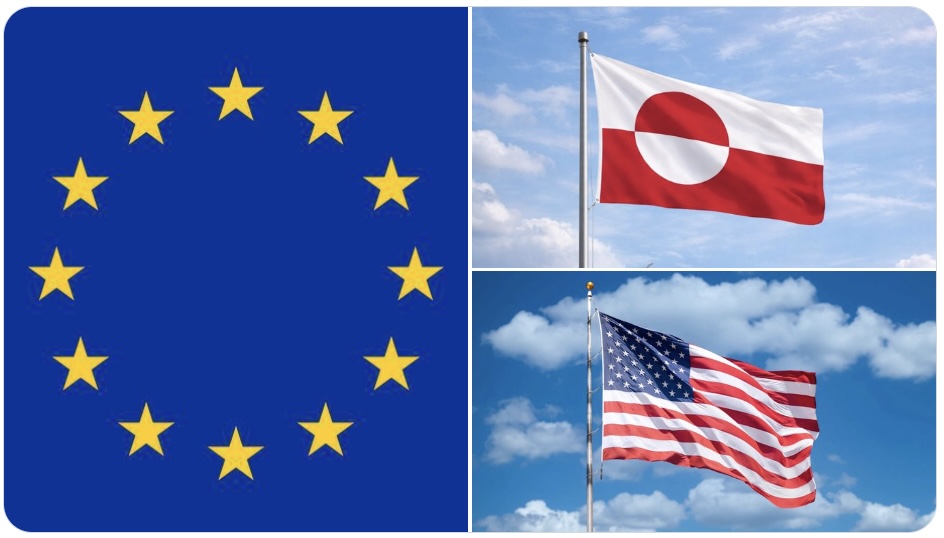
Denmark and Greenland have responded forcefully. Danish Prime Minister Mette Frederiksen has warned that any US military move would mark “the end of everything,” including NATO and the post-World War II international order. Such an act would pit one NATO ally against another and effectively nullify Article 5, the alliance’s mutual defence guarantee.
Greenland’s Prime Minister Jens-Frederik Nielsen has dismissed annexation talk as “fantasies,” emphasising Greenland’s democratic right to self-determination. European leaders have issued joint condemnations, reaffirming Greenland’s sovereignty and insisting that Arctic security must be pursued through NATO, not imposed unilaterally.
The Strategic Trade-Off: Control Versus Credibility
From a strategic standpoint, full US control of Greenland would eliminate reliance on existing arrangements under Cold War-era agreements, such as the 1951 defence pact that allows American bases including Thule (Pituffik). Ownership would lock in Arctic supremacy and deliver long-term economic gains from natural resources.
However, the cost could be severe. Analysts warn that Greenland, combined with reduced US commitment to Ukraine, could deliver a “deadly one-two punch” to NATO. The alliance could be reduced to a hollow shell, emboldening adversaries and eroding deterrence across Europe.
A Deliberate Pivot Away from Alliance Loyalty
In experts’ assessment, Trump’s approach reflects a deliberate pivot rather than impulsive provocation. He appears to view NATO not as an indispensable partnership but as an outdated and costly insurance policy—one that is rarely claimed and increasingly unnecessary given overwhelming US military superiority.
If allies are not pulling their weight, at least in his estimation, Trump sees little reason to prioritise institutional loyalty over raw American gains, such as Arctic dominance and strategic autonomy. This logic could push Europe toward independent rearmament and alternative security frameworks. At the same time, it risks overreach and backlash that may ultimately weaken long-term US influence.
Europe would be prudent to treat these signals seriously, strengthening deterrence through measures such as multinational Arctic deployments, while pursuing diplomacy to avert a rupture that could permanently reshape the transatlantic order.